Flat Roof Maintenance: 5 Critical Checks for Finger Lakes Business Owners
Flat Roof Maintenance: 5 Critical Checks for Finger Lakes Business Owners
For business owners in towns like Canandaigua, Geneva, or Skaneateles, a commercial roofing is a vital but often ignored asset. The Finger Lakes region presents a unique set of challenges (from heavy lake effect snow to intense spring rains) that can rapidly degrade a low slope roofing system. Proactive maintenance is not just about avoiding leaks; it is about extending the lifespan of your investment and ensuring business continuity.
1. Inspect for Ponding Water and Proper Drainage
Unlike a pitched residential roof, flat roofs rely on a slight internal slope to move water toward drains or scuppers. If water remains on your roof for more than forty eight hours after a storm, you have a ponding problem.
The Weight Factor: One inch of standing water weighs approximately five pounds per square foot. On a large commercial roof, this adds thousands of pounds of unplanned stress to the structural steel.
Biological Growth: Standing water is a breeding ground for algae and vegetation. Roots can eventually penetrate the roofing membrane, leading to catastrophic failure.
Clear the Drains: Ensure that primary drains and overflow scuppers are free of leaves, twigs, and debris. This is especially critical during the autumn months when foliage is heavy.
2. Evaluate Seams and Field Joints
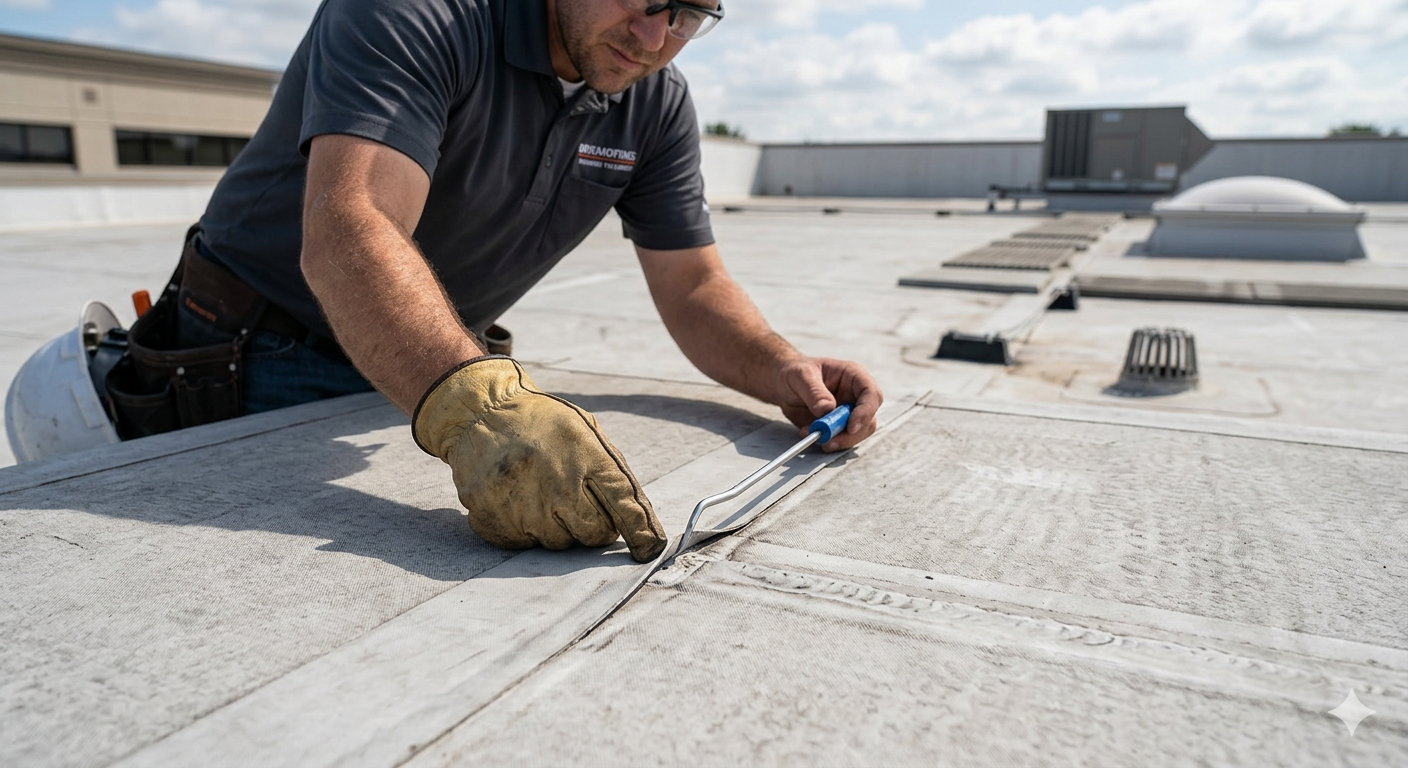
The seams are the most vulnerable part of any flat roof (whether you have TPO, EPDM, or Modified Bitumen). Temperature swings in Upstate New York cause materials to expand and contract, a process known as thermal shock.
Seam Separation: Look for areas where the adhesive or heat weld has begun to lift. Even a tiny opening can allow moisture to seep into the insulation board below.
Blistering: If you see raised bubbles, it often indicates that moisture is trapped between the layers of the roof. When the sun heats the roof, that moisture turns to vapor and expands.
Professional Tip: Regularly checking these joints can help you catch small issues before they require a full roofing insurance claims Rochester style replacement.
3. Examine Flashings and Penetrations
Most leaks do not start in the middle of the roof; they start at the edges or where equipment pierces the membrane. Commercial roofs are crowded with HVAC units, vents, and pipes.
HVAC Curbs: Ensure the flashing around your heating and cooling units is secure. Vibration from these machines can loosen sealants over time.
Pipe Boots: Check the rubber or metal covers around plumbing vents. UV rays can cause these materials to crack and become brittle.
Parapet Walls: Inspect the metal coping caps on top of your perimeter walls. If these are loose, wind can catch them and tear the roofing material away from the building.
4. Monitor Snow Load and Ice Accumulation
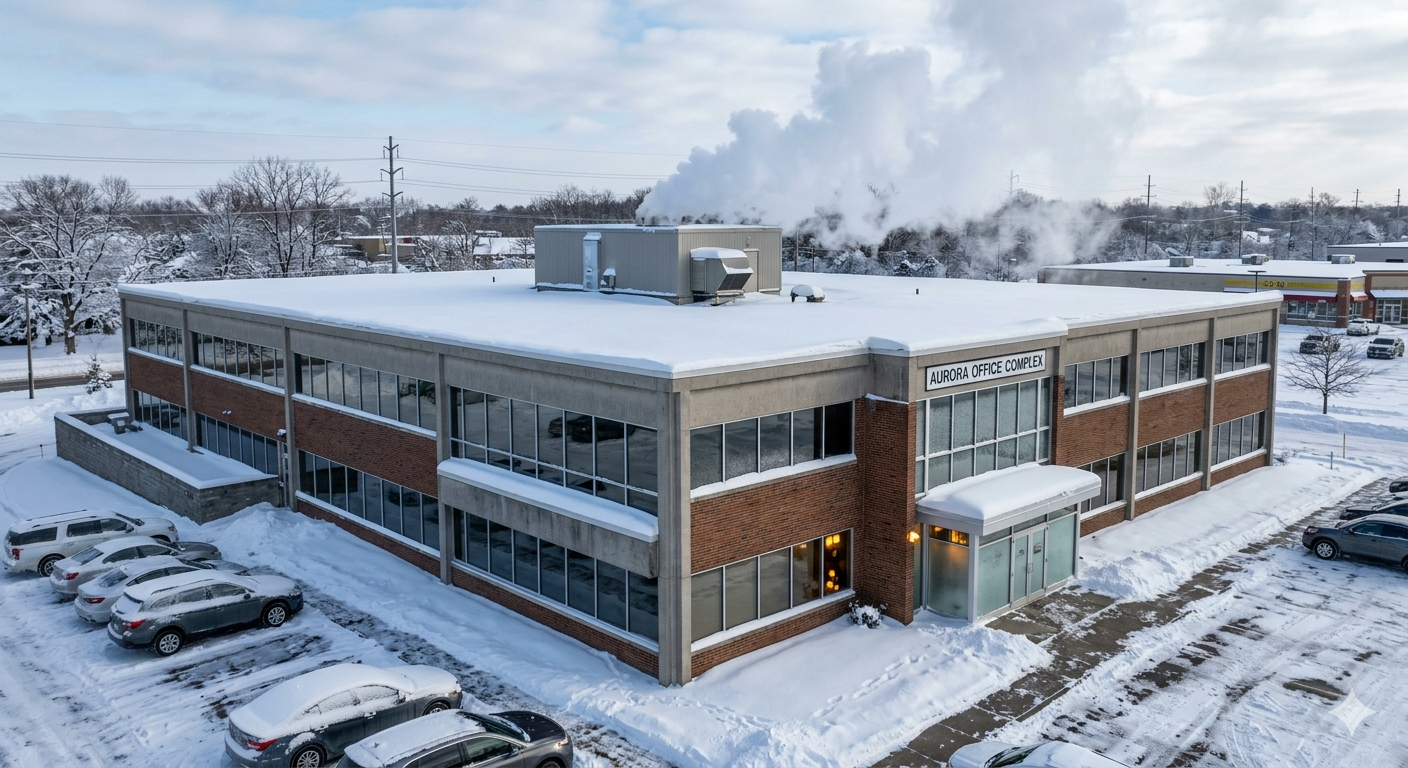
Finger Lakes winters are famous for their intensity. While flat roofs are designed to handle significant weight, the way snow drifts can create dangerous imbalances.
Drifting Patterns: Wind coming off the lakes often creates deep drifts against parapet walls or HVAC units. This concentrated weight can exceed design limits.
Ice Damming at Drains: If your building heat escapes through the roof, it can melt snow that then refreezes over the cold drain. This creates a "plug" that prevents any further drainage during a thaw.
Safety First: Never attempt to shovel a commercial roof without professional guidance, as standard shovels can easily puncture expensive membranes.
5. Check the Interior for Early Warning Signs
Sometimes the best way to inspect a roof is from the inside. Your ceiling can tell a story that the roof surface hides.
Ceiling Tiles: Look for yellow or brown staining on drop ceiling tiles. These are often the first sign of a slow, migrating leak.
Wall Streaks: Water often travels along the top of structural beams and runs down the interior walls.
Odors: A musty smell in a warehouse or office space usually indicates that the insulation under the roof membrane is saturated and growing mold.
The Financial Benefit of Proactive Maintenance
For many Finger Lakes businesses, the cost of a biannual inspection is a fraction of the cost of an emergency repair. Documenting your maintenance also helps when filing commercial property insurance claims. Most adjusters want to see that the owner has taken reasonable steps to maintain the property before they approve a payout for storm damage.

Protect Your Commercial Investment
Your roof is the most expensive component of your building envelope. Do not wait for a puddle in your showroom to take action. Implementing a consistent maintenance schedule ensures your business stays dry and your budget stays predictable.