Commercial Roof Maintenance: The Hidden Revenue Protector Business Owners Overlook
Commercial Roof Maintenance: The Hidden Revenue Protector Business Owners Overlook
Most commercial property owners see their roof as a building component. Something that sits on top of the structure and should work until it doesn't.
That's the wrong way to think about it.
Your roof is an active revenue protection system. Every day, it defends your business against weather, temperature swings, and moisture intrusion. It protects your inventory, your equipment, your employees, and your ability to serve customers without interruption.
The moment you realize this changes everything about how you approach maintenance.
When the Cost Goes Beyond the Repair Bill

The realization usually comes when a roofing issue interferes with daily operations rather than just showing up as a maintenance concern on paper.
Water intrusion forces part of a workspace to shut down. Damaged insulation affects climate control in a retail environment. Inventory has to be relocated or replaced after exposure to moisture.
In those situations, the cost is no longer limited to repairing the roof. Productivity suffers. Tenant satisfaction drops. Customer experience degrades.
When a small leak leads to delayed service, equipment downtime, or temporary closure for cleanup, it becomes clear that the roof supports the continuity of business activity inside.
That's when owners begin to view routine inspections and preventive upkeep as a way to safeguard revenue rather than simply addressing wear after it becomes visible.
The Real Cost of a "Small" Leak

A small retail or warehouse-based business experienced a slow-developing roof leak over a storage area that went unnoticed until water began dripping during a heavy rainstorm.
The leak affected shelving that held packaged inventory. Staff had to stop regular operations for several hours to move product out of the affected zone and set up temporary protection to prevent further damage.
That interruption stretched into most of the day. Sections of the floor had to be dried and checked before work could safely resume. Some moisture-exposed goods had to be written off as a precaution.
The roof repair itself cost a few thousand dollars.
But the business also lost nearly a full day of productivity across multiple employees and incurred additional costs tied to product disposal and cleanup.
By the time operations returned to normal, the indirect impact from downtime and inventory loss had exceeded the repair expense.
Even a relatively small roofing issue created broader financial consequences inside the facility.
The Warning Signs You're Missing

Early warning signs show up long before any visible dripping occurs. They develop gradually and may not seem directly related to the roof at first.
You might notice:
Subtle discoloration on ceiling tiles
Small bubbles forming in paint near the upper walls
A faint musty odor in certain areas that appears after heavy rain
HVAC systems running less efficiently
Unexplained increases in humidity near storage zones
Exterior clues matter too. Cracked flashing, clogged drains on flat roofs, or sections of roofing material that appear slightly raised or uneven can signal that water is starting to penetrate the surface.
Inside the facility, warped shelving, minor rust on metal fixtures near the ceiling, or recurring condensation where it didn't previously occur may all point to moisture intrusion that hasn't yet reached the stage of active leakage.
Catching these smaller changes early through routine inspections prevents the kind of water exposure that eventually disrupts operations or damages inventory.
The Math That Changes Everything

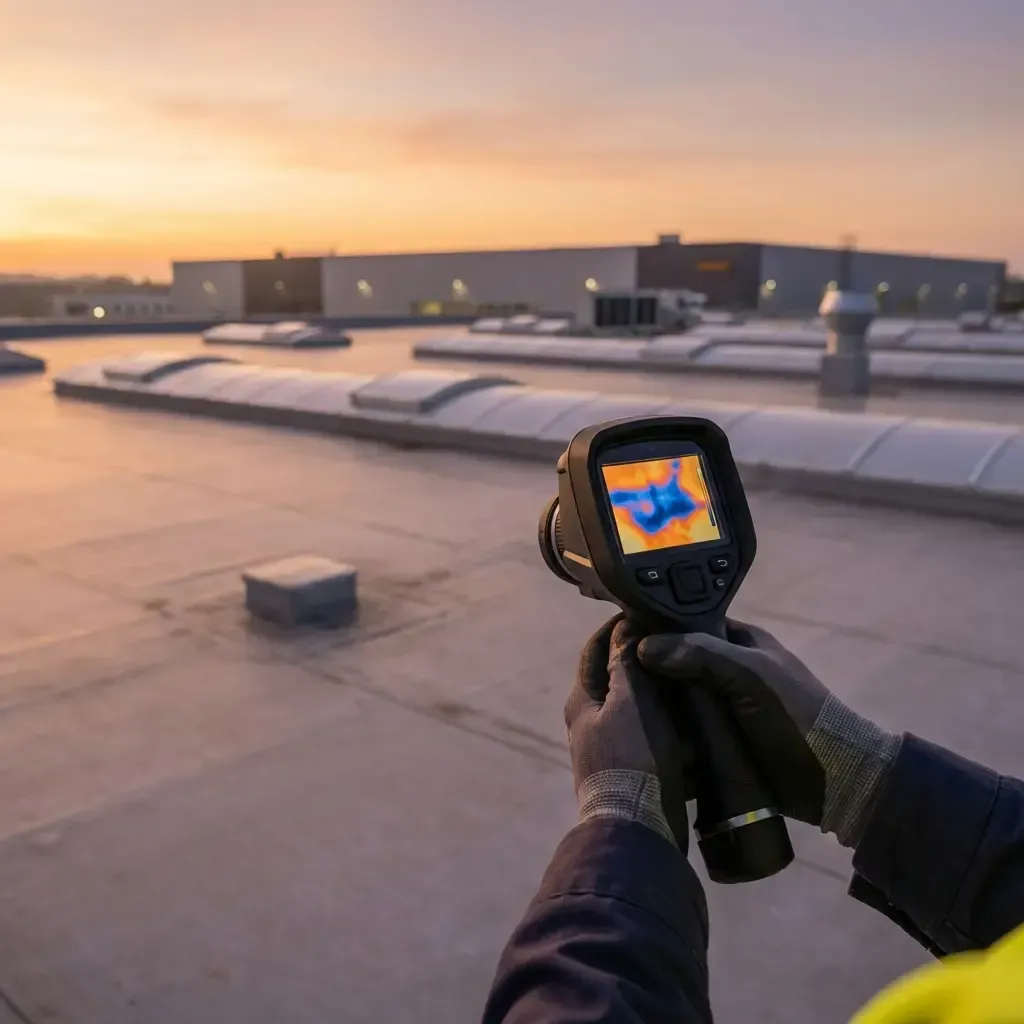
An effective inspection schedule for a commercial roof involves checking the system at least twice a year—typically in the spring and fall—along with additional reviews after major storms or seasonal weather changes.
These visits focus on identifying small issues like membrane wear, flashing separation, or blocked drainage before moisture begins working its way into the structure.
A typical professional commercial roof inspection runs between $200 to $600 per visit, depending on building size and accessibility.
So if you run a twice-yearly preventive schedule, you're looking at roughly $400 to $1,200 annually to catch issues before water gets inside the building.
Now compare that to what happens once moisture makes it past the roofing system.
When Prevention Becomes Crisis Management

A basic commercial roof leak repair costs anywhere from $600 to $4,500 or more, depending on how long the issue has been developing.
But once interior water damage enters the picture, the costs multiply quickly. You're no longer dealing with just roofing material.
Water damage restoration in commercial buildings typically runs between $3.75 to $7.50 per square foot. Severe cleanup events can reach $5,000 to $16,000 or more depending on contamination and structural impact.
Even drying out a limited affected area can cost $1,500 to $2,500 before any repairs to insulation, ceilings, or contents are factored in.
In real terms: A business might spend under a thousand dollars per year to monitor their roof and prevent issues, versus several thousand dollars for leak repair alone, and potentially tens of thousands once cleanup crews, damaged materials, operational downtime, or mold remediation are added into the equation.
That difference turns routine inspections from a maintenance expense into financial risk management.
Research shows that for every $1 spent on preventative maintenance, building owners save $4 in repairs. Even more striking: a proactively maintained roofing system has an average life of 21 years compared to 13 years with a reactive maintenance program.
Why Timing Matters in New York

The timing of inspections matters because the most damaging roof issues often develop during seasonal transitions rather than during obvious storms.
Spring: After the Freeze-Thaw Damage

A spring inspection is especially important after freeze-thaw cycles from winter. Melting snow and ice can work its way into small cracks or flashing gaps that expand when temperatures fluctuate overnight.
Ice dams that formed along roof edges during colder months may have already allowed moisture beneath the surface. Once temperatures rise, that trapped water begins migrating toward insulation or interior spaces.
Fall: Preparing for Winter's Assault
A fall inspection prepares the roof for snow load, heavy rain, and wind-driven storms that are common through late fall and winter.
During this time, drains can become clogged with leaves. Sealants may begin to deteriorate from summer heat. Minor membrane damage can worsen once freezing temperatures return.
Addressing those vulnerabilities before winter sets in helps prevent moisture intrusion that might otherwise remain hidden until it disrupts operations months later.
The Hidden Cost Timeline

If a small crack or seam separation develops in January during a freeze-thaw cycle, the actual business impact often doesn't show up until late spring or even early summer.
What happens inside the roof system during those hidden months is a slow progression of moisture migration rather than an immediate drip.
As snow melts during the day and refreezes at night, small amounts of water get drawn into tiny openings through capillary action. It begins saturating insulation or pooling beneath the membrane.
That trapped moisture gradually reduces the insulation's thermal resistance.
HVAC systems work harder. Energy costs increase without any visible leak inside the building.
Over time, repeated freezing expands that moisture pocket, loosening fasteners, weakening adhesive bonds, or beginning to soften decking materials.
By the time warmer weather arrives and heavy rain adds more water to the system, the accumulated damage finally reaches interior spaces as staining or dripping.
But the business has already been absorbing the cost through higher utility usage, declining material performance, and structural stress for weeks or months before the problem becomes visible.
The Energy Bill Connection
Businesses have noticed that energy usage trends begin shifting before any visible roofing issue appears, especially when insulation within the roof system has been compromised by moisture.
When insulation becomes saturated, it loses much of its ability to resist heat transfer. Conditioned air escapes more easily. HVAC systems need to run longer to maintain the same interior temperature.
That change might only show up as a modest increase in monthly utility costs at first. But over several billing cycles it becomes noticeable compared to previous years with similar weather conditions.
For larger commercial spaces, even a small drop in insulation performance can translate into hundreds of additional dollars per month in heating or cooling expenses.
By reviewing energy usage alongside maintenance records or inspection findings, business owners may begin to see patterns such as rising costs following heavy winter weather or storm events.
Connecting those trends with potential roof vulnerabilities helps identify underlying issues earlier and reduces the likelihood of more significant damage developing later.
The Insurance Documentation Advantage
Insurance carriers look for proof that the building owner has taken reasonable steps to prevent avoidable damage rather than allowing normal wear to progress into a loss event.
When a business maintains documentation of routine roof inspections, minor repairs, and seasonal upkeep, it demonstrates that any damage being claimed was sudden or weather-related instead of the result of long-term neglect.
That distinction influences how a claim is evaluated.
Many commercial policies exclude coverage for deterioration that could have been addressed through normal maintenance.
In situations where a claim is filed but there are no records showing regular inspections or corrective work, insurers may question whether the issue developed over time. This can delay approval or reduce the payout amount.
On the other hand, having a documented maintenance history supports the claim process by showing that the roof was being actively managed. This helps avoid disputes and streamlines resolution if storm damage or another covered event occurs.
Research shows that documented preventive maintenance can lower insurance premiums 5–15%.
When Claims Get Denied

A business files a claim after discovering interior water damage following a heavy storm, assuming the weather event caused the problem.
The insurer determines that the roofing system showed signs of long-term wear that had not been addressed.
A commercial property owner notices water staining after a strong rain and submits a claim expecting coverage for both roof repair and interior restoration.
During the inspection, the adjuster finds deteriorated flashing or membrane separation that appears to have developed gradually over time.
Without records showing routine inspections or maintenance to address those vulnerabilities, the carrier may classify part of the damage as the result of deferred upkeep rather than a sudden occurrence.
Coverage for interior repairs or insulation replacement could be reduced or denied, leaving the owner responsible for costs tied to cleanup, material replacement, or operational disruption.
For a business that relies on uninterrupted workspace, absorbing those expenses out of pocket can strain budgets and delay repairs needed to restore normal operations.
Building Your Proactive Maintenance System

Making the shift from reactive to preventive roof maintenance starts with establishing a baseline. You need to know exactly what condition the system is in before building any kind of schedule around it.
First 30 Days: Establish Your Baseline

Have a professional inspection completed to identify existing vulnerabilities such as membrane wear, flashing separation, drainage issues, or areas where moisture may already be present beneath the surface.
That initial assessment creates a reference point for future comparisons and helps prioritize any minor repairs that could prevent larger problems later.
Days 30-90: Build Your System

The focus moves toward setting a recurring inspection schedule tied to seasonal weather patterns, clearing debris from drains and rooftop equipment areas, and addressing any small issues that were flagged during the baseline review.
Documentation becomes critical.
Begin documenting each inspection, repair, or adjustment in a centralized record that includes dates, findings, and corrective actions taken.
Keep these reports along with photos or service summaries. This allows you to track roof performance over time and demonstrate consistent upkeep if a claim ever needs to be filed.
By combining routine monitoring with organized maintenance records, you protect both daily operations and your ability to show that the roofing system has been actively managed rather than left to deteriorate.
The Fundamental Shift
Your roof is not a static structure sitting on top of your building.
It's an active revenue protection system working every single day to keep your business operational.
Most owners think about their roof the same way they think about their foundation: something that was built once and should just work until it doesn't.
But your roof is constantly defending your business against weather, temperature swings, UV exposure, and moisture intrusion. It's protecting your inventory, your equipment, your employees, and your ability to serve customers without interruption.
When you reframe the roof as a revenue protector rather than a building component, the entire maintenance conversation changes.
You stop asking "How much does an inspection cost?" and start asking "What does it cost me if I don't inspect?"
You stop seeing maintenance as an expense line item and start seeing it as insurance against business disruption, property value loss, and catastrophic repair bills.
The businesses that understand this distinction treat their roof maintenance budget the same way they treat their security system or insurance premiums—as non-negotiable protection for their revenue stream.
The ones who don't often learn this lesson the expensive way, when a small leak becomes a major operational crisis that could have been prevented for a fraction of the cost.
Protect Your Business, Protect Your Revenue
We've seen too many business owners discover the true cost of roof neglect only after it's disrupted their operations and strained their budgets.
The good news? You can avoid that outcome entirely with a systematic approach to roof maintenance.
Start with a professional baseline inspection. Know exactly what condition your roof is in today. Identify vulnerabilities before they become crises.
Build a twice-yearly inspection schedule tied to seasonal weather patterns. Document everything. Create the paper trail that protects you operationally and from an insurance standpoint.
Your roof is working every day to protect your revenue stream. Give it the attention it deserves.
Ready to shift from reactive to proactive? Schedule your baseline inspection today and take the first step toward protecting your business from avoidable disruption and expense.