Roof Repair Signs for New York Homes
Home Maintenance, Residential Roofing
Top Warning Signs Your New York Home’s Roof Needs Repair or Replacement
A well-maintained roof is essential for protecting your New York home from harsh winters, coastal storms, and humid summers. Recognizing early warning signs can help you address residential roofing issues before they become costly emergencies.
1. Age of Your Roof and New York’s Climate Stress
One of the most important warning signs is simply your roof’s age. Most asphalt shingle residential roofing systems last between 20 and 25 years under normal conditions. In New York, however, freeze–thaw cycles, heavy snow loads, summer heat, and coastal winds can shorten that life span, especially if the roof was installed over an existing layer of shingles or has not been regularly maintained.
If your roof is approaching or has passed the 20-year mark, it is prudent to schedule a professional inspection. Even if you do not see obvious damage from the ground, the underlying materials may be deteriorating and losing their ability to protect your home from New York’s demanding weather. Partnering with a trusted residential roofing inspection specialist can help you document the roof’s current condition and plan ahead.
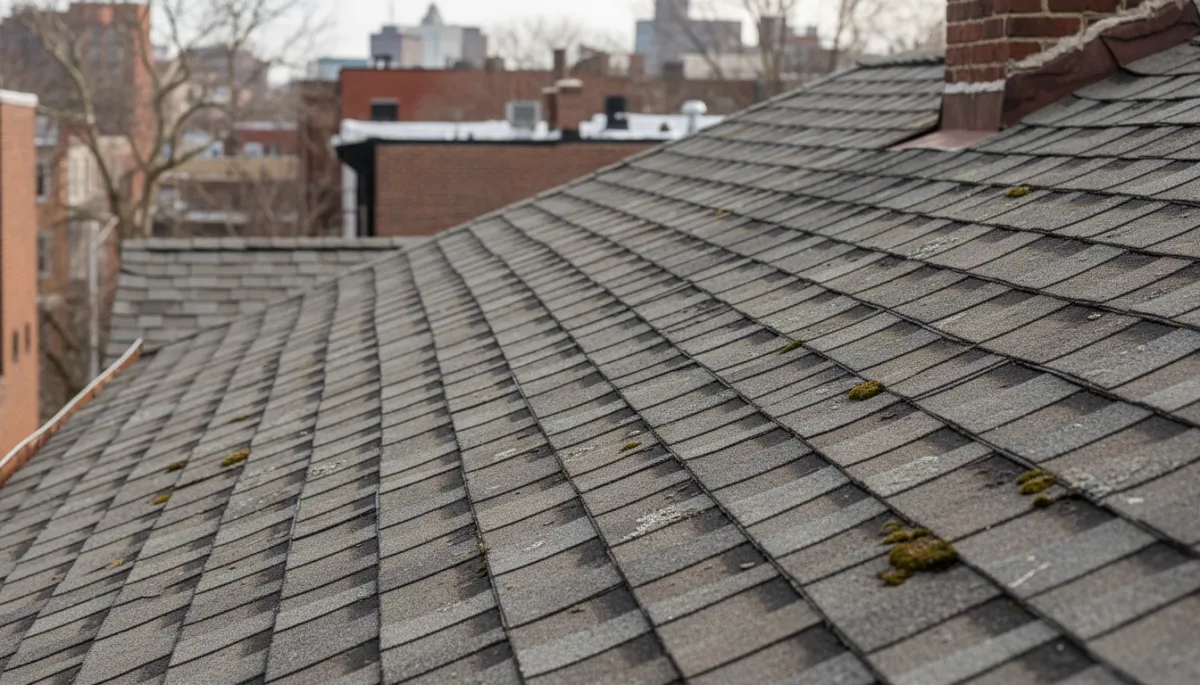
Older shingles exposed to New York’s seasons often show early wear before leaks appear.
2. Curling, Cracked, or Missing Shingles
Shingles are your roof’s first line of defense. When they begin to curl at the edges, crack, or go missing entirely, your roof is signaling that it needs attention. In New York, high winds from coastal storms and nor’easters frequently loosen or tear away shingles, leaving exposed areas vulnerable to water intrusion and further damage. Promptly addressing these issues with professional residential roofing repair can prevent more serious structural problems.
Walk around your property and look for sections where shingles appear uneven, buckled, or discolored. Spot repairs may be appropriate if the damage is limited. However, widespread shingle failure across large areas of the roof often indicates that a full residential roofing replacement will be more cost-effective and reliable in the long term.
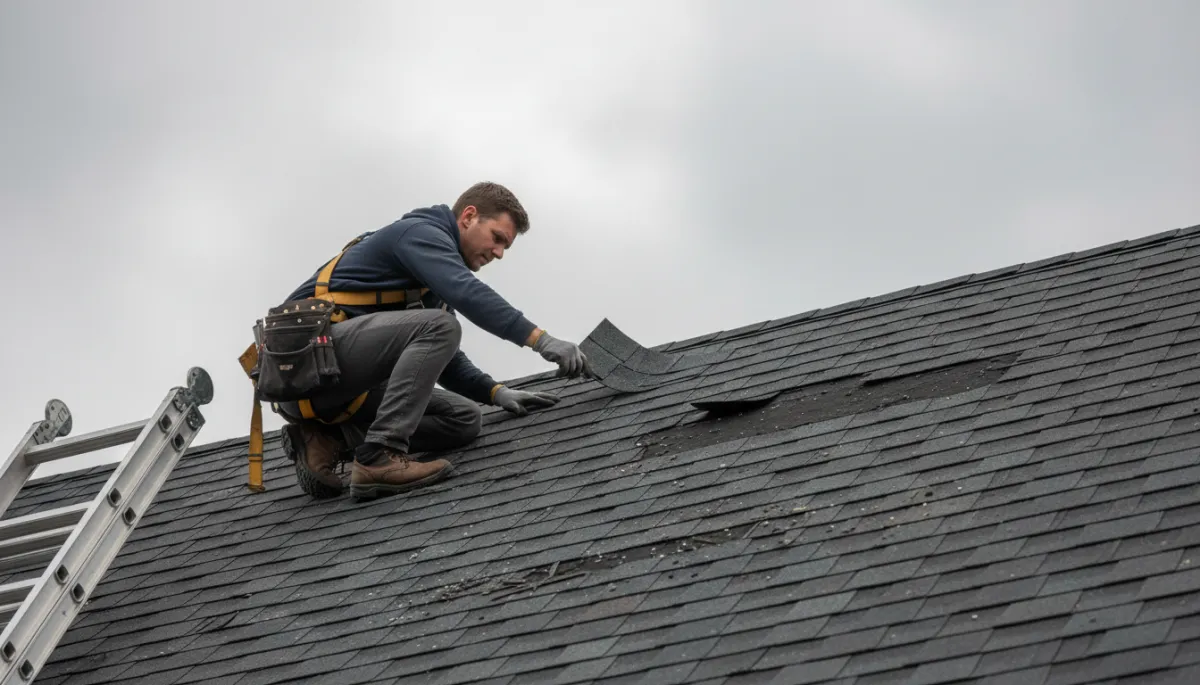
Visible shingle curling or gaps are early indicators your roof’s surface is failing.
3. Granules in Gutters and Dark, Bald Patches
Asphalt shingles are coated with protective granules that shield them from UV rays and weather. Over time, these granules loosen and wash into your gutters. While some granule loss is normal, excessive accumulation in gutters or at the base of downspouts is a strong warning sign that your shingles are wearing out and losing their protective layer. This is a key moment to consult a New York roofing contractor before leaks develop.
From the ground, you may notice darker or “bald” patches on the roof where granules have worn away. New York’s intense summer sun and winter ice can accelerate this process. Once granules are gone, shingles age rapidly, and your roof becomes more susceptible to leaks and structural damage. Proactive residential roofing maintenance can slow this wear and extend the life of your shingles.
Professional Tip: Check your gutters after heavy rain or spring snowmelt. If you see large amounts of shingle granules, contact a licensed residential roofing expert for an evaluation.
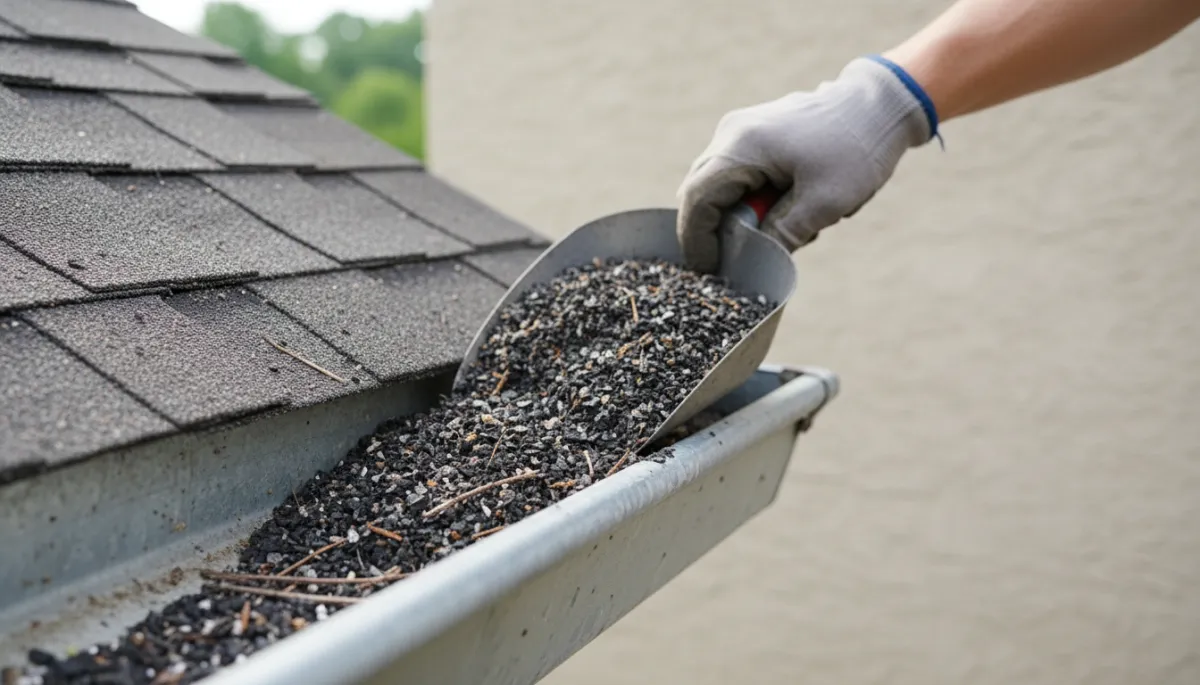
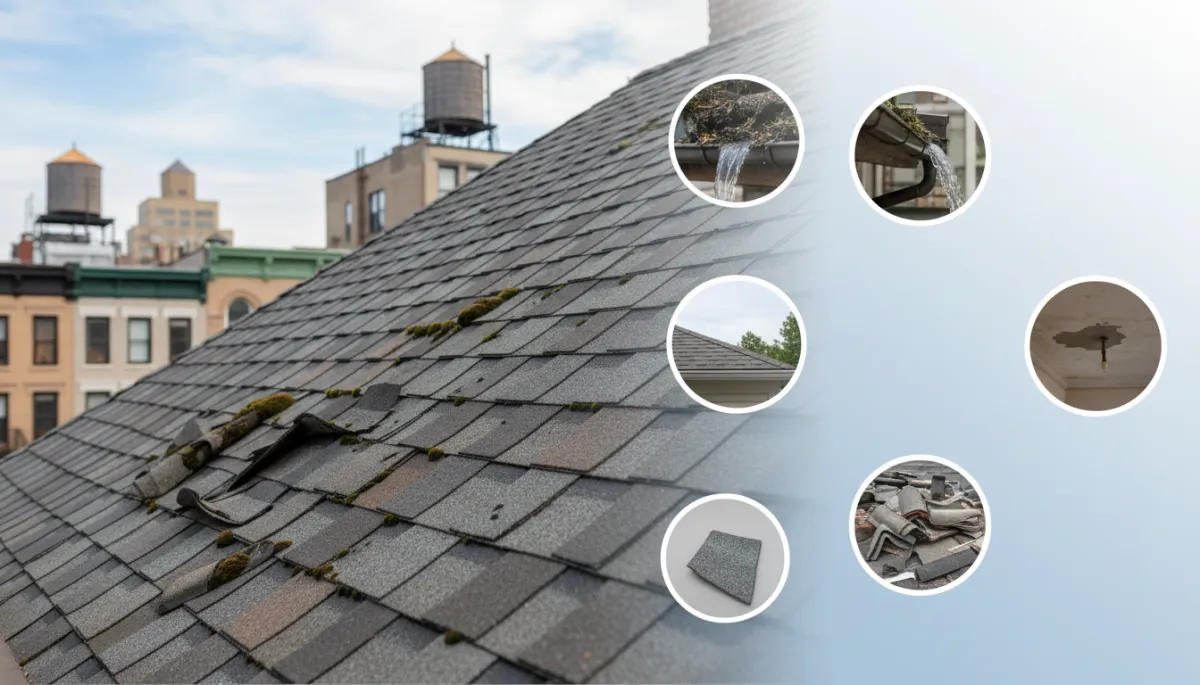
Excessive granules in gutters signal shingles are nearing the end of their service life.
4. Interior Leaks, Stains, and Mold Growth
Warning signs are not limited to the exterior. Inside your New York home, water stains on ceilings or walls, peeling paint near the roofline, or damp insulation in the attic all suggest that moisture is penetrating the roofing system. Small leaks often go unnoticed until they have already caused insulation damage, wood rot, or mold growth. Addressing these issues quickly with professional roof leak and residential roofing repair can help you avoid major interior restoration costs.
During or after a rainstorm, inspect your attic with a flashlight. Look for wet spots, dark streaks, or daylight shining through the roof boards. In multi-story New York homes, pay attention to upper-level rooms where ceilings meet exterior walls. Persistent moisture issues may indicate that repairs are no longer sufficient and that a full roof replacement by a residential roofing specialist is the safest solution.
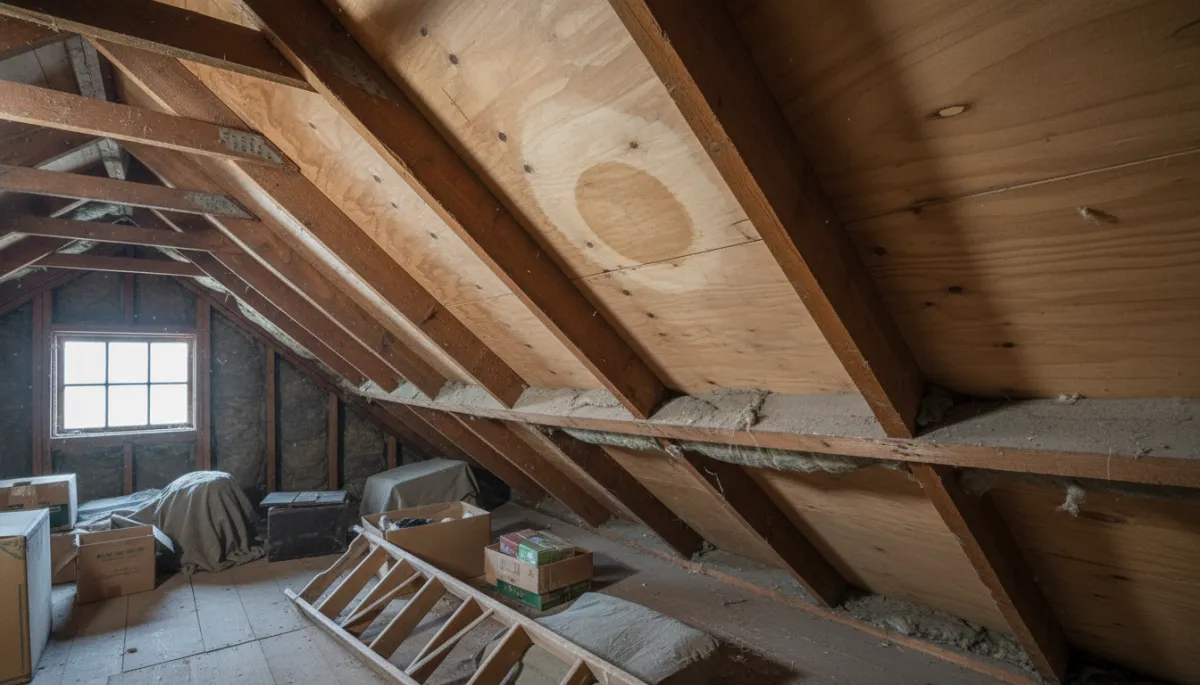
Attic stains and damp insulation often reveal hidden roof leaks long before ceilings fail.
5. Sagging Rooflines and Structural Concerns
A properly functioning roof should appear straight and even. If you notice areas where the roofline sags or dips, especially after heavy snowfall or prolonged rain, this can point to serious structural issues. Water infiltration may have weakened the roof decking or supporting framing, and immediate professional assessment is essential for safety. In these cases, a qualified structural residential roofing repair specialist should inspect your home as soon as possible.
In New York’s older housing stock, sagging roofs are particularly common when past repairs have only addressed surface issues rather than underlying structural damage. In many cases, a comprehensive residential roofing replacement, including new decking and reinforcement, is required to bring the roof back to modern safety standards.
6. Ice Dams, Poor Ventilation, and High Energy Bills
Many New York homeowners see icicles along the eaves as a normal part of winter. However, heavy icicles and thick ice ridges, known as ice dams, are often signs of poor attic insulation or ventilation. Warm air escaping from living spaces melts snow on the roof, which then refreezes at the colder edges, trapping water that can back up under shingles and leak into the home. Working with a contractor experienced in ventilation and insulation for residential roofing can help correct the root cause.
In addition to visible ice dams, unusually high heating or cooling bills can indicate that your roof and attic are not performing efficiently. Modern energy-efficient residential roofing systems are designed to work with proper ventilation and insulation to keep your home more comfortable and energy efficient throughout New York’s extreme seasons.

Ice dams along eaves often point to roof and attic issues that need prompt attention.
When to Repair and When to Replace Your Roof
Deciding between roof repair and full replacement depends on the extent of damage, the roof’s age, and your long-term plans for the property. Local New York roofing professionals can perform a thorough inspection and provide clear recommendations based on building codes, weather patterns, and the condition of your existing materials. Choosing an experienced New York residential roofing company ensures that those recommendations are tailored to local conditions.
Targeted repairs may be sufficient for isolated shingle damage or minor flashing issues. However, if your roof shows several of the warning signs described above—especially advanced age, widespread shingle failure, and recurring leaks—a full residential roofing installation is often the most reliable way to protect your investment and safeguard your home against New York’s demanding climate.
By paying close attention to these signs and partnering with a reputable, locally experienced contractor, New York homeowners can address problems early, extend the life of their roofs, and maintain the safety, comfort, and value of their homes for years to come. Scheduling regular annual residential roofing maintenance is one of the most effective ways to stay ahead of potential issues.
Frequently Asked Questions About Residential Roofing in New York
1. How long does a typical residential roof last in New York?
In New York’s climate, most asphalt shingle roofing systems last about 18–25 years, depending on the quality of materials, installation, and maintenance. Harsh winters, coastal winds, and summer heat can shorten that life span. If your roof is over 20 years old—or you notice multiple warning signs from this guide—it is wise to schedule a professional inspection to determine whether repair or replacement is more cost-effective.
2. Should I repair my roof or replace it entirely?
Minor issues like a few missing shingles or a small flashing leak can often be addressed with targeted roofing repairs. However, if your roof is nearing the end of its expected life, has widespread shingle damage, recurring leaks, or structural concerns, a full roof replacement usually offers better long-term value, improved energy efficiency, and stronger protection against New York’s weather.
3. How much does a residential roof replacement cost in New York?
Roof replacement costs vary based on roof size, pitch, material choice, and any structural repairs needed. In general, New York homeowners can expect a full residential roofing replacement to range from several thousand dollars for smaller homes to significantly more for larger or complex roofs. The most accurate way to understand your cost is to request a detailed, written estimate from a licensed local contractor after an on-site inspection.
4. Will my homeowners insurance cover roof repairs or replacement?
Coverage depends on your policy and the cause of the damage. Many policies help pay for storm-related residential roofing repairs caused by wind, hail, or falling debris, but they typically do not cover normal wear and tear or roofs that have exceeded their expected life span. A reputable roofing contractor can document damage, provide photos, and assist you in communicating with your insurance adjuster.
5. How often should I schedule a roof inspection?
Most experts recommend having your residential roofing system inspected at least once a year, ideally in the spring or fall, and after any major storm. Regular inspections help catch minor issues—like loose shingles, failing flashing, or early granule loss—before they turn into costly leaks or structural damage. Annual inspections are especially important for older roofs approaching the end of their service life.
6. What can I do to extend the life of my roof?
Simple maintenance steps can significantly extend the life of your roof. Keep gutters clean, trim overhanging branches, remove debris from the roof surface, and address minor repairs promptly. Consider enrolling in an annual residential roofing maintenance plan so a professional can regularly inspect and service your roof. Good attic ventilation and insulation also reduce ice dams, moisture buildup, and premature shingle aging.
7. How long does a roof replacement project usually take?
For most single-family New York homes, a standard asphalt shingle residential roofing installation can be completed in one to three days, depending on roof size, complexity, and weather conditions. Projects that require significant structural repairs or decking replacement may take longer. A professional contractor will provide a clear timeline before work begins and keep you updated throughout the process.