Solar-Integrated Shingles Deliver Measurable Energy Savings for Romulus Homeowners
Solar-Integrated Shingles Deliver Measurable Energy Savings for Romulus Homeowners
The biggest misconception keeping Romulus homeowners stuck isn't about cost or technology.
It's the belief that waiting for 2026's projected price drops will save them money.
The math tells a different story. When you factor in NYSEG's 23.7% rate hike hitting May 2026, the disappearing federal tax credit on December 31, 2025, and accelerating utility costs, waiting actually costs you more.
We've spent the past year analyzing solar-integrated shingle installations across the Finger Lakes region. The data reveals something most homeowners miss: the window of maximum savings closes in 2025, not opens in 2026.
The 2026 Price Drop Everyone's Waiting For

Solar shingles currently run $21-$25 per square foot installed. Industry projections show a 30% cost reduction by 2026, dropping prices to around $15 per square foot.
That sounds like a reason to wait.
But here's what changes the equation: the federal 30% Investment Tax Credit expires December 31, 2025. This isn't a phase-down. It's a complete elimination for residential solar systems.
A typical 2,500 square foot Romulus home needs a $42,000-$50,000 solar shingle system today. With the 30% federal credit plus New York's $5,000 state rebate, your net cost drops to $25,000-$30,000.
Wait for 2026's lower material costs, and you'll pay around $35,000-$37,500 for the same system—but without any federal tax credit. You lose $7,000-$12,000 in savings chasing a price drop that doesn't materialize when you remove the incentives.
The Hidden State Credit Most Calculators Miss
New York's Solar Energy System Equipment Credit delivers a 25% state tax credit on qualified solar costs, capped at $5,000. This stacks with federal incentives.
Most online rebate calculators bury this credit in fine print or omit it entirely. You claim it on Form IT-255-G over up to five years, but eligibility requirements trip up homeowners who don't work with certified installers.
For a $40,000 system, this overlooked credit adds $3,000-$5,000 in savings. Combine it with NYSERDA's agricultural rebates for vineyard properties or B&B operations, and total incentives reach $10,000.
These programs have capacity limits. When 2026 demand surges hit, funding blocks fill fast.
Real Numbers From a Romulus Installation

Last year we installed GAF DecoTech solar shingles on a 2,800 square foot colonial with a south-facing barn roof.
Pre-installation: $318/month average NYSEG bill year-round ($3,816 annually).
Post-installation: $42-$68 in summer months, $148 average in winter ($1,164 annually).
Annual savings: $2,652. System payback in under nine years after rebates and tax credits.
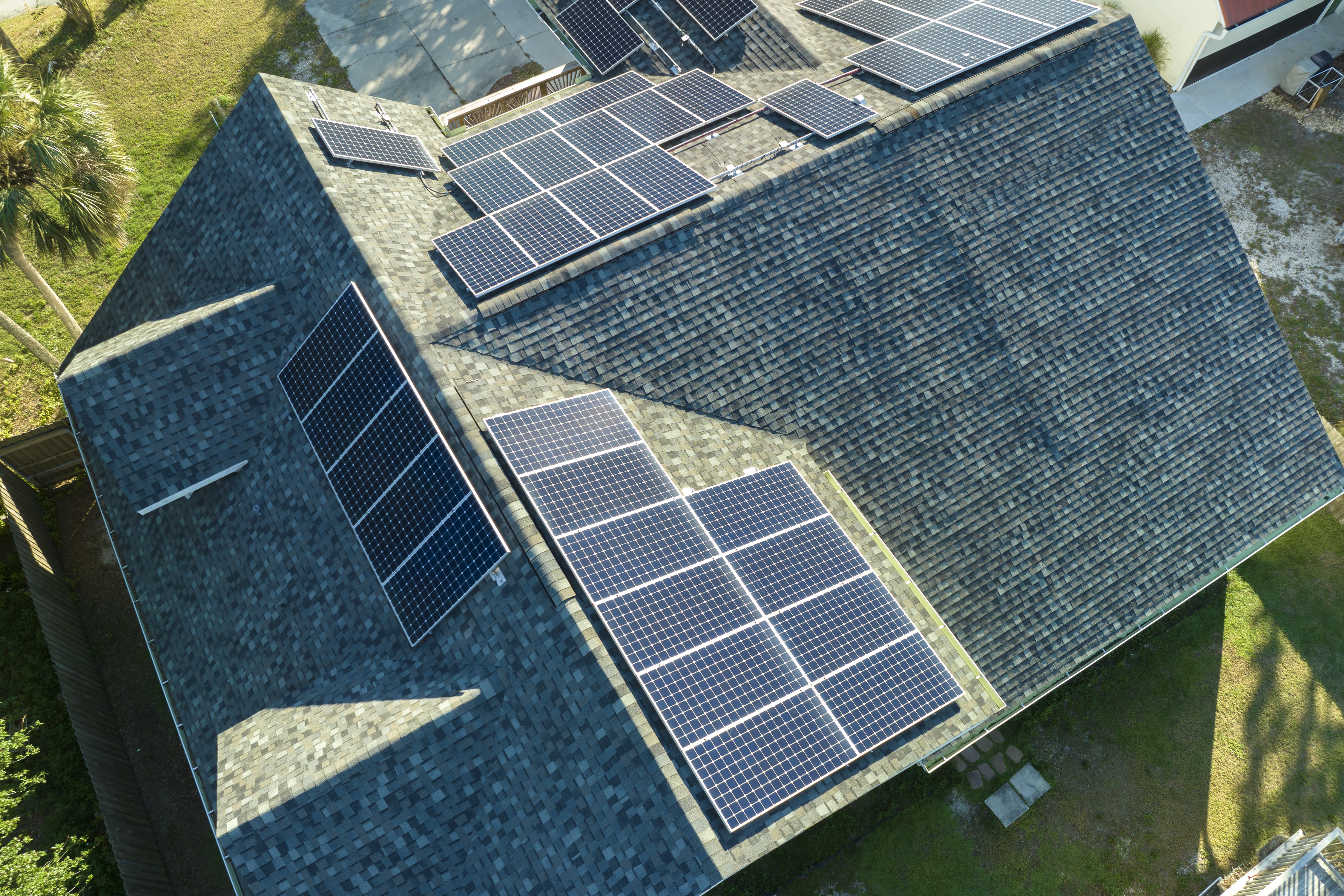
The homeowner kept their classic roof aesthetic. No visible panels. No structural concerns about rack-mounted systems.
But here's where the math accelerates: NYSEG's proposed 23.7% rate hike adds $33/month to a typical 600 kWh bill starting May 2026. That's $400 annually in additional costs.
For solar shingle owners, this rate increase boosts annual savings from $2,652 to $3,052. The payback timeline drops from nine years to 7.5 years.
If rates continue climbing 10-15% yearly through 2028—as projections suggest—payback accelerates to six years by 2028.
Why Rising Rates Work in Your Favor
Every utility rate increase improves your solar ROI. You locked in your energy production cost at installation. Your neighbors didn't.
GAF Timberline solar shingles maintain 84.8% of initial output after 25 years. That's a 2% degradation in year one, then only 0.55% annually. Your energy production stays consistent while grid rates climb.
The system we installed produces enough energy to offset 70% of annual consumption. In months with low usage, excess generation credits roll forward under New York's net metering rules.
The Contractor Revenue Opportunity Nobody's Talking About

A standard 2,000 square foot roof replacement nets contractors $8,000-$12,000 in markup.
Solar-integrated installations like GAF Timberline generate $42,000-$50,000 in total project value with 25-30% margins. That's $10,000-$15,000 per job—often more when bundling electrical hookups and system monitoring.
For a contractor completing 10 jobs per season, revenue jumps from $80,000-$120,000 to $100,000-$150,000. Add recurring maintenance streams from 25-year warranties, and the business model transforms.
The Six-Month Certification Window
Most contractors see cost as the barrier. The real constraint is time and expertise.
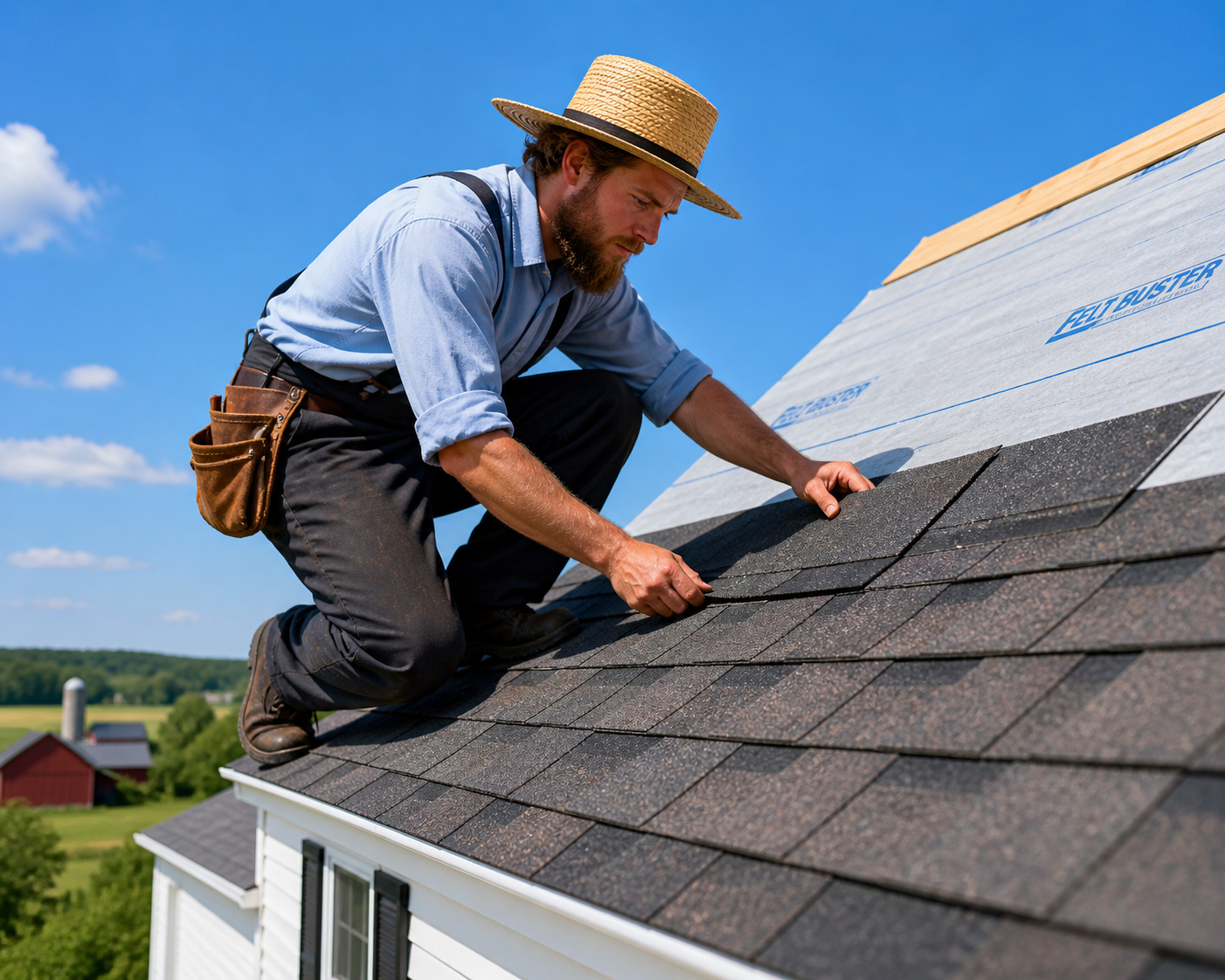
NABCEP or GAF solar shingle certification requires 6-12 months for crew training. Many Amish roofing teams—known for quality craftsmanship—need this full timeline to meet installation standards.
Contractors who invest in certification now capture first-mover advantages: 20-30% higher margins on early installations before 2026's projected 28% market expansion floods the field with new competitors.
Early adopters lock in premium pricing and build certified crews while competitors scramble for training slots. By 2026, waitlists extend six months, supply costs rise 15-20% from demand surges, and profit margins compress as everyone enters the market.
Financing the Certification Investment
The $18,000-$25,000 certification cost stops many small contractors. But support structures exist right now:
NABCEP's Les Nelson Scholarship Fund: Full tuition coverage for volunteer-experienced trades professionals pursuing PV Installer credentials (applications open through March)
NYSERDA's NY-Sun program: $1,000-$5,000 incentives per certified installation
NABCEP contractor grants: 50% coverage of training costs for Finger Lakes firms
Mosaic and GreenSky: 0% intro loans up to $25,000 for business upgrades, repayable over 12-24 months
Owens Corning's Solar PROtect: Free training modules with financing partners, reducing out-of-pocket to $10,000-$15,000
A Romulus contractor committing to GAF/Timberline certification in early 2025 can realistically close 8-12 installations in year one. At $45,000 average ticket and 28% gross margin, that's $100,000-$168,000 profit on $360,000-$540,000 revenue.
Add $15,000-$25,000 in standard roof referrals from solar leads, and first-year returns justify the certification investment.
The Agritourism Market Shift

Winery owners and B&B operators in the Finger Lakes region face a unique challenge: maintaining pristine vineyard views while managing climbing energy costs.
Bulky solar panels disrupt the aesthetic that attracts tourists. Solar shingles solve this problem.
These agritourism properties aren't just buying energy independence. They're branding their businesses as "green escapes" to attract millennials who book 40% more sustainable stays, according to Airbnb data.
The roof becomes a revenue driver through premium pricing and access to NYSERDA's $1,000-$5,000 agricultural rebates.
Certified installers who partner with these properties early own a niche market. By 2026, latecomers chase commoditized panel installations in a saturated field.
The Implementation Roadmap

From decision to generating power: 8-12 weeks.
Week 1-2: Free site assessment and design using drone scans for barn-style roofs
Week 3-6: Engineering review and NY-Sun rebate applications
Week 7-12: Seneca County permitting and NYSEG interconnection (the main bottleneck, but pre-filed templates accelerate approval)
Installation: 1-2 days for Amish crews layering GAF Timberline over existing roof decks
Final inspection: 1 week
Most delays hit during permitting—HOA restrictions or utility coordination add 2-4 weeks. Unexpected roof prep issues like ice dam damage create similar delays.
We front-load structural checks and HOA reviews to keep projects on schedule. Most Romulus homeowners generate power by early February when starting in November.
Material Lead Times and Supply Constraints
Current lead times run 3-4 months for GAF Timberline solar shingles. Tariffs increased material costs 20-60% over the past two years, creating supply chain pressure.
When 2026 demand surges hit, these lead times extend to 6+ months. Early orders lock in current pricing and production slots.
The Cost Comparison That Changes Everything

Traditional asphalt roof replacement: $8,000-$12,000 Traditional roof plus rack-mounted solar panels: $35,000-$45,000 Solar-integrated shingles: $42,000-$50,000 before incentives
After federal and state credits, solar shingles cost $25,000-$30,000—achieving price parity with traditional roof-plus-panels while eliminating the aesthetic concerns and structural load of rack systems.
GAF Timberline solar shingles average $2.50 per watt compared to traditional panels at $2.94 per watt. The integrated system costs less per watt while delivering the same energy production.
Each GAF Timberline shingle uses monocrystalline PERC solar cells with 57-watt power ratings. Systems withstand winds up to 130 mph—critical for Finger Lakes weather patterns.
The 25-Year Performance Guarantee
Solar shingles carry the same warranty as your roof because they are your roof. No separate maintenance contracts for racking systems. No concerns about roof penetrations creating leak points.
GAF's power production warranty guarantees 84.8% output after 25 years. Your energy savings compound over decades while utility rates climb.
Traditional solar panels typically pay for themselves in 6-9 years. Solar shingles historically showed 12-18 year payback timelines. But when you factor in combined federal and state incentives available through 2025, payback drops to 5-7 years in New York.
The higher-than-average electric rates in the Finger Lakes region accelerate these returns. A solar installation can pay for itself in about five years here.
What's Actually Keeping Homeowners Stuck

The core misconception isn't about technology readiness or system performance. It's about timing.
Homeowners believe waiting for lower prices maximizes savings. The data shows the opposite.
The 2026 price drop is real. But it doesn't overcome the loss of federal tax credits, the acceleration of utility rate increases, and the compression of state rebate funding.
Acting in 2025 turns rising rates into your advantage instead of your burden.
Every month you wait, NYSEG bills climb. Every year the federal tax credit remains available is a year of maximum incentive stacking. Every installation completed before the 2026 rush avoids supply constraints and contractor availability issues.
The math is clear: install now, lock in incentives, and let rising utility rates accelerate your payback timeline.
Or wait for 2026, pay more net cost without federal credits, and watch your neighbors generate power while you're still paying full retail rates to the grid.
The Revenue Map for Your Decision

We've analyzed the numbers from every angle—homeowner ROI, contractor opportunity, market timing, and incentive structures.
The window of maximum advantage closes December 31, 2025.
For homeowners: your net cost after incentives is lower in 2025 than it will be in 2026, despite material price drops. Your payback timeline accelerates as utility rates climb. Your roof gets replaced with a system that generates power for 25+ years.
For contractors: certification investment in 2025 positions you ahead of the 2026 market flood. First-mover margins of 20-30% above market rates justify training costs. Revenue per job increases 4-5x compared to standard roofing.
The data supports action now, not waiting.
Solar-integrated shingles deliver measurable energy savings. The research confirms the financial returns. The case studies prove real-world performance.
What you do with this information determines whether you capture the opportunity or watch it pass.