The Hidden Cost of Neglect: How Small Roofing Issues Become Major Financial Drains
The Hidden Cost of Neglect: How Small Roofing Issues Become Major Financial Drains
Your roof protects everything beneath it. Your inventory. Your equipment. Your people. Your revenue stream.
When a few damaged shingles or a small membrane seam separation appears, the repair might cost a few hundred dollars. Simple. Straightforward. Easy to schedule.
But here's what happens when you wait.
The $200 Problem That Becomes $15,000

We've seen this pattern repeat itself across commercial properties throughout New York. A routine inspection identifies a minor issue. The property owner decides to delay the work until the next maintenance cycle. Six months later, what started as a localized repair has spread into a full-scale restoration project.
The math tells the story clearly.
When you catch a minor roofing issue early, you're replacing limited material or resealing a localized area before moisture gets inside the system. A few hundred dollars. Maybe a thousand at most.
Wait six months, and water begins saturating insulation, weakening decking, and spreading beneath adjacent roofing components. Now you're replacing larger sections of roofing material along with compromised insulation and interior finishes. The cost rises into the low thousands once you factor in labor, materials, and cleanup.
If mold remediation becomes necessary, the project can easily exceed $15,000.
Industry data confirms this pattern. The 1-10-100 rule in roofing demonstrates that $1 spent on immediate prevention saves $10 in early repair interventions and prevents $100+ in major reconstruction costs.
What New York Weather Does to Your Roof

New York's seasonal transitions accelerate roofing deterioration in ways that property owners often don't realize until damage becomes visible inside the building.
Temperatures move above and below freezing within the same 24-hour period. This freeze-thaw cycle turns small vulnerabilities into structural concerns.
Here's the physical process:
During late fall and early winter, rain or melting snow seeps into tiny cracks around flashing, seams, or fasteners. When overnight temperatures drop below freezing, that trapped moisture expands as it turns to ice. The expansion puts pressure on surrounding roofing material and widens the openings slightly.
Each time temperatures rise again, more water enters the newly expanded gap.
The cycle repeats.
Over time, this process loosens fasteners, weakens adhesive bonds, and separates layers within the roof system. By the time spring arrives and heavier rain adds more moisture, the compromised areas allow water to reach insulation or decking beneath the surface.
That ongoing expansion and contraction beneath the membrane gradually shifts a small leak into a broader structural issue.
The Month-by-Month Timeline of Damage
Once moisture reaches the insulation or decking beneath the roofing surface, damage develops in stages that remain invisible from inside the building.
Month One: The Silent Beginning
Insulation begins absorbing water and losing its ability to regulate temperature. Your HVAC systems run longer without any obvious leak appearing below. Minor corrosion forms around fasteners or metal components within the roof assembly.
According to FEMA, mold growth can begin within 24 to 72 hours of water infiltration.
Month Three: Lateral Spread
Repeated freeze-thaw cycles or additional rainfall spread moisture laterally. Insulation softens further. The structural integrity of decking material begins to weaken. Adhesives that bond layers together lose their strength. Small pockets of trapped moisture form beneath the membrane.
Month Six: Visible Deterioration

The continued presence of water leads to warped decking, mold growth within insulation, and sagging sections of the roof surface. At this stage, the problem moves beyond localized repair. You're replacing multiple layers of the roofing system to restore stability and performance.
The Hidden Tax You're Already Paying

Before you see any interior staining or ceiling damage, your property is already costing you money.
When insulation becomes even partially saturated, its ability to resist heat transfer drops significantly. Conditioned air escapes more easily. HVAC systems cycle on more frequently to maintain the same interior temperature.
For a commercial property, this shows up as an increase of several percentage points in monthly heating or cooling costs.
That translates into hundreds of additional dollars depending on building size and usage patterns. Because these increases coincide with seasonal weather changes, most owners attribute them to colder winters or hotter summers rather than considering the roof as a contributing factor.
The connection is easy to miss because the roof system is out of sight, and the effect on energy performance develops gradually rather than through a sudden spike.
Research shows that well-maintained commercial roofs can lower HVAC costs by up to 15%.
Beyond Repair Bills: The Full Financial Impact

Roof neglect creates a chain of financial impacts that never appear on the contractor's invoice but still affect your business over time.
Moisture intrusion compromises insulation and interior finishes. Increased humidity levels affect stored materials or equipment, forcing replacement or additional climate control measures.
Water damage interrupts normal operations. Cleanup and restoration work reduces productivity or delays services while affected areas are dried and repaired.
Insurance considerations change. Repeated issues tied to ongoing wear rather than sudden events can result in higher deductibles or more scrutiny during renewal. In 2024, roof-related claims exceeded $30 billion, with costs up nearly 30% since 2022.
Property value declines. Visible deterioration or a history of water damage signals potential structural concerns to buyers or tenants.
When you combine hidden energy costs with possible downtime, these indirect effects make neglect significantly more expensive than the original repair would have been if addressed early.
Why Property Owners Delay Maintenance

We've worked with enough property owners to understand the psychology behind delayed maintenance decisions.
When a roofing issue doesn't actively disrupt operations, it feels like a future risk rather than a current expense. This makes it easier to justify putting off the repair in favor of something that has an immediate impact on daily business needs.
Owners tell themselves the leak is minor. It hasn't caused interior damage yet. It can be addressed during the next scheduled maintenance cycle when funds are more available.
There's a tendency to view preventive work as discretionary spending.
The benefit is avoiding something that might happen later rather than solving a visible issue now. On tight budgets, short-term cash flow feels more pressing than long-term asset protection, even when you understand the condition could worsen.
The gradual nature of roofing deterioration reinforces this mindset because small changes rarely trigger urgency until the problem becomes noticeable inside the building.
The ROI of Prevention: Real Numbers
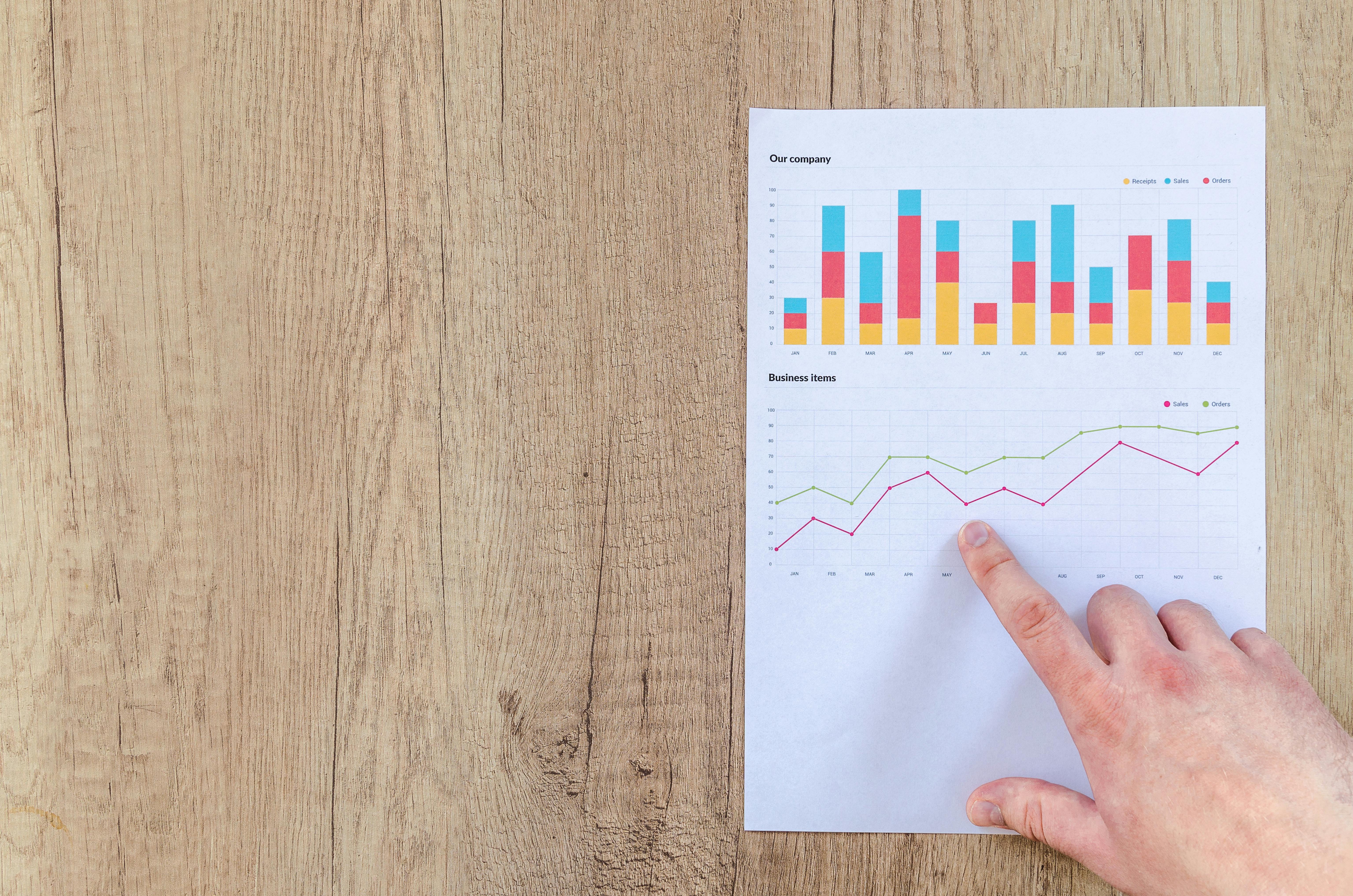
Here's how to make prevention feel like a current benefit rather than discretionary spending.
Frame it as a cost avoidance calculation.
If a twice-yearly inspection program costs around $500 to $1,000 annually, but catching a minor issue early prevents even one repair that might otherwise grow into a $3,000 to $5,000 project, the return becomes clear in avoided expense alone.
You can also factor in indirect savings:
Reduced energy use from dry insulation
Fewer disruptions to daily operations
Lower likelihood of interior restoration costs if moisture never reaches occupied spaces
When you compare avoided costs to the predictable annual inspection fee, the potential savings exceed the preventive investment by several multiples.
The Three-Year Comparison

Invest $1,000 per year in preventive inspections and minor maintenance. Over three years, you commit $3,000 to monitor and address small issues before moisture enters the roofing system.
Compare that to a reactive approach where a minor seam separation or flashing gap is left unaddressed and develops into a larger repair. Once you include insulation replacement and labor, that repair costs $3,000 to $5,000.
If that type of repair occurs even once within the same three-year window, the total expense already exceeds what preventive care would have cost for that entire period.
The Five-Year Reality

Over five years, it's not uncommon for multiple small problems to surface, potentially leading to one or two repair projects along with interior cleanup or energy losses tied to compromised insulation.
In that scenario, the reactive approach results in expenses reaching $8,000 to $10,000 or more, compared to the $5,000 invested in routine inspections and upkeep.
Studies show that for every $1 spent on preventative maintenance, building owners save $4 in repairs.
Warning Signs You Cannot Ignore

If you've been delaying maintenance, certain warning signs indicate moisture has already moved beyond the surface layer of the roof system.
Interior ceiling stains or discoloration are obvious signals, especially if they appear after rain or snowmelt.
A musty odor in upper floors or storage areas suggests trapped moisture within insulation or decking.
On the exterior, look for:
Bubbling or blistering in the roofing membrane
Cracked flashing around vents or rooftop units
Standing water that doesn't drain within a day or two
Sudden increases in energy usage without a clear operational cause may point to insulation that has become saturated.
If any of these conditions are present, schedule an inspection promptly. Delaying further allows water intrusion to spread, increasing the scope and cost of repairs.
Early Warning Signs You Can Spot Yourself

Before interior stains appear, you can spot early indicators during a quick visual check.
On the roof itself:
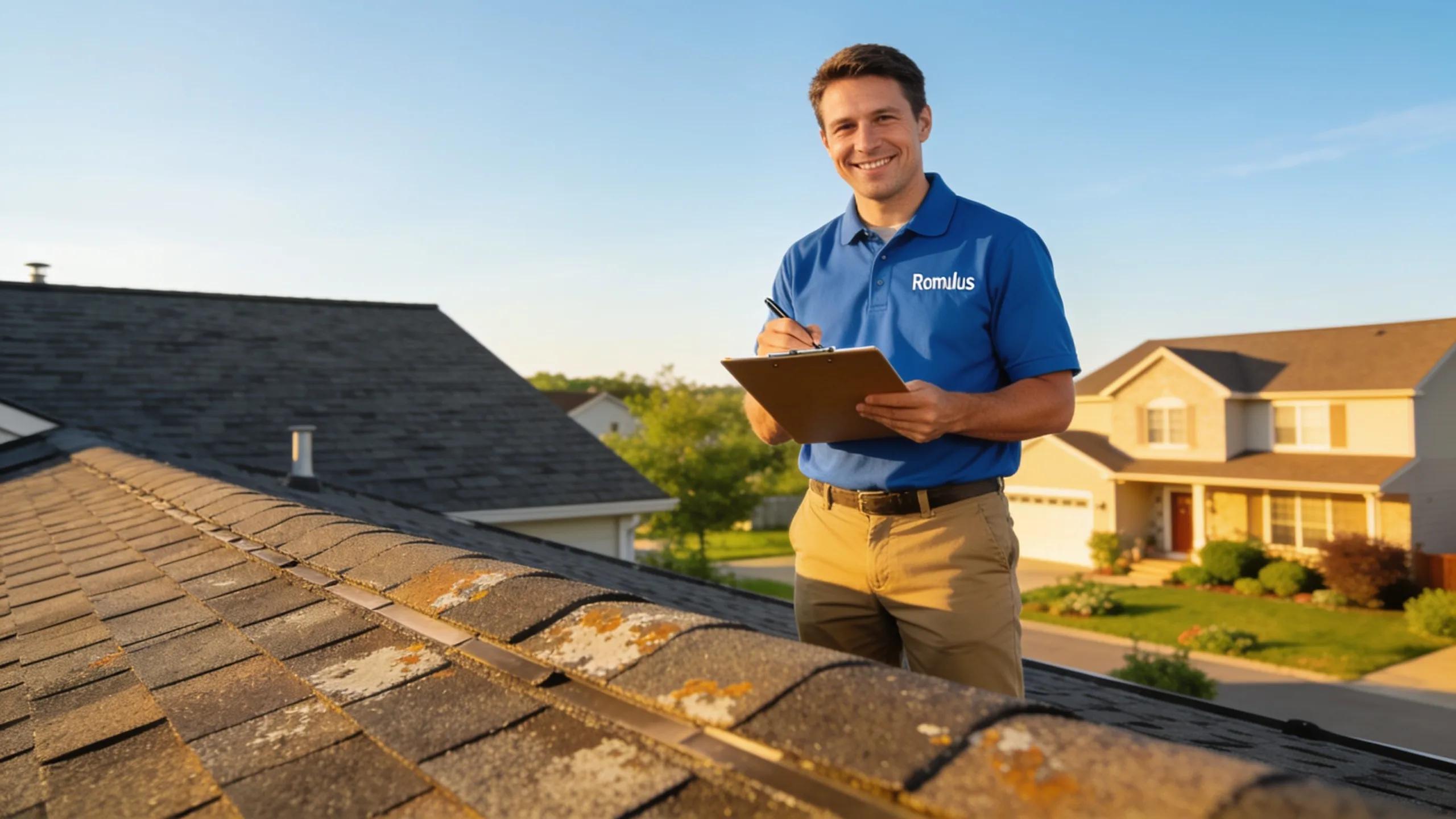
Shingles that are curling, cracked, or missing
Surface that appears uneven or slightly raised (suggests trapped moisture or loosening beneath the material)
Small gaps or rusted edges in flashing around vents, skylights, and rooftop equipment
Debris buildup near drains or areas where water pools after rain
Inside the building:
Subtle paint bubbling on upper walls or ceiling corners
Minor warping
Faint discoloration that appears after storms even if no dripping is visible
Catching these small changes early helps prevent moisture from spreading into insulation or structural components where repairs become more involved.
The Mindset Shift That Protects Your Investment
If every property owner in New York could change one belief, it would be this:
Stop thinking of roof maintenance as something you do in response to visible damage.
Start treating it as a routine checkup for an asset that is constantly exposed to weather stress.
Because of the freeze-thaw cycles, heavy snowfall, wind-driven rain, and seasonal temperature swings common in this region, even small vulnerabilities develop into larger problems beneath the surface long before any interior signs appear.
Viewing inspections as a regular part of building care rather than an occasional reaction allows minor issues to be addressed while they're still inexpensive and localized.
That single shift in mindset helps prevent moisture intrusion from spreading into insulation or structural components, reducing the likelihood of costly repairs and protecting the long-term performance of the roofing system.
Protecting What You've Built
Your roof is more than a building component. It's a revenue protection system.
When you maintain it proactively, you're not just avoiding future repairs. You're managing total ownership cost in a way that protects operating budgets and building performance.
The choice is clear: invest a predictable amount in prevention or face unpredictable expenses in emergency repairs.
We've seen both approaches play out across hundreds of properties. The property owners who treat roof maintenance as routine asset protection consistently spend less, experience fewer disruptions, and maintain higher property values over time.
Your roof is working for you right now. The question is whether you're working to protect it.
Schedule a free inspection to identify small issues before they become expensive problems. We'll walk your property, document any concerns, and provide a clear assessment of what needs attention now versus what can wait.
No pressure. No sales pitch. Just honest guidance from people who understand how New York weather affects roofing systems and what it takes to protect your investment for the long term.