The Hidden Revenue Leaks in Your Business Foundation
The Hidden Revenue Leaks in Your Business Foundation
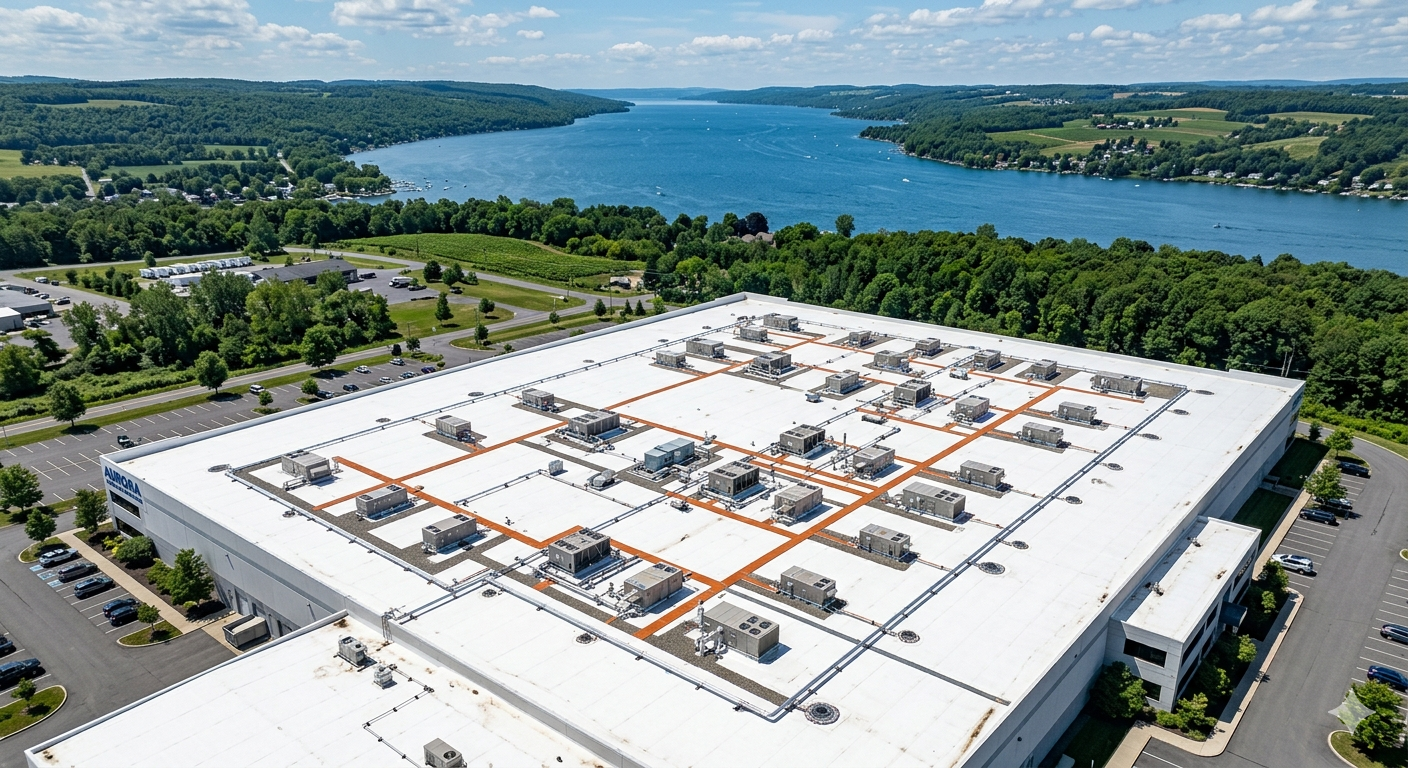
A commercial property owner in Kansas City watched his utility bills climb steadily for six months. He assumed it was seasonal. Higher usage. Normal business fluctuations.
Then a routine roof inspection revealed the truth.
Moisture had been trapped beneath a section of the membrane for months. The insulation had become saturated from a slow-developing seam failure. The HVAC system had been working overtime to maintain temperature even though there were no visible signs of a leak inside.
That extra strain translated into higher monthly energy costs that had quietly been draining profits long before any ceiling discoloration appeared. Once the compromised section was repaired and insulation replaced, energy usage dropped noticeably compared to the same period the previous year.
The owner realized the roof had been affecting operational expenses in a way that was not immediately obvious.
Your business has the same problem.
The Invisible Deterioration Principle

We've worked with startups and small businesses since 2020, and we've discovered something most entrepreneurs never see until it's too late: most financial problems start as tiny process problems.
The equivalent of saturated insulation shows up as small operational inefficiencies that quietly compound over time while being mistaken for normal growing pains or market conditions.
Research confirms what we see every day: companies lose 20-30% of their revenue due to operational inefficiencies. You're essentially throwing away one-fifth to one-third of everything you earn through hidden leaks.
Here's what that looks like in practice:
Marketing spend that continues month after month without a clear return because campaigns are not being tracked properly
Subscription tools that overlap in functionality but go unnoticed on the expense sheet
Manual workflows that force staff to spend hours each week on tasks that could be automated
Pricing that has not been updated to reflect increased costs, which slowly compresses margins even as sales volume appears steady
Inventory management issues that lead to excess stock tying up cash flow
Customer acquisition efforts that focus on channels producing low retention rates
These types of inefficiencies rarely cause immediate disruption.
But over several billing cycles they can reduce profitability in the same way compromised insulation raises energy costs without triggering an obvious leak.
The Cost Cascade Effect

One service-based business came to us because revenue growth had slowed. Their response was logical: increase ad spend each month to generate more leads and maintain momentum.
A quarterly review revealed the real problem.
New customers were still coming in. But their average project value had declined due to an outdated pricing structure that had not kept pace with rising delivery costs.
They were throwing more money at marketing to solve what was actually a margin problem.
Because that issue was caught early, the business was able to adjust its service packages and margins before cash flow tightened significantly. Within a few billing cycles, profitability began stabilizing without requiring further increases in marketing spend.
Had the pricing imbalance continued for another quarter or two, the owner likely would have responded by cutting staff or reducing service capacity to manage expenses.
Small adjustments made early prevent much larger financial corrections later.
This matters because cash flow issues cause 82% of small business closures according to U.S. Bank. The invisible leaks you ignore today become the cash crisis that closes your doors tomorrow.
The Conversion Gap Nobody Sees

When we work with a new client through the REVREV Matrix, we start by mapping how money moves through the business from acquisition to fulfillment. This helps highlight whether marketing spend is translating into profitable customers or simply driving volume without retention.
We review recurring expenses and internal workflows to spot overlapping tools or manual tasks that consume time without improving output. We compare pricing structure against delivery costs to determine whether margins are being quietly compressed by rising inputs or outdated packages.
We examine inventory turnover, customer lifetime value, and lead conversion patterns to see whether resources are being tied up in slow-moving stock or short-term buyers who do not generate repeat business.
One place stands out above all others.
Time and money quietly disappear in the gap between when a lead first expresses interest and when that interest is converted into a paying customer.
Many small businesses invest heavily in attracting prospects but do not have a consistent process for follow-up, qualification, or onboarding. Opportunities stall or drop off before generating revenue.
This happens when inquiries sit unanswered. When proposals are delayed. When communication becomes fragmented across different platforms.
Even when the initial marketing effort is effective, the lack of a streamlined handoff from acquisition to conversion results in missed sales that never show up in standard expense reports.
The data is stunning: responding to leads within 5 minutes can increase your chances of converting them by up to 100x compared to waiting 30 minutes. Yet the average lead response time across industries exceeds 40 hours.
You're hemorrhaging opportunities in this exact gap.
Over time, this kind of leakage reduces the return on marketing spend and forces the business to seek more leads to maintain revenue, rather than improving the efficiency of converting existing interest into completed transactions.
The Invisible Leak of the Next Five Years

Looking ahead to 2025-2030, one invisible leak will drain startups and small businesses more than any other.
We call it tool-driven inefficiency.
Companies continue adding software platforms, automation services, and subscription-based tools in an effort to improve productivity without fully evaluating whether those systems are actually improving output or simply increasing overhead.
As more operational processes move into digital environments, it becomes easy to stack multiple solutions that perform similar functions or require ongoing management time from staff. This quietly erodes margins through both direct subscription costs and indirect labor spent maintaining integrations.
The numbers are alarming: Organizations use an average of 112 SaaS applications, with large enterprises using up to 447 different tools. Companies wasted an average of $18 million on unused SaaS licenses in 2023, a 7% increase from the prior year.
On average, companies use just about half of the software licenses they have purchased.
Many entrepreneurs view these tools as investments in growth. But without periodic review they may end up paying for features they do not use or workflows that do not generate measurable revenue impact.
Over time, this kind of unchecked accumulation creates a situation where operating expenses rise steadily even as sales remain flat, making it harder to scale sustainably.
The Psychological Trap

New tools promise relief from very real operational pain. They are usually positioned as fast solutions to problems that feel urgent in the moment.
When a business is struggling with lead flow, fulfillment delays, or customer follow-up, the idea that a platform can automate or streamline those tasks is appealing because it seems easier than pausing to rework existing processes.
There is also a sense of progress that comes from adopting something new.
This can make it feel like action is being taken even if the underlying workflow has not changed.
Over time, this creates a cycle where entrepreneurs respond to each new challenge by layering on another system rather than stepping back to assess whether current tools are being used effectively.
The subscription model reinforces that pattern because the cost is spread out monthly and may not feel significant until multiple services accumulate.
Without periodic review, it becomes difficult to see how these additions affect overall margins, which is why the next software purchase often feels like the answer instead of examining what is already in place.
Entrepreneurs are confusing motion with momentum.
From Solution Seeking to System Thinking

The biggest shift that has to happen is moving from solution seeking to system thinking.
This means stepping back from the urge to fix every symptom with a new tool and instead asking what part of the business process is creating that symptom in the first place.
When someone first enters the REVREV Matrix, they are often focused on solving isolated problems like lead generation or fulfillment delays. But the mindset transformation begins when they start viewing those issues as signals that something in the underlying workflow is misaligned.
That change usually involves replacing questions like "what software can help me do this faster" with questions such as "where is time or money being lost between acquisition and delivery."
As they begin mapping how resources flow through the business, it becomes easier to see that adding another platform may only mask inefficiencies rather than remove them.
The result is a shift toward evaluating whether existing systems are being used effectively and whether processes can be simplified before introducing new complexity.
Over time, this approach encourages more deliberate decision making.
It reduces the tendency to react to short-term challenges with incremental purchases that do not address root causes.
The AI Paradox

Technology will likely make some of these leaks easier to detect. But it may also introduce new ways for revenue to slip through the cracks that are harder to notice without intentional oversight.
As AI-driven tools begin tracking customer behavior, forecasting demand, or automating follow-up, businesses may gain better visibility into where prospects disengage or processes slow down.
At the same time, reliance on automated decision making can create blind spots if systems are set up without a clear understanding of the underlying workflow.
For example, predictive analytics might flag leads that appear less likely to convert, leading to reduced follow-up even though those customers could become profitable with a different engagement approach.
Similarly, automation can handle routine tasks efficiently but may obscure where manual intervention is still needed to maintain quality or customer experience.
The result could be a shift from obvious inefficiencies like delayed responses to more subtle issues such as missed opportunities caused by over-reliance on algorithmic assumptions.
In that environment, regular review of both data outputs and operational processes will remain important to ensure that new technology supports business goals rather than quietly redirecting resources away from potential growth.
Building Leak Detection Systems

Proactive revenue protection starts by building simple feedback loops into each stage of the acquisition-to-delivery process so that performance is monitored continuously rather than reviewed only after results decline.
In practice, that means defining a small set of operational indicators and tracking them at regular intervals:
Response time to new inquiries
Conversion rate from proposal to sale
Fulfillment turnaround
Repeat purchase frequency
These measures act like early warning signals that highlight when interest is not being converted efficiently or when delivery delays may affect customer satisfaction.
The REVREV Matrix encourages entrepreneurs to review these indicators alongside financial outcomes so that trends can be addressed while they are still manageable.
Instead of waiting for revenue to drop, adjustments can be made when conversion slows or retention dips.
This reduces reliance on reactive decisions.
Over time, integrating these checkpoints into routine operations helps ensure that potential leaks are identified through data patterns rather than through crisis events that require more disruptive changes.
Businesses that conduct quarterly efficiency audits see a 12% reduction in operational waste. Companies that excel at managing their sales pipeline experience 28% higher revenue growth.
The inspection process pays for itself.
What 2030 Will Reveal

By 2030, the biggest difference you will see is that the businesses that thrived treated leak prevention as a core operating discipline rather than an occasional fix.
They built simple, repeatable checks into their weekly rhythm and made small corrections early instead of waiting for revenue drops to force dramatic changes.
The winners understood that most financial problems start as tiny process problems: slow follow-up, inconsistent delivery, rising costs that are not reflected in pricing, or customer churn that is ignored until it becomes visible in monthly numbers.
They monitored those signals like vital signs and responded fast when something drifted.
They also resisted the temptation to chase quick fixes and instead focused on tightening the system they already had by improving clarity, accountability, and consistency across the customer journey.
While struggling businesses stayed reactive and kept searching for the next tool, tactic, or campaign to save them, the successful ones treated the business like an asset that requires routine maintenance.
They established clear standards, measurable indicators, and regular adjustments that protected cash flow and capacity before problems became crises.
The Complexity Problem

Many future revenue leaks will not come from obvious cost increases or declining sales.
They will come from gradual complexity that builds up inside the business over time.
As companies grow, they often add new processes, partnerships, or service lines that seem beneficial on their own but can create friction when layered together without coordination.
That friction might appear as slower decision making, inconsistent customer experiences, or delays in delivering value.
All of which can reduce profitability even when revenue looks stable.
More entrepreneurs are beginning to recognize the value of simplicity and transparency in their operations, which allows them to identify where effort is not translating into results.
At the same time, it is important to remain attentive to how technology and automation are integrated so that they enhance rather than complicate workflows.
Keeping systems aligned with business goals can help ensure that growth does not introduce hidden inefficiencies that are difficult to reverse later.
Escape the Maze and Enter the Matrix

For brave individuals like you, your Road to Revenue is like entering a business maze. Inside the maze, you won't find any revenue signs to point you in the right direction or any Revenue Maps to help you navigate out of the maze.
That is the problem.
Today, millions of new business owners enter the maze without revenue-generating experience. As a result, those who enter often lack the ability to buy or sell their way out of the middle of the maze. Void of any clear directions, the maze often leads to one dead-end after another.
Entering the maze without any means of navigating the gauntlet of challenges of building your business is like entering a Road to Ruin instead of your Road to Revenue.
When the missteps of the business maze seem never ending, and time and money are running low, this kind of stress can increase blood pressure, leaving you short of breath and in desperate need of C.P.R. (Cash, Profit, and Revenue).
Revenue is your answer.
The REVREV Matrix is the first-of-its-kind cross-industry turn-key business navigation system for your entrepreneurial journey. We help your side hustle, startup, or small business escape the maze and enter the matrix.
We provide "A Voice You Can Trust", "A System You Can Follow", and "Support You Can Count On" in our cross-industry turn-key REVREV Business Navigation Matrix designed for side hustles, startups, and small organizations.
It's your all-in-one business-building assembly line, where, instead of assembling cars, it assembles businesses, helping you build your business part by part.
Inside the REVREV Matrix are trademarked Revenue Maps. Every Revenue Map is like a mini Roadmap to Revenue that helps you avoid Roads to Ruin. Designed to point you in the right direction, they guide you at every twist and turn on your entrepreneurial journey.
Our Revenue Maps help you navigate away from pitfalls, potholes, and cliff edges. The primary purpose of a Revenue Map is to help you solve highly specific problems with highly specific solutions.
These are the kind of business problems that business owners inevitably face on a monthly, weekly, and even daily basis.
We integrate tools, tips, technologies, teachings, and training into a comprehensive synchronized business solution to save you time and money.
All you need is to be ready, willing, and able to learn at your own pace, build with turn-key systems, and engage on-stand-by business networks ready to go.
The maze is your foe. The matrix is your friend.
We believe everyone is a business, and we believe everyone has more business income in them. You are revenue, because revenue lives in you.
Isn't it time you enter God's Economy and experience your Revival of Revenue?