Metal vs Asphalt Roof in Winter | Finger Lakes Guide - LS Roofing LLC
Why Metal Roofing Outperforms Asphalt in Finger Lakes Winter Conditions
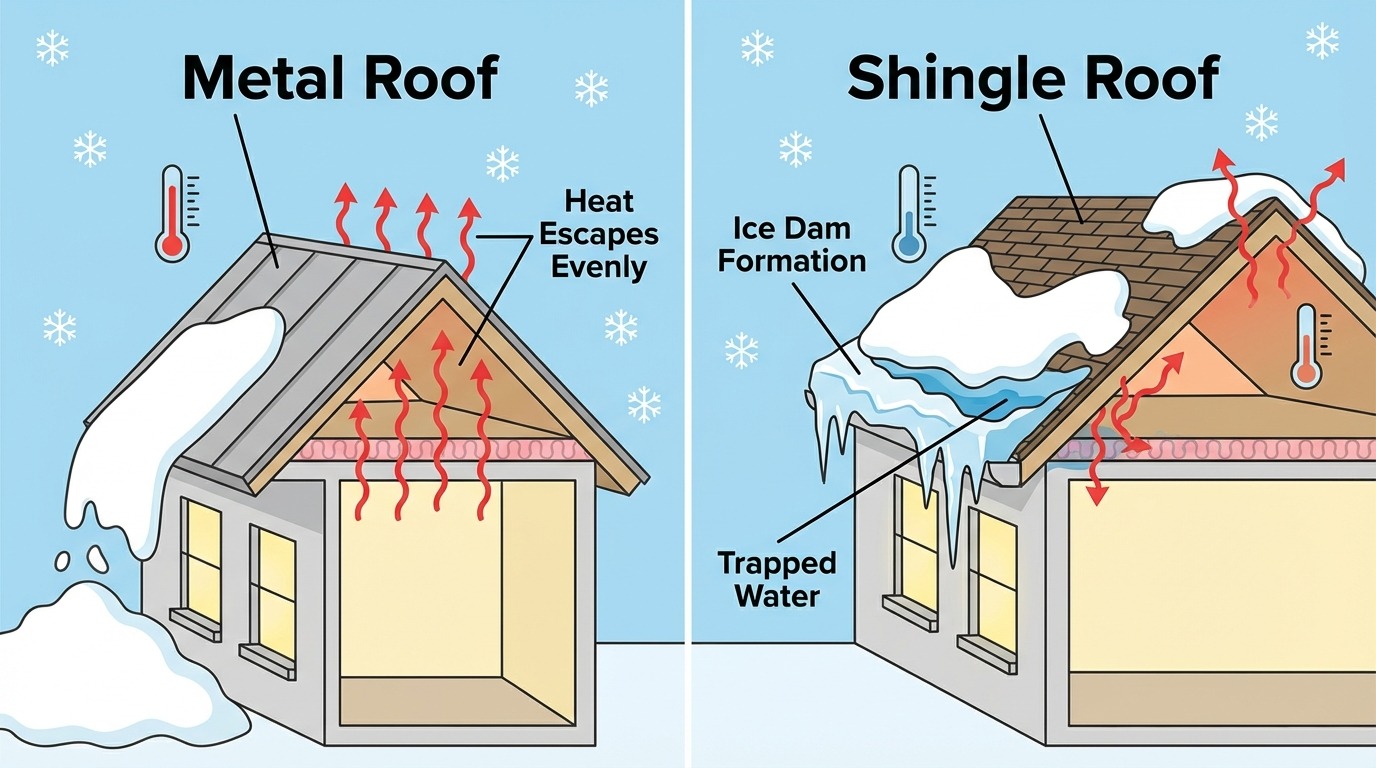
When homeowners in the Finger Lakes region experience their first major ice dam, the damage often comes as a shock. Water pours through ceilings, insulation gets saturated, and emergency repair bills climb into thousands of dollars.
The root cause isn't just bad luck or extreme weather.
It's a fundamental mismatch between roofing material and regional climate demands. Asphalt shingles simply weren't designed to handle the 125 lake-effect precipitation events that hit the Finger Lakes during an average 11-winter period.
The Thermal Dynamics Behind Ice Dam Formation
Ice dams form through a specific sequence of thermal events that asphalt roofing accelerates rather than prevents.
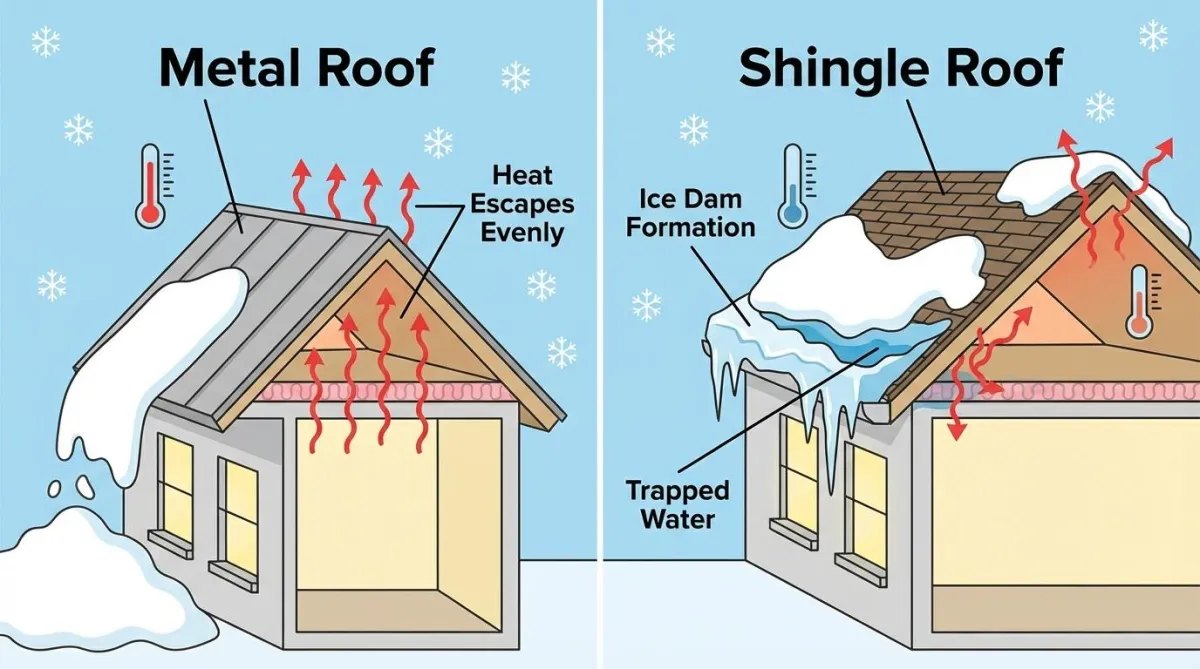
Heat escapes from your attic through poor insulation or ventilation, warming the roof sheathing unevenly. Snow melts on the warmer upper slopes while the overhanging eaves stay locked at sub-freezing temperatures. That meltwater runs downhill, hits the cold edge, and refreezes layer by layer.
Asphalt's low thermal conductivity traps solar heat in localized hot spots. Its rough granule surface grips snow in place, fueling repeated freeze-thaw cycles that build the dam higher and force water under the shingles.
Metal roofing stops this process cold.
High conductivity distributes any escaping heat evenly across the entire panel instead of creating temperature spikes. Reflective coatings bounce back sunlight to keep the surface much closer to ambient air temperatures. The smooth, low-friction finish lets snow slide off in sheets before it ever has time to melt and refreeze.
This completely short-circuits the warm-roof-to-cold-eave imbalance that asphalt can't handle during the Finger Lakes' 40-plus daily freeze-thaw cycles.
What Happens During a Single Freeze-Thaw Cycle
Understanding material behavior at the microscopic level reveals why asphalt fails and metal endures.
During one freeze-thaw cycle on an asphalt shingle roof, water slips into the porous granule surface and asphalt binder through micro cracks or lifted edges. As temperatures plunge below freezing, that water turns to ice and expands approximately 9% in volume.
This generates thousands of pounds per square inch of pressure.
The expansion acts like a hydraulic jack, prying shingle layers apart, delaminating the fiberglass mat from the asphalt, and widening cracks. The material's low thermal conductivity traps uneven heat pockets that make the damage worse.
On the thaw, meltwater rushes deeper into the fresh openings. The cycle repeats, fatiguing the brittle asphalt until granules slough off and deck rot sets in.
Metal roofing skips this destructive loop entirely.
High thermal conductivity instantly spreads any attic heat evenly, so the entire panel stays closer to ambient air temperature. No hot upper slope versus cold eave contrast develops. Since the smooth, non-porous surface never absorbs water, there's zero internal expansion pressure.
Any ice simply forms on top and slides off cleanly or melts uniformly without prying seams or cracking the protective coating.
The Three-Year Progression of Asphalt Failure
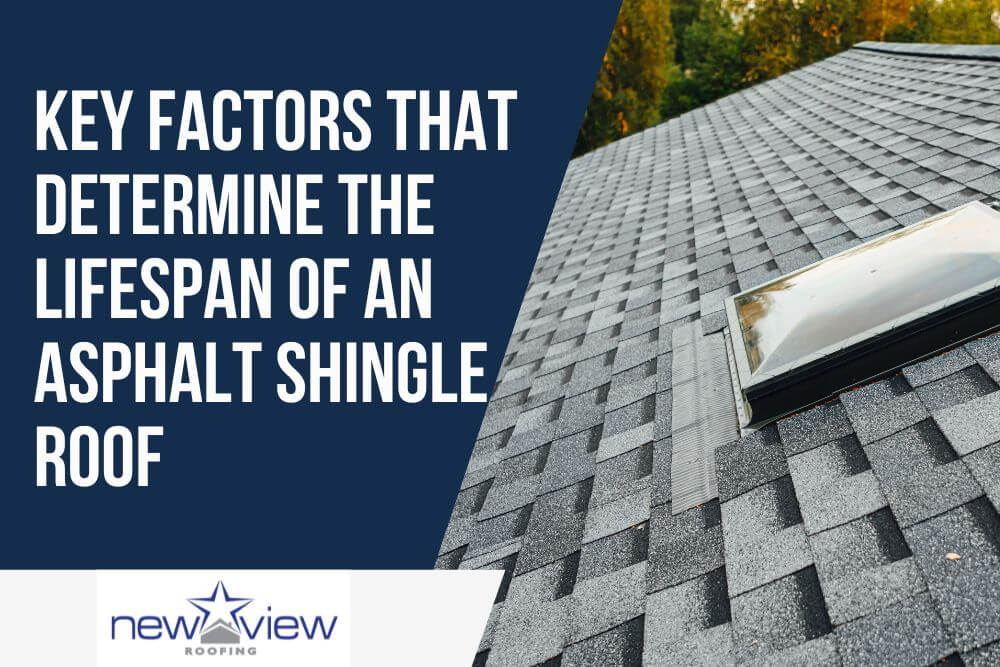
Documentation of actual installations near Seneca Lake shows how freeze-thaw damage compounds over time.
Year one: Light granule loss and faint curling on sunny slopes from ice expansion pressure working into micro cracks.
Year two: Curls deepen into visible splits with water stains bleeding through to the attic. The fiberglass mat starts delaminating in patches.
Year three: Shingles lift in sheets, exposing rotted decking and forcing full replacement after repeated prying has turned small gaps into structural soft spots.
This textbook progression demonstrates how freeze-thaw fatigue compounds until the roof gives up way before its rated life. The typical 15-25 year lifespan of asphalt shingles often gets cut short in harsh climates.
Installation Methodology That Works With Winter Physics
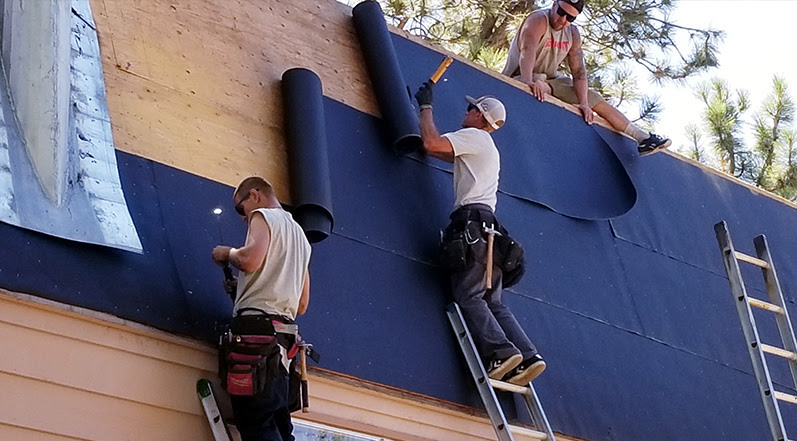
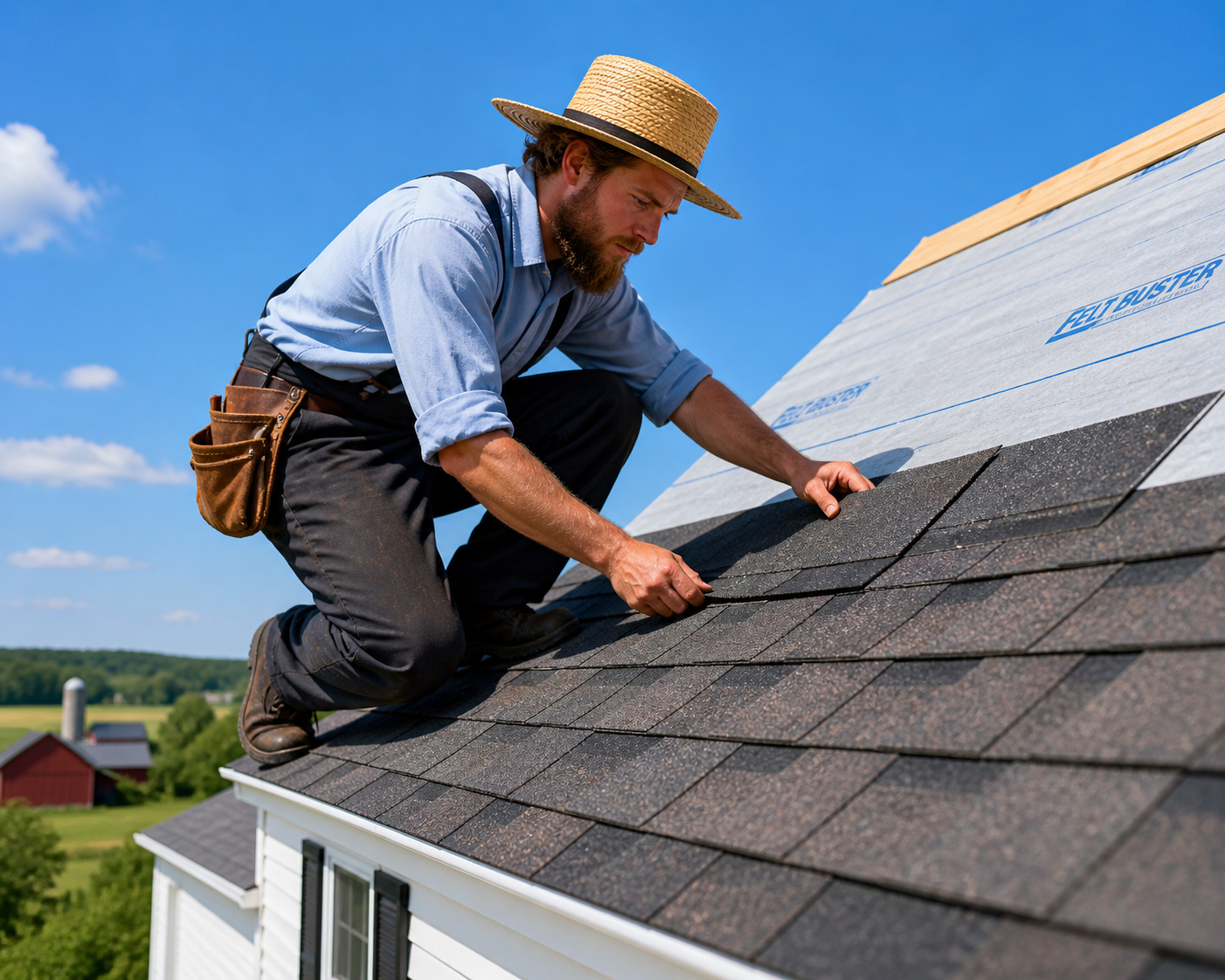
Replacing failed asphalt roofs with metal systems requires a complete shift in installation approach.
We roll ice-and-water shield membrane over the full roof deck instead of stopping at the eaves. We build continuous soffit-to-ridge ventilation using custom intakes and exhaust vents to keep attic temperatures perfectly balanced and eliminate warm spots that trigger uneven melting.
Standing-seam panels get installed with concealed expansion clips that let the metal move freely during every temperature swing. We use heavier 26-gauge material with baked-on stone coating for snow-load strength.
Every flashing penetration gets hand-sealed with overlapping joints and premium butyl tape. No rushed corners.
These changes mean the metal never absorbs water, never experiences internal ice pressure, and simply sheds snow and ice cleanly. The same brutal winters that destroyed old shingles become something the new roof barely notices.
Why Metal Panels Need to Move
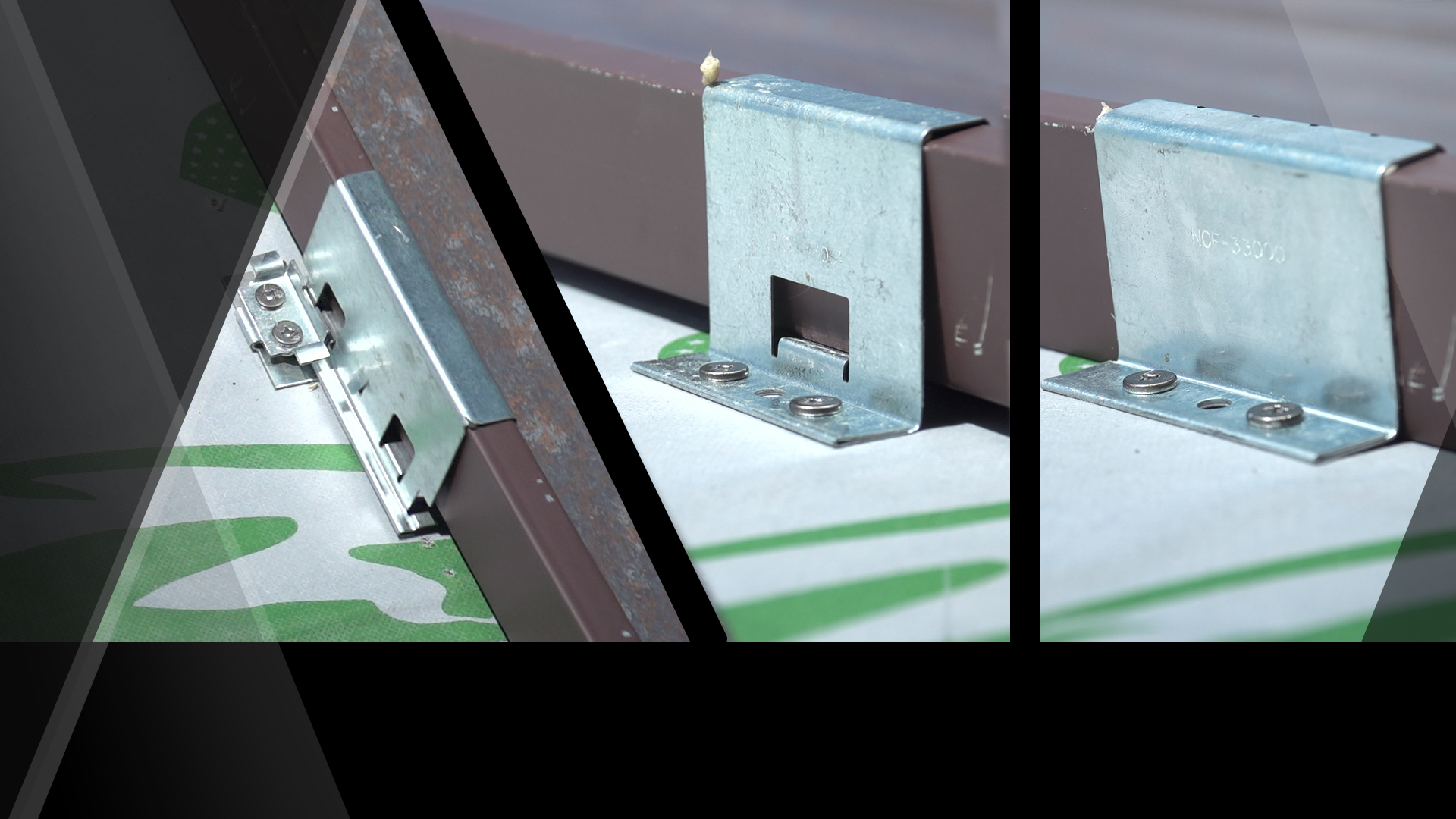
Most homeowners don't realize metal roofs require thermal movement accommodation.
When temperatures swing 50 or 60 degrees in a single Finger Lakes day, metal panels physically grow or shrink by up to a quarter inch over a twenty-foot run. Steel expands roughly six and a half millionths of an inch per inch for every degree of change.
Concealed expansion clips let every panel slide freely inside the seams so natural movement happens without stress on the structure or fasteners.
When installers skip the clips and lock everything down with fixed screws instead, the panels buckle into waves called oil-canning. Seams pull apart. Fastener holes tear open, creating gaps that let water sneak underneath during the next rain or melt.
What should be a watertight roof turns into leaks and callbacks within a season or two.
Standing-Seam vs Stone-Coated Performance in Heavy Snow
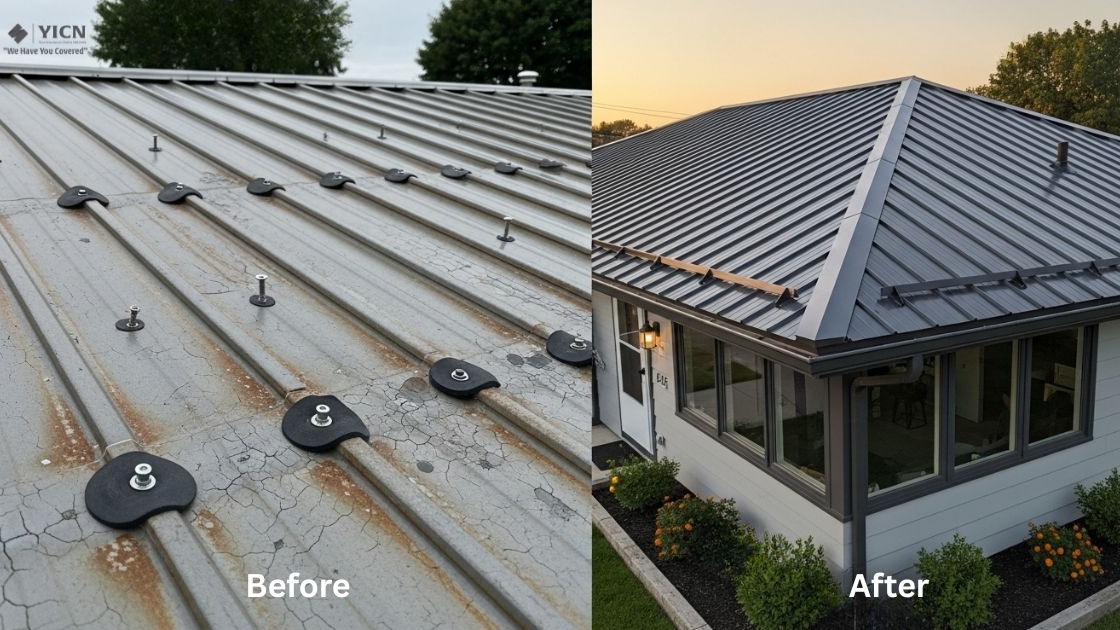
The snow-shedding difference between these two metal options shows up dramatically during massive lake-effect dumps around Seneca and Cayuga.
Standing-seam panels, with their dead-smooth surface and concealed seams, let heavy wet snow slide off in huge sheets within hours. Even under two or three feet of accumulation, friction is almost zero. The reflective coating keeps surface temperature close to air temperature, preventing sticking.
Stone-coated roofs have textured granule finishes that grip snow just like asphalt does.
Snow piles up longer, compacts into dense layers, and often needs manual clearing or snow guards to avoid sudden avalanches or ice-dam buildup. In big storms, standing-seam roofs clear themselves cleanly while stone-coated ones stay loaded for days, adding extra weight stress.
But here's the important distinction: Stone-coated metal still protects from ice dams far better than asphalt ever could. The metal conducts heat evenly across the whole surface instead of trapping pockets that cause uneven melting and refreezing at the eaves.
Even when snow sticks longer, the lack of water absorption and uniform temperature mean no water backs up under the panels like it does with shingles. Ice dams rarely form at all.
It's a smart compromise for style without losing the big winter advantages.
The Real Cost Over 20 Years

Initial price comparisons miss the complete financial picture.
For a typical 1,800-2,200 square foot home in the Finger Lakes:
Asphalt Shingle Roof:
Initial installation: $8,500-$12,000
Ice dam and leak repairs (2-3 major events): $4,000-$9,000
Emergency calls, mold remediation, minor fixes: $2,500-$5,000
Premature full replacement around year 16-18: $11,000-$14,000
Total 20-year cost: $26,000-$40,000
Standing-Seam or Quality Stone-Coated Metal Roof:
Initial installation (including proper ventilation, ice shield, expansion clips): $18,000-$26,000
Ice dam repairs: Almost none
Emergency or major repairs over 20 years: $0-$1,500
No replacement needed (still has 10-20 years left)
Total 20-year cost: $18,000-$27,500
Most homeowners who go with metal end up saving $8,000 to $15,000 over 20 years in this region, even after paying the higher upfront price.
The biggest difference isn't the initial cost. Asphalt keeps sending surprise bills every few winters while metal just sits there quietly doing its job.
When Ice Dam Damage Cascades Through Your Home
A specific example from just outside Watkins Glen illustrates how quickly damage spreads.
The homeowner called at 2 a.m. during a heavy lake-effect storm. Water was already pouring through the ceiling in the master bedroom and dripping into the kitchen below.
On the roof, a thick ice dam had built up along the entire back eave. Some spots measured over 18 inches high. Meltwater had been forced under the asphalt shingles for days, ran down the roof deck, and found its way through failed flashing at the chimney and several valleys.
The water had saturated the plywood decking, leaked through attic insulation, and was running down interior walls and light fixtures.
Inside, ceiling drywall was sagging and stained in a 12-foot-wide section. Insulation was dripping wet and falling in clumps. Water had wicked into bedroom walls, ruining paint and starting to buckle the hardwood floor below.
The emergency repair bill that night came to $4,800 just for tarping, water extraction, and temporary fixes. Full restoration and roof replacement totaled over $17,000 once everything dried out and damaged decking and shingles got replaced.
That single ice dam turned a quiet winter night into thousands of dollars in damage that spread from the roof all the way down into living spaces in just a few days.
What Roof Decking Reveals About Long-Term Performance

Tearing off damaged asphalt shingles at that Watkins Glen home revealed brutal deck conditions.
Large sections of plywood were dark, soft, and spongy, especially along eaves and in valleys where water had been working its way in for years. You could literally push a screwdriver through the wood in places.
Freeze-thaw cycles had turned the plywood into layered mush. Top veneers were delaminated, swollen, and separated, with black rot streaks running between the plies. Around the ice dam area, decking was completely saturated and starting to sag between rafters.
We ended up replacing about 40% of the entire deck because it was structurally compromised.
In comparison, decking under old metal roofs that have been up 25-35 years in the same Finger Lakes conditions usually looks remarkably good. The plywood is still firm, dry, and structurally sound with only minor surface weathering.
Because metal doesn't absorb water and sheds snow and ice so effectively, very little moisture ever reaches the deck.
Under asphalt, you often find hidden rot and delamination that has been quietly destroying the deck for a decade. Under properly installed metal, the deck often looks almost as good as the day it was nailed down.
The Ventilation Mistake That Undermines Metal Performance
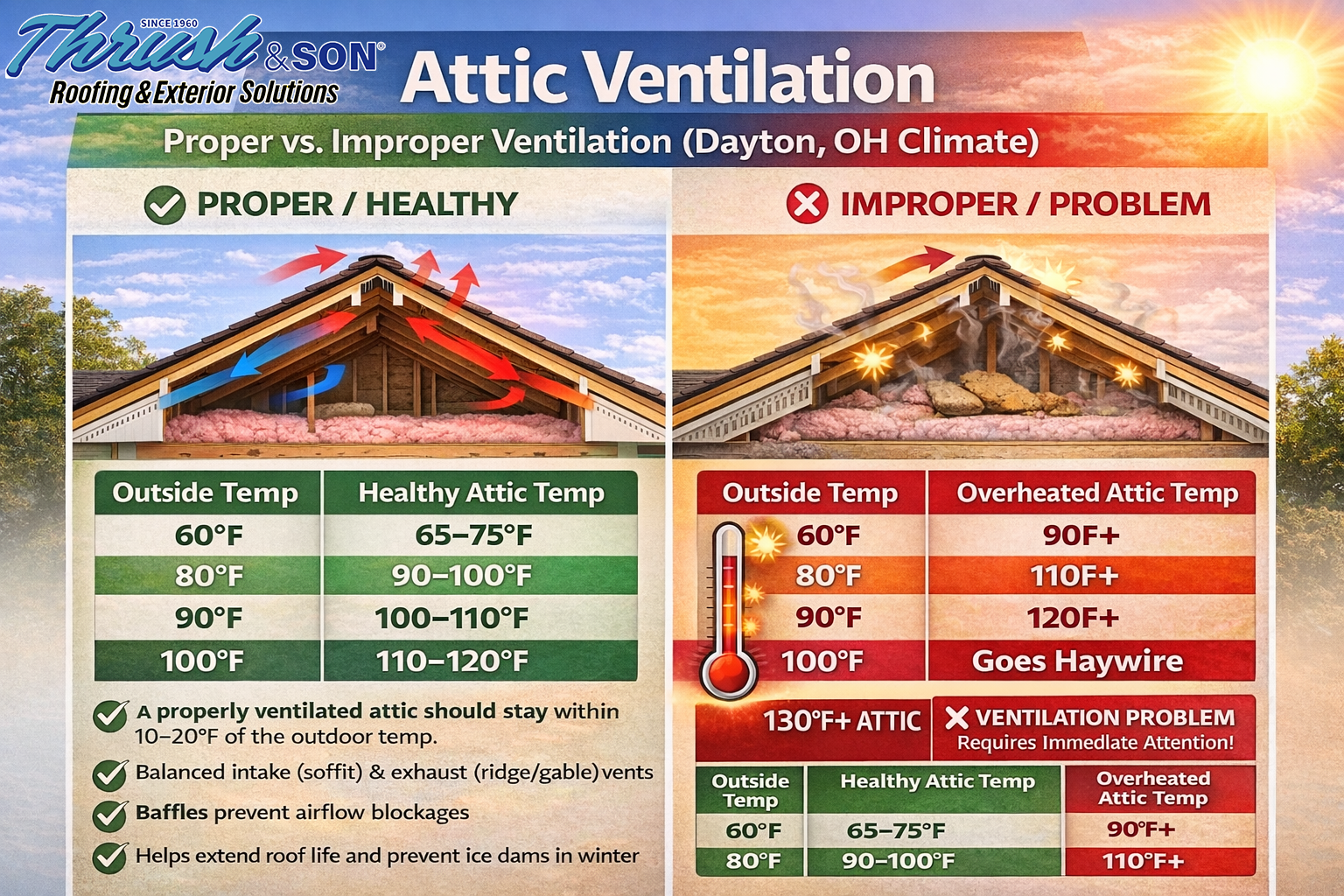
Proper ventilation is critical to metal roof performance, yet installers consistently make one major error.
They treat ventilation as an afterthought and only install ridge vents while blocking or severely restricting intake vents at the soffits.
The attic becomes a heat trap. Warm air rises but can't exit efficiently, so it builds up right under the metal panels. Even though metal conducts heat well, trapped attic heat keeps the underside of the roof much warmer than outside air.
This destroys the uniform temperature advantage metal is supposed to have.
During a lake-effect snow event, you end up with the exact same problem asphalt roofs have: a warm roof deck melting snow on upper slopes while cold eaves stay frozen, creating ice dams that metal was supposed to prevent.
The worst cases involve beautiful standing-seam metal roofs installed with almost no soffit intake. Within two winters, homeowners deal with ice dams, leaks, and interior water damage—the very things they paid extra to avoid.
Proper metal roof performance in our climate requires a balanced system: plenty of continuous intake at the eaves (usually 60-70% of total vent area) paired with adequate exhaust at the ridge.
Anything less turns an expensive metal roof into an expensive asphalt roof with a prettier finish.
Where Building Codes Fall Short
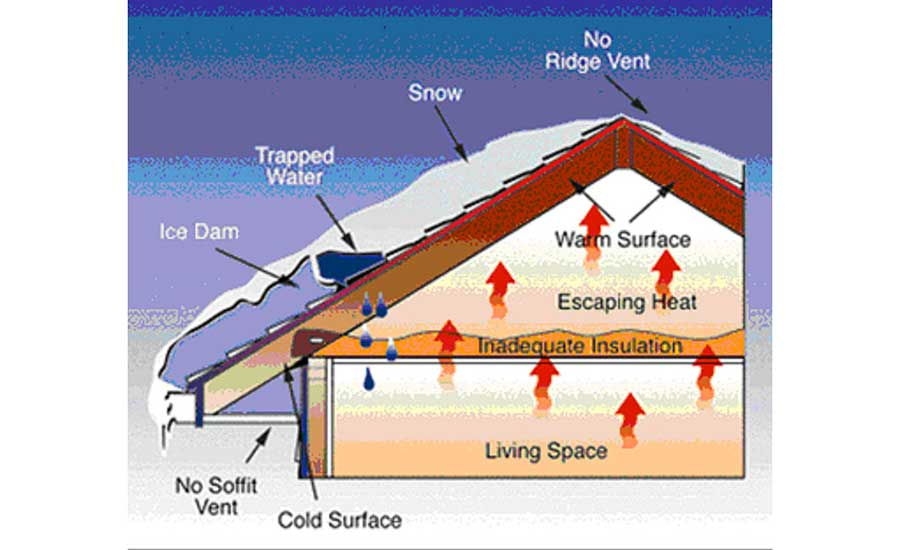
The current Building Code of New York State requires basic attic ventilation—typically 1 square foot of net free ventilating area per 150 square feet of attic space. It mandates a 1-inch airspace between insulation and roof sheathing in vented attics, plus ice barriers extending at least 24 inches inside the exterior wall line in areas with ice damming history.
The 2025 Energy Conservation Construction Code tightens insulation requirements (R-49 or higher for attics in our climate zones) and pushes for better air sealing and energy efficiency.
But it doesn't add meaningful new rules for balanced ventilation.
Specifically, the critical 60-70% intake at soffits paired with proper ridge exhaust that prevents heat-trapping problems we see every winter.
In practice, codes remain minimum standards written for average conditions, not the 40-60 daily freeze-thaw cycles and heavy lake-effect snow we get here. They still allow the exact mistake seen constantly: inadequate or blocked soffit intake with only a ridge vent, which undermines metal roofs' thermal performance and leads to ice dams anyway.
Local enforcement in places like Seneca or Schuyler County varies, and many older homes were built to even weaker prior codes.
While there's slow movement toward tighter envelopes and more insulation, ventilation requirements haven't caught up to regional reality. A truly balanced, high-capacity system is what keeps both asphalt and metal roofs performing long-term in the Finger Lakes.
Going Beyond Code on Every Install
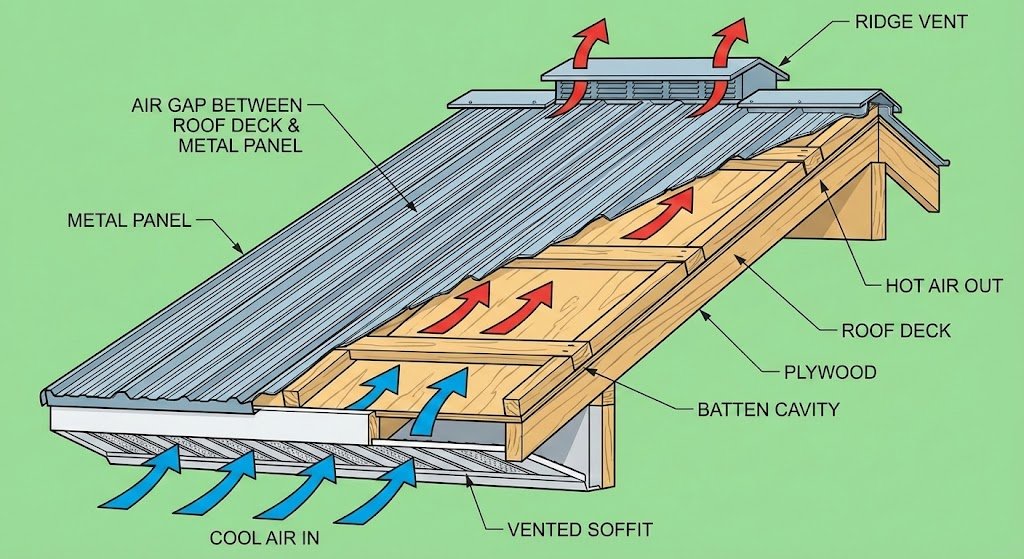
When we go well beyond code on metal installs, the approach centers on creating balanced airflow that matches regional demands.
We target 65-70% of total net free vent area at soffit intakes rather than the code minimum 50-50 split. This creates positive intake pressure that drives consistent airflow up and out through ridge vents, preventing any heat stagnation under panels.
We use continuous perforated soffit panels across the entire eave rather than individual vents every few feet. This eliminates dead zones where air can't flow.
Ridge vents get installed with external baffles that create low-pressure zones to pull air out even in calm conditions. We add a minimum 2-inch air channel between insulation and roof deck instead of the code's 1-inch requirement.
Every valley and hip gets dedicated ventilation pathways so air flows uniformly across complex roof geometries, not just simple gable ends.
We install attic temperature monitors so homeowners can verify balanced conditions throughout winter. If attic temps climb more than 5-10 degrees above outdoor temps during snow events, we know ventilation needs adjustment before ice dams form.
For metal roofs over cathedral ceilings or tight spaces where traditional ventilation is difficult, we design closed-cell spray foam systems with proper vapor barriers and thermal breaks to eliminate any temperature differential at the roof deck.
These details take extra time and add modest cost upfront. But they're what separate metal roofs that perform as designed from expensive installations that disappoint in their first real winter test.
Your Roof Protects Everything Beneath It
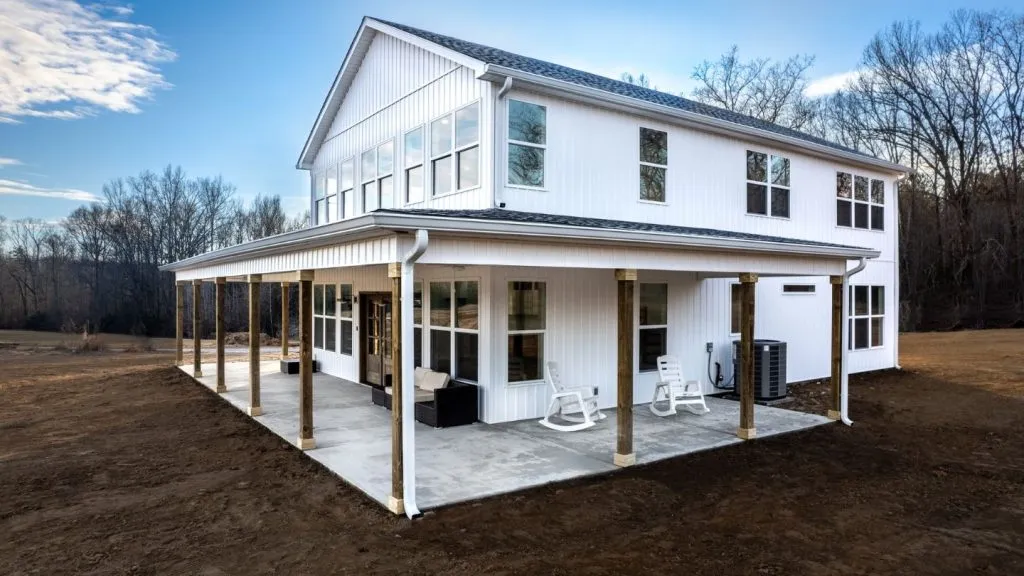
The choice between asphalt and metal roofing in the Finger Lakes isn't about aesthetics or trends.
It's about matching material science to regional climate demands. Asphalt shingles absorb water, trap heat unevenly, and fail progressively under freeze-thaw cycles that define our winters. Metal roofing conducts heat uniformly, sheds precipitation before it becomes a problem, and protects the structural deck for decades.
Proper installation matters as much as material selection.
Balanced ventilation, thermal expansion accommodation, and full-deck waterproofing turn good materials into systems that work reliably year after year.
Your home is more than just a building. It's where your family gathers, where memories form, where you find shelter from harsh weather.
We combine timeless craftsmanship with modern roofing techniques to deliver protection you can count on. Every installation receives the attention to detail that ensures your roof will withstand the tests of time.
Contact us for a free roof inspection. We'll assess your current system, explain what we find, and help you make an informed decision about protecting your most valuable asset.
Because when winter storms roll in off the lakes, you deserve peace of mind knowing your roof will perform exactly as it should.
Also Read: 5 Critical Checks for Finger Lakes Business Owners