Cool Roof Problems Winter | Why Roofs Fail in Cold Weather - LS Roofing LLC
Why Your Cool Roof Fails Every Winter
Property owners come to us with the same belief every time.
They think a cool roof automatically saves money year round. The marketing promises it. The product specs suggest it. The summer energy bills seem to confirm it.
Then November hits.
We've seen this pattern across hundreds of New York properties. A homeowner installs a highly reflective roof, watches their summer cooling costs drop by 5-10%, and feels great about the investment. Six months later, their heating bill tells a different story.
That same reflective surface that blocked summer heat is now blocking beneficial solar gain when you need it most.
For a typical New York home spending $2,500 annually on heating, a poorly matched cool roof adds $125-200 to winter costs. Meanwhile, those summer AC savings? Often just $30-50.
The math doesn't work.
The System Nobody Explains

When we inspect a roofing service in Romulus, we're not just looking at the surface material.
We check insulation thickness and continuity first. Are there gaps? Compressed regions? Then we examine ventilation: ridge vents, soffit vents, airflow paths. Can heat and moisture move freely?
The most common mistake we find is uneven insulation paired with blocked vents. This traps moisture beneath the reflective layer.
Another issue: contractors install standard reflective materials without accounting for winter heat loss. The result is a roof that's "too cool" during cold months.
Most people don't realize a roof can be too cool. But it can.
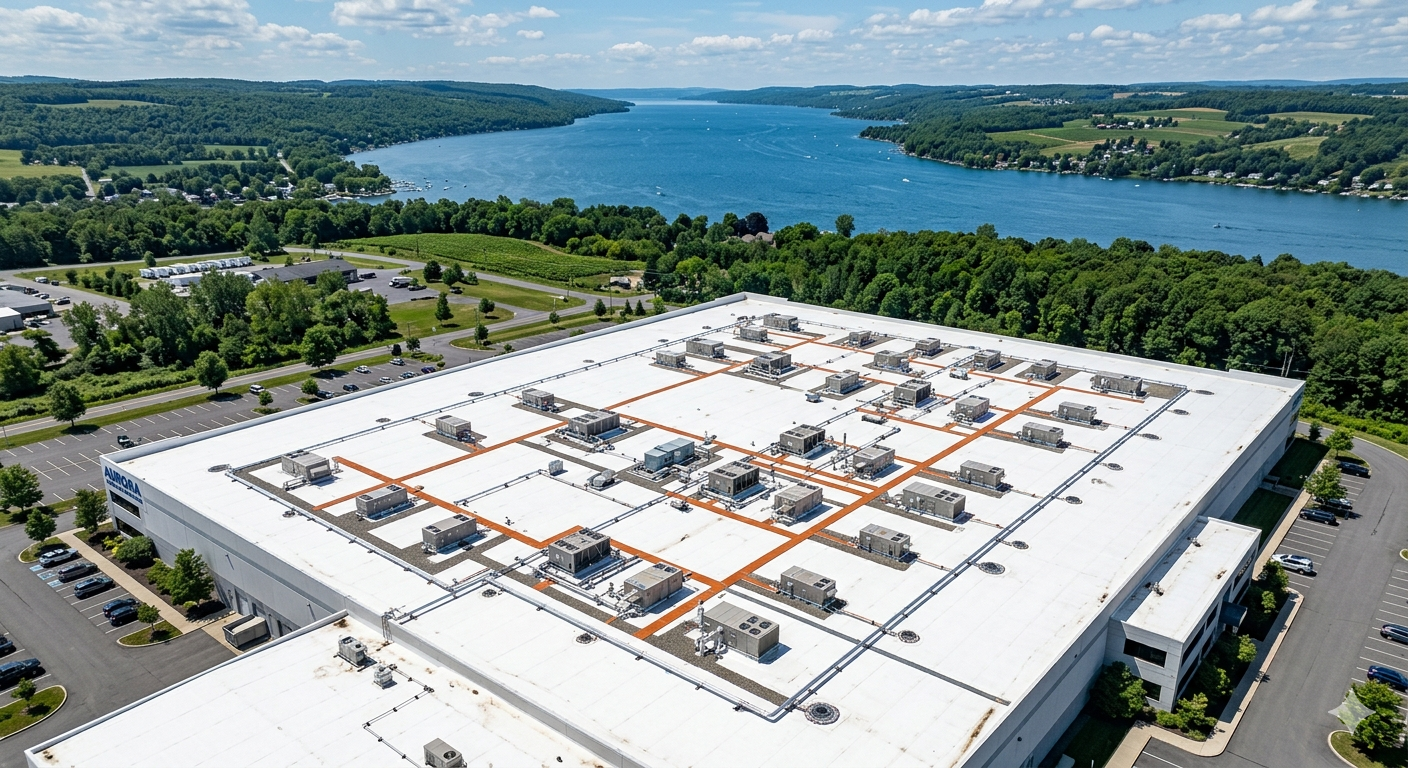
A fully reflective surface in a mixed climate like New York's creates a thermal imbalance. You're reflecting away heat your building could use. Without proper insulation to retain interior warmth and ventilation to manage moisture, you've created an efficiency problem, not solved one.
Research from the EPA shows cool roofs can stay up to 60°F cooler than traditional roofs in summer. That's powerful. But the same reflective properties that create this advantage become a liability when temperatures drop.
The key insight: reflectivity and insulation have a symbiotic relationship. Reflectivity minimizes heat flux during summer. Insulation levels drive winter performance.
You need both, properly matched.
What Thermal Scans Reveal

We use thermal imaging to show property owners what's actually happening on their roof.
The results surprise everyone.
Even high-reflectivity materials can create hot and cold spots due to uneven insulation or obstructed ventilation. A roof that looks perfect on paper retains moisture in shaded areas or allows heat to escape through inadequate insulation.
Homeowners see blue patches indicating wet or cold zones where energy bleeds away. Red regions show where heat suddenly accumulates.
Specifications alone don't tell the full story.
We inspected a New York office building where the previous contractor had installed a completely reflective membrane without evaluating ventilation. Thermal scans revealed cold blue patches along the north edge and moisture beneath the membrane.
Heat escaped in winter. Moisture got trapped. Insulation sagged.
To fix it, we removed problematic sections, built adequate venting, increased insulation in weak regions, and selectively replaced the membrane only in sun-exposed areas.
The result: summer cooling where needed, winter heat retention where required, and no more moisture damage.
Climate Matters More Than Marketing

Cool roofs work exceptionally well in specific conditions.
In areas like Long Island or southern Westchester with high summer sun and mild winters, they lower AC expenses without significant heating penalties.
Upstate regions with harsh winters, heavy snow, or deeply shaded buildings face different challenges. Fully reflective roofs can raise heating expenditures and trap moisture in these environments.
Even within New York, local microclimates, roof orientation, and shade patterns create vastly different performance outcomes.
This is where partial reflectivity becomes valuable.
Instead of coating the entire roof, we apply reflective materials only where they're most effective. A white thermoplastic membrane goes on south-facing sections or flat areas receiving direct sunlight. Shaded or north-facing sections get darker, insulated materials that retain heat.
We combine this with high R-value insulation, proper ventilation, and moisture barriers.
The goal: reflect summer heat where needed while keeping warmth inside during cold months. By customizing materials and positioning, we achieve year-round energy efficiency without the winter penalty of a fully reflective surface.
Interestingly, research on Target Stores shows they shifted from dark to reflective roofs 20 years ago across approximately 2000 stores in all US climate zones. They reported net positive energy impact even in locations with lengthy heating seasons.
The difference? Proper system integration.
The Long-Term Cost of Shortcuts

When cool roofs are installed without sufficient insulation, ventilation, or moisture control, durability suffers dramatically.
Trapped moisture destroys decking. Warps insulation. Causes mold growth.
Restricted ventilation makes reflective membranes delaminate or blister over time.
The roof's lifespan can drop by 10 to 20 years compared to a professionally integrated system. Repair costs multiply.
Even small energy penalties compound. A $125 annual winter penalty becomes $2,500 over 20 years. Add premature replacement costs, and you've eliminated any summer savings multiple times over.
Without system integration, a roof that appears "green" or efficient on paper becomes a maintenance burden and cost drain. It undermines the very benefits it was designed to provide.
Questions That Reveal Expertise

Property owners need to ask three specific questions before signing any contract.
First: How will you balance reflectivity, insulation, and ventilation for my specific building and climate?
Second: How do you prevent moisture buildup under the membrane, especially in winter?
Third: Can you provide examples or data from previous projects where this system approach improved both energy efficiency and durability?
Contractors who focus solely on product specifications or aesthetics will struggle to answer these questions.
Those who understand integrated roofing can explain their rationale for material selection, airflow design, and long-term performance. They'll discuss insulation R-values, vent placement, airflow patterns, and moisture prevention strategies.
They might reference thermal scanning or climate-specific modifications.
This level of detail reveals whether they understand how all factors combine for year-round performance or if they're simply installing a reflective surface.
The biggest giveaway in a proposal: does it include insulation, ventilation, and moisture control details alongside the reflective membrane specifications?
If a contractor lists only roofing material, color, and warranty, they're focused on surface, not system.
Emerging Technologies Worth Watching

New materials are addressing the seasonal performance challenge directly.
Phase change coatings reflect heat in summer while storing and releasing warmth in winter. Some membranes now use directional heat emitters that remove excess heat when it's hot but retain it when cold.
Materials that change reflectivity based on season are entering the market. Optical panels appear bright in summer but more transparent in winter.
Advanced insulation like aerogel panels pairs with these roofs to prevent winter heat loss.
The focus has shifted from summer-only solutions to true year-round performance systems.
According to data from the International Journal of Environmental Sciences, implementing cool roofs at the city level can lead to substantial HVAC consumption reductions of up to 71% by 2100 when properly integrated with building systems.
These aren't just incremental improvements. They represent a fundamental rethinking of how roofing materials interact with climate conditions throughout the year.
Making the Right Decision for Your Building

Property owners standing at the decision point need to think beyond trends.
Consider your building's orientation first. How much direct sunlight does each section receive? What's your current insulation quality? How does your ventilation system function?
Examine how winters impact your energy consumption patterns.
Ask contractors how they'll balance summer cooling with winter heating while preventing moisture problems.
A somewhat higher initial investment in a climate-smart roof pays dividends over time through lower energy bills, fewer repairs, and easier future modifications like solar or green roofing additions.
The key is selecting a system matched to your building and local climate rather than following marketing claims.
Your roof should operate efficiently all year and protect your investment for decades.
The Critical Truth About Year-Round Performance

One insight matters more than any other.
The color or reflectivity of a roof doesn't dictate its performance. What matters is how insulation, ventilation, moisture control, and local climate all interact with the material itself.
A "cool" roof that ignores these considerations might save money in summer. But it will cause heat loss, trap moisture, and create costly winter repairs.
Year-round efficiency requires a system approach tailored to your building, environment, and seasonal shifts.
Not a single feature. Not a marketing trend.
We've seen too many property owners invest in reflective surfaces without understanding the complete picture. They follow trends instead of evaluating their specific needs.
The smartest roof isn't the one that reflects the most sunlight. It's the one designed to work with your building's unique characteristics, your climate's seasonal patterns, and your long-term performance goals.
That's what preserves both energy costs and the roof's durability over its full lifespan.
When property owners understand this, the conversation shifts. They stop asking about product specifications and start asking about system integration. They stop following trends and start making informed decisions based on their building's actual needs.
That's when we know we're building a roof that will protect their investment for decades, not just look good in a brochure.
Also Read this Article: Roofing Contractor Risks | Avoid Costly Roofing Mistakes - LS Roofing LLC