Storm-Resistant Roofing NY | Prepare for Extreme Weather - LS Roofing LLC
Extreme Weather Roofs: Prepping for NY's Storm Surge
Your roof looks fine from the ground.
That's what most business owners in Upstate New York tell themselves—right up until water starts pouring through the ceiling and a $6,000 preventive upgrade turns into a $40,000 emergency disaster.
The roofs we're inspecting across the Finger Lakes region tell a different story. Mother Nature cranked up the intensity dial, and your 25-year roof warranty just became obsolete.
New York's Weather Patterns Changed While You Weren't Looking

Five years ago, hail was a once-a-decade event in Romulus and surrounding areas. Today, we're spotting jagged granule scars and cracked asphalt shingles from microbursts hitting 60-70 mph every single spring.
The numbers back this up.
New York State recorded three of its four highest severe weather event years in 2019 (2,498 events), 2021 (2,395 events), and 2024 (2,268 events). Thunderstorm wind events have surged dramatically, with the top seven years for such events all occurring within the last eight years.
But here's what most property owners miss: the real damage happens during those wild freeze-thaw swings.
The 20-Degree Temperature Swing That Destroys Roofs
Ice dams used to form tidy ridges along eaves after a big nor'easter. Manageable. Predictable.
Today's climate delivers something completely different.
When temperatures spike 20 degrees overnight after heavy snow, the snowpack on your roof melts fast from the top down. That wave of water races toward the eaves, hits the cold edge, and refreezes instantly.
The result? Massive, chaotic ice blockages that span your entire roof edge and push three feet up under the shingles.
This forces water sideways and upward into nail holes, flashing seams, and even through the felt—rotting decking and rafters far faster than the predictable winters of 2015.
In 2024 alone, New York State responded to eight severe lake-effect snowstorms and multiple flooding events that triggered four major disaster declarations. Ice storms produced accumulations up to three-quarters of an inch across the Capital Region.
The speed and scale of these temperature swings turn manageable issues into widespread structural leaks.
The $34,000 Mistake Business Owners Keep Making

Let's talk real numbers.
For a typical 3,000 square foot commercial flat or low-slope roof in the Finger Lakes, catching ice-dam rot early with a preventive inspection and targeted upgrade runs $4,800 to $7,200 and adds 15-20 years of roof life.
Wait until water pours through your ceiling?
You're suddenly looking at $28,000 to $55,000+ to tear off saturated decking, replace rotted rafters, install new insulation, and redo the membrane. Add weeks of lost business and skyrocketing insurance claims.
That six-month delay turns a $6,000 smart investment into a $40,000+ nightmare.
The International Facility Management Association reports that every dollar spent on preventive roof maintenance saves $4-7 in future repair costs. Some organizations report 400-500% ROI on preventive maintenance investments calculated over the roof's service life.
But most business owners never see this coming because they can't spot the warning signs from ground level.
The Hidden Vulnerabilities Your Inspection Should Catch
From the ground, your roof looks perfect.
Climb a ladder and you'll find silent killers:
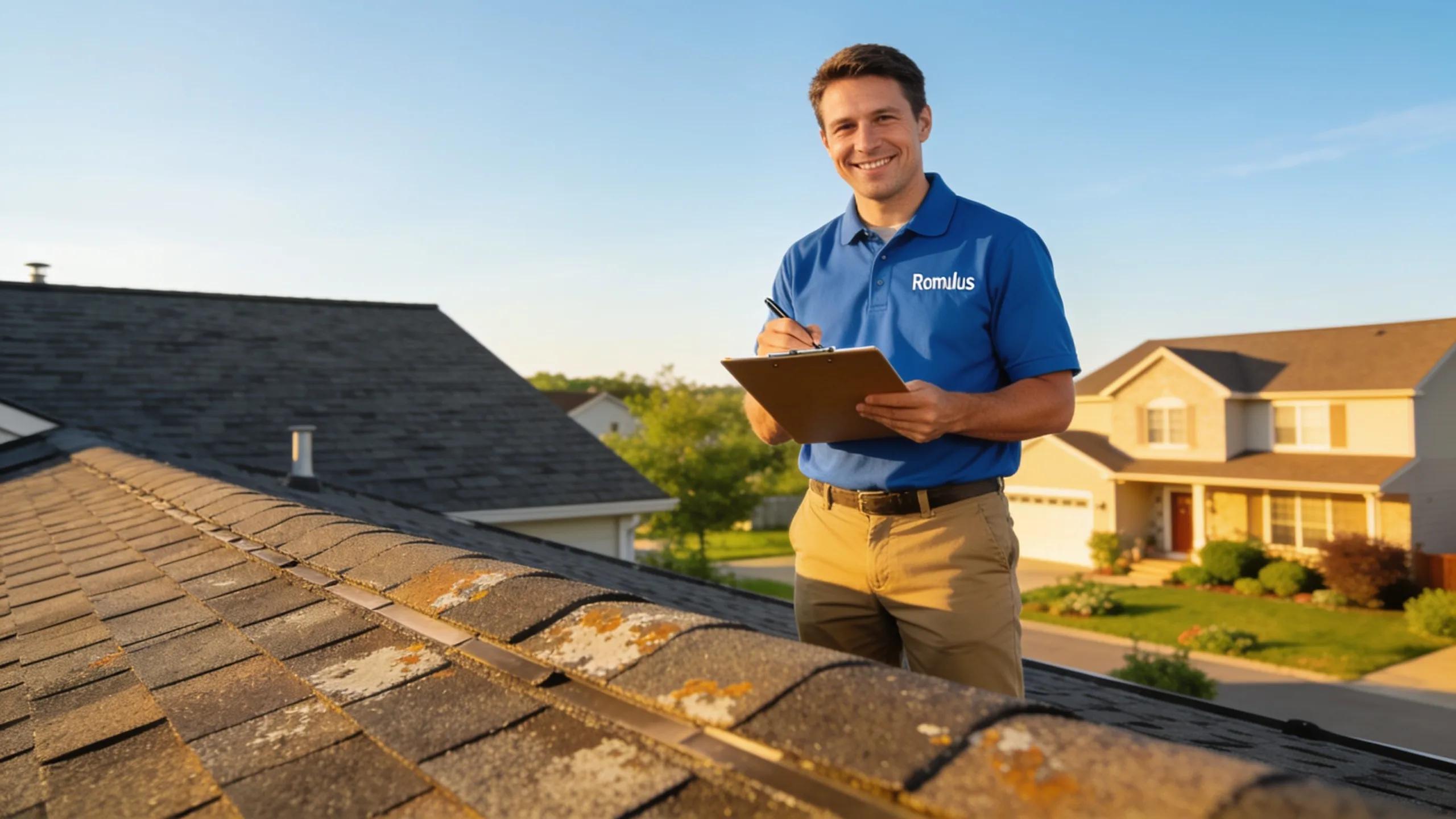
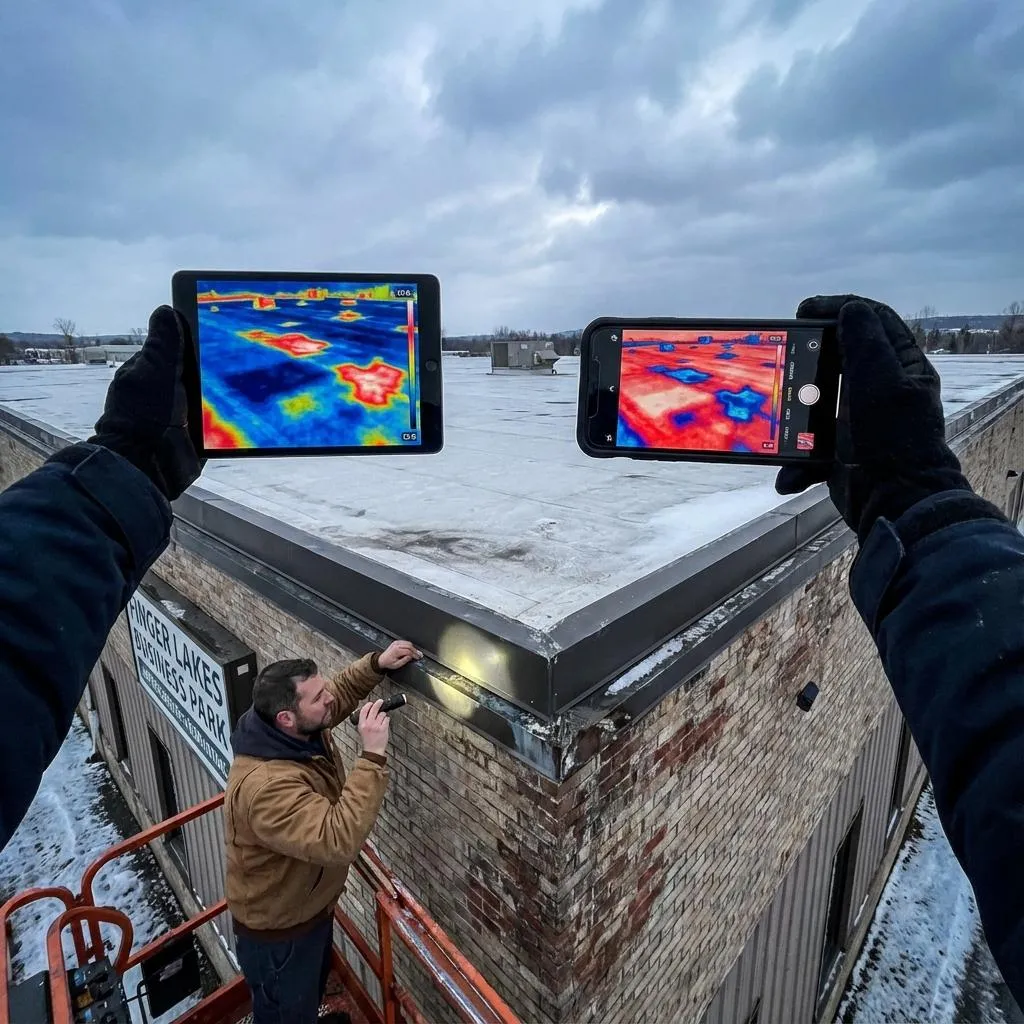
Hairline membrane cracks from brutal UV and temperature swings that let water seep in for months
Split seams around vents and curbs that open just enough for ice to pry them apart and rot decking from inside
Heavy granule loss turning shingles brittle so one hailstorm punches straight through to soaked insulation
These invisible flaws stay dry on top while destruction spreads underneath—until ceilings collapse and bills hit $40,000.
80% of commercial roofs are replaced prematurely due to inadequate maintenance. Building owners save $4 in repairs for every $1 spent on preventative maintenance.
A professional inspection spots these vulnerabilities early and prevents that nightmare scenario.
Your 25-Year Roof Just Became a 15-Year Roof

Here's the truth most roofing companies won't tell you:
Today's hotter, longer UV summers in Upstate New York are shaving 25-35% off the real-world lifespan of even top-grade asphalt shingles.
A roof rated for 25 years is now showing heavy granule loss and brittleness by year 16-18. The intense solar spikes combined with wild freeze-thaw cycles accelerate cracking and curling far beyond old warranties.
UV exposure reduces asphalt roof life by approximately 10% per decade in sunny regions. Homes experiencing intense UV exposure need roof replacement 5-7 years sooner than those in less intense regions.
The thermal cycling process causes stress on shingles, leading to cracking, curling, and eventually fracturing of the shingle mat. UV radiation speeds up oxidation in asphalt shingles, causing the material to become brittle and susceptible to cracking.
That "25-year roof" most business owners count on is quietly turning into a 15-18 year roof.
This is why we push clients to inspect at the 12-year mark instead of waiting for leaks that trigger massive replacement bills.
Materials That Actually Survive New York's New Climate

In today's brutal Upstate New York climate, standard materials fail fast.
We steer clients toward three proven solutions:
1. Class-4 Impact-Rated Architectural Asphalt
Class 4 is the highest impact resistance rating a shingle can receive under the UL 2218 test. These shingles withstand impacts from a 2-inch steel ball dropped from 20 feet without showing signs of failure.
Class 4 rated shingles typically carry a 50-year product warranty from manufacturers, while non-Class 4 shingles carry a 30-year warranty.
2. Standing-Seam Metal with Kynar Coatings
These systems shrug off 150 mph microbursts, resist UV degradation for 40-50 real years instead of 15-18, and flex through freeze-thaw swings without cracking or curling.
3. Synthetic Slate or Polymer Shakes
Modern polymer materials deliver the appearance of traditional materials with superior weather resistance and longevity.
Yes, these materials cost 25-40% more upfront.
But they deliver true 35-50 year performance while cutting insurance premiums and eliminating surprise $40,000 replacements.
For Finger Lakes businesses, the higher initial price pays for itself in under ten years.
The Insurance Premium Reduction Most Owners Don't Know About

Last year, a Romulus manufacturing client switched from 20-year 3-tab shingles to GAF Timberline HDZ Class-4 shingles with full ice-and-water shield.
Annual premium: $18,400.
After we sent the insurer photos, material certifications, and our signed warranty, they re-rated the roof from standard to "superior impact and wind resistance."
The premium dropped by $4,860 per year—a 26% reduction. The carrier even waived the deductible for hail and wind claims.
Total material upgrade cost: $9,200.
The owner broke even in under two years and now sleeps through storms that used to keep him checking the ceiling at 3 a.m.
Class 4 impact-resistant roofing systems typically save property owners 10-27% of their insurance premium annually. Most homeowners can expect a premium discount of 10-30% when installing Class 4 impact-resistant shingles.
For a typical policy costing $1,200 annually, that translates to $120-$360 back in your pocket every single year.
State Farm and USAA are among major carriers offering discounts in New York for impact-resistant roofing products.
Why Traditional Amish Craftsmanship Outperforms Modern Installation
Most people think "Amish craftsmanship" just means quality workmanship.
There's something more specific happening.
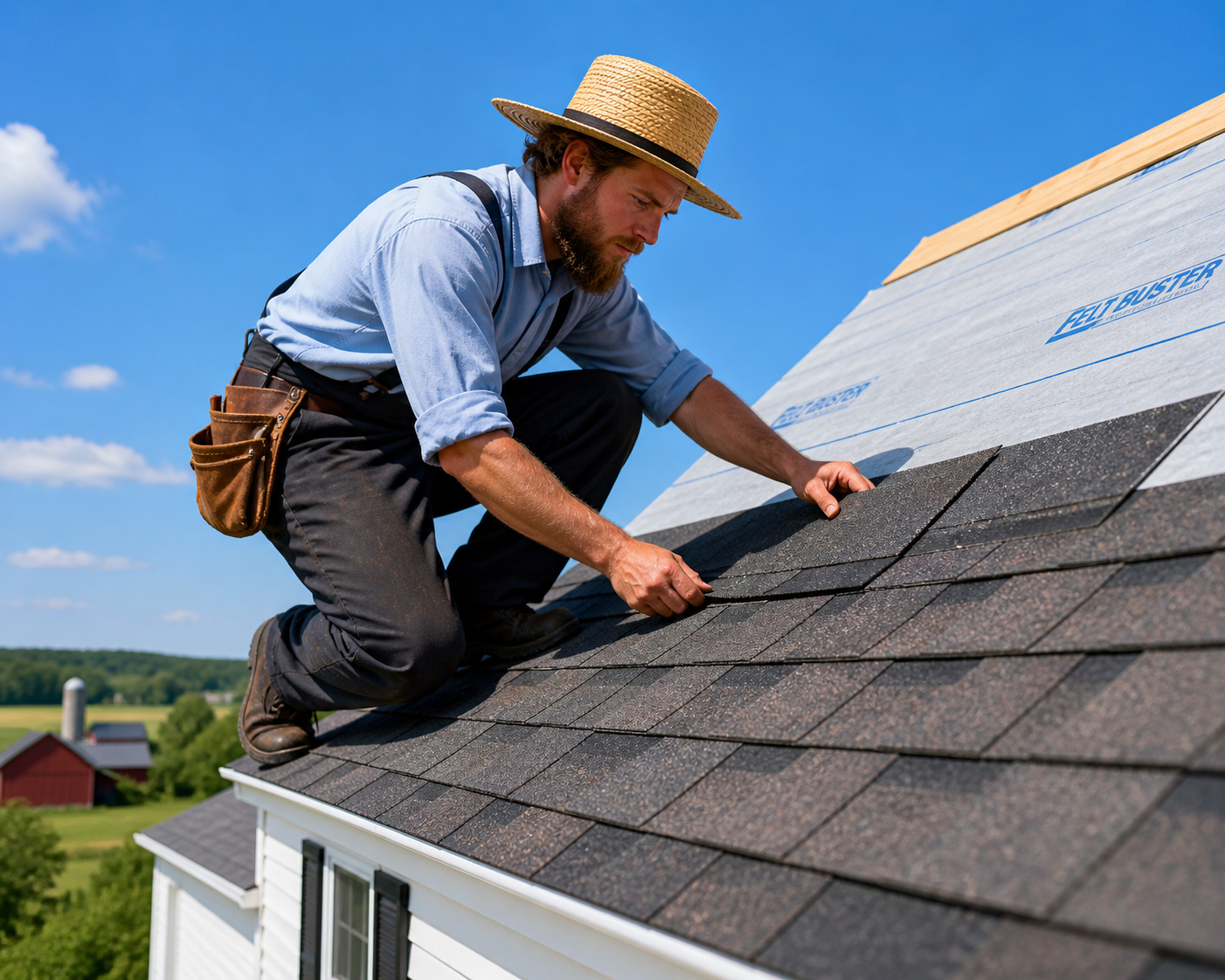
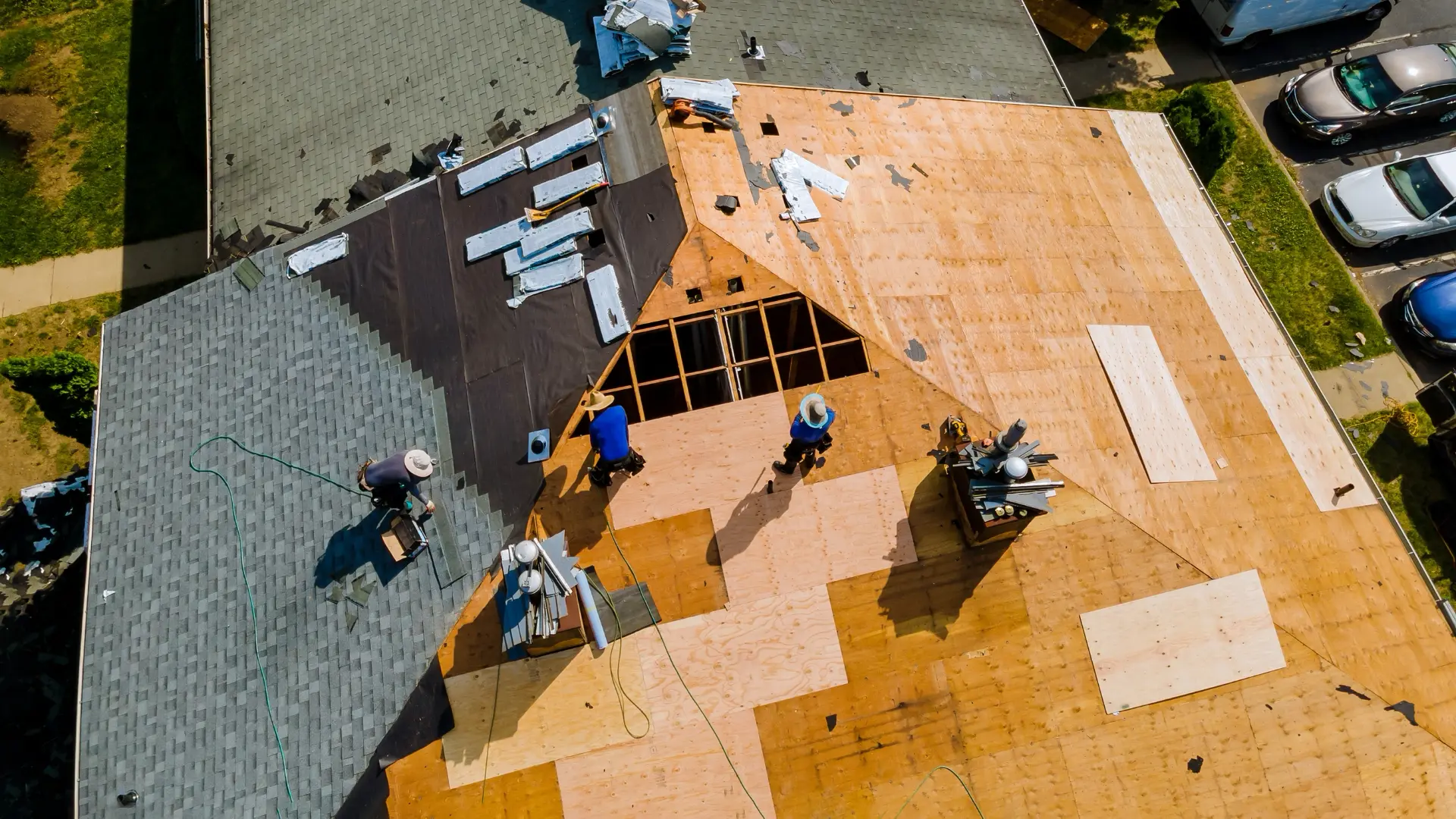
Our Amish crews still hand-nail every shingle with six nails instead of four. They seal every seam with real roofing cement instead of spray cans. They weave ice-and-water shield two full layers high up the rake and eaves - most code crews stop at three feet.
They over-frame valleys with extra decking and flash them with soldered copper or heavy aluminum instead of peel-and-stick tape that fails in freeze-thaw cycles.
These old-school details create a roof that flexes instead of cracking, sheds ice without ripping, and stays watertight when modern stapled, taped-together installations tear apart in the first real microburst.
The Two Extra Nails That Make the Difference
In a 60-70 mph microburst, wind gets under the shingle edge and tries to peel it upward like opening a sardine can.
Four nails let the shingle flex and lift just enough for the next gust to tear the seal tabs and rip whole rows off.
Six hand-driven nails (placed higher and wider) lock the shingle flat, spreading the uplift force across the entire layer. The roof acts as one solid panel instead of hundreds of loose flaps.
We've seen standard four-nail roofs lose half their field in one storm while our six-nail installations barely lose a granule.
Those two extra nails turn wind resistance from 90 mph rated to real-world 140+ mph survival.
The One Sign That Means Your Time Is Up

When we're up on a roof and spot dark water stains or soft spots spreading across the decking from the underside, that's the unmistakable red flag.
Those stains mean active rot has already compromised the structure. Leaks are imminent even in light rain. Waiting another year risks sudden ceiling collapse, inventory damage, or mold that triggers health code shutdowns.
Once rot hits that stage, costs skyrocket past simple replacement into full structural repairs.
If your inspection reveals those spreading stains, schedule the job now before the next freeze-thaw cycle turns a manageable upgrade into an emergency disaster.
Your Timeline for Action

If your roof is 12-15 years old and the inspection is clean today, schedule the replacement 18-24 months out—ideally in late spring or early fall when crews can work fast and dry.
That sweet spot gives you two full seasons to:
Budget properly without financial strain
Lock in current material prices before another spike
Beat the rush before the next brutal winter accelerates rot
Waiting past 24 months risks jumping from a planned $25,000-$35,000 upgrade to a $60,000+ emergency tear-off once UV exposure and freeze-thaw cycles push your roof over the edge.
Properly maintained commercial roofs can last 25-30 years, while neglected roofs often require replacement within 15-20 years. An industry study showed that preventive maintenance can cut total roofing costs by up to 50%.
Book the date now, sleep easy, and keep the profits in your pocket.
The Mental Barrier Keeping Business Owners Stuck

The biggest pushback we hear: "My roof still looks fine and I hate spending money on something that isn't broken yet."
Owners see the big upfront number and think they're buying peace of mind.
They're actually buying time before a total catastrophe.
We show them photos of two identical buildings side-by-side after the same storm. One with a cheap roof now has tarps and $80,000 in emergency fixes plus weeks closed. The other with our storm-resistant system didn't lose a single shingle and stayed open.
The real cost isn't the upgrade. The real cost is gambling your entire operation on weather you can't control.
Construction-related lawsuits involve building exteriors about 80% of the time, with commercial roofing issues accounting for the largest portion of these legal challenges. A staggering 36% of building envelope litigation stems from edge metal failure alone—components that represent just 1% of total building cost yet carry 36% of legal risk exposure.
Once business owners see the disaster that almost happened to them, the smart investment becomes obvious.
What to Do Right Now

Climate change is creating conditions that will increase the frequency and severity of extreme events in New York State. Several types of storms are expected to become more intense, featuring heavier rainfall, stronger winds, and higher storm surge along the coast.
Your roof is either protecting your business or becoming your biggest liability.
Here's your action plan:
If your roof is under 10 years old: Schedule a professional inspection within the next 60 days to establish a baseline and catch any early vulnerabilities.
If your roof is 10-15 years old: Schedule an inspection immediately and begin planning your replacement timeline for 18-24 months out.
If your roof is over 15 years old: You're operating on borrowed time. Schedule an emergency inspection this week and prepare for replacement within the next 12 months.
If you see any of these signs: Water stains on ceilings, soft spots on the roof surface, heavy granule loss in gutters, curling or cracked shingles, or ice dams forming in unusual patterns—stop waiting and call for an inspection today.
Emergency commercial roof repair during a weekend or holiday can cost $200-300 per hour for labor alone, plus premium material costs and potential overtime charges. Scheduled commercial roof maintenance performed during regular business hours costs significantly less per hour.
The next major storm is coming. The only question is whether your roof will protect your business or become your biggest expense of the year.
We combine timeless Amish craftsmanship with modern roofing techniques to deliver storm-resistant systems that actually perform when extreme weather hits. Our installations use the six-nail hand-driven method, premium Class-4 impact-rated materials, and traditional flashing techniques that have protected buildings for generations.
Request your free roof inspection today and get a clear assessment of your roof's readiness for New York's new climate reality. We'll show you exactly what vulnerabilities exist, what they'll cost if left unaddressed, and how to protect your operation before the next storm surge hits.
Your business deserves a roof that works as hard as you do.
Also Read: Roof Problems Finger Lakes NY | Common Failure Reasons - LS Roofing LLC