Roof Inspection Benefits NY | Hidden ROI Explained - LS Roofing LLC
The Hidden ROI of Roof Inspections
Most property owners treat roof maintenance like going to the dentist. They avoid it until something hurts.
The problem is, by the time you notice a problem, you're already looking at exponentially higher costs. What could have been an $800 repair becomes an $18,000 disaster. A $200 ventilation fix turns into $10,000 in ice dam damage.
We've climbed thousands of roofs across New York, and the pattern is always the same: small problems ignored become financial catastrophes.
Here's what the numbers actually show about roof inspection economics.
The $800 to $18,000 Escalation
A homeowner in upstate New York noticed a small leak during a rainstorm. No big deal, right? Just a few damaged shingles from wind.
Eight months later, we got the call.
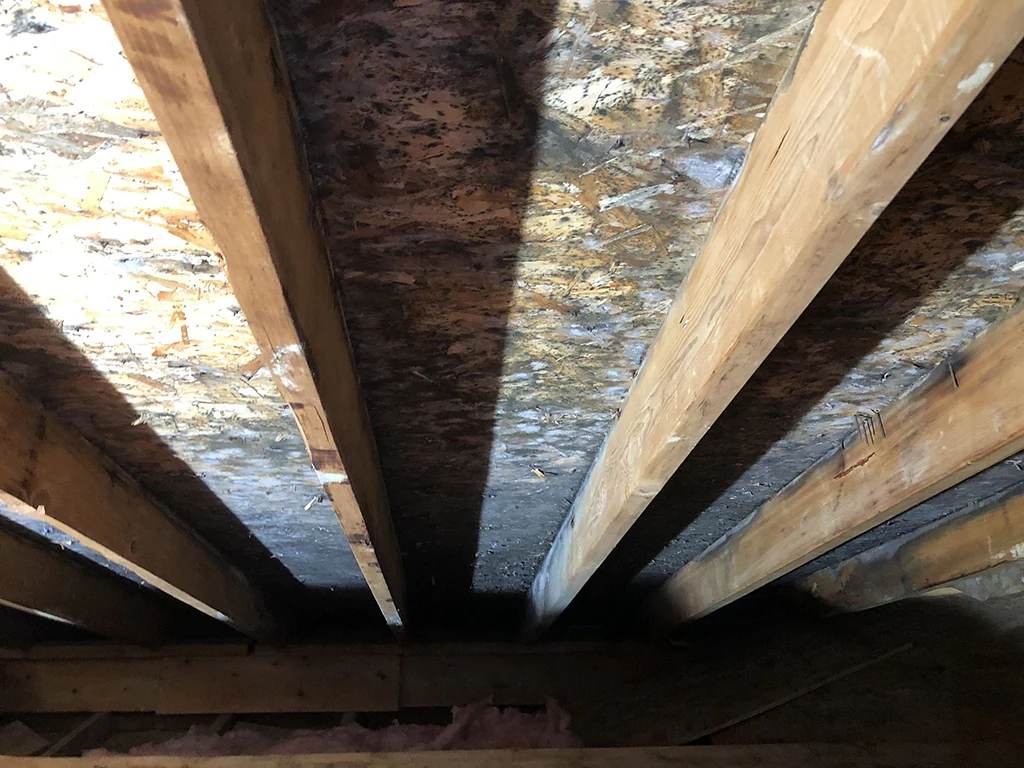
By then, water had rotted the underlying plywood decking and soaked into the attic insulation. Mold had spread throughout the space, compromising structural integrity. We had to replace the entire section of roof deck, treat for mold remediation, and rebuild what should have been a simple shingle patch.
Final cost: $18,000.
The original repair? $800.
That's a 22x cost multiplier from eight months of delay. But here's what makes this even more painful: there were multiple intervention points where the homeowner could have stopped the damage.
The Cost Progression Timeline
Month 1: Patch the damaged shingles = $800
Month 2: Minor seepage softening the decking = $2,500
Month 4: Rotted decking and damp insulation = $7,000
Month 8: Full mold remediation and structural work = $18,000
Each month of delay added another layer of damage and expense. This isn't unique to one property. It's a mathematical progression that plays out across New York every single day.
According to the National Roofing Contractors Association, implementing a roof maintenance program can nearly double the lifespan of a roof and lead to 25 to 50 percent savings on lifetime maintenance costs.
The Invisible 70 Percent

Here's what most property owners don't realize: roughly 70 percent of roofs that look fine from the ground have hidden problems.
When we climb up for a routine inspection on a roof that appears perfectly normal from street level, we find issues that are already costing the owner money. Poor ventilation. Granule loss on shingles. Flashing gaps. Early rot that will turn into visible leaks within six months.
The most common problem? Ventilation issues affecting about 90 percent of homes we inspect.
The Ventilation Cost Nobody Sees
Poor attic ventilation adds 15 to 20 percent to your annual heating and cooling bills. For a typical New York household spending $2,500 annually on energy, that's an extra $375 to $500 draining your wallet every year.
You won't notice it. It just shows up as slightly higher utility bills that you attribute to weather or rate increases.
Over three years, those inflated bills alone hit $1,125 to $1,500. But the real damage comes from premature roof aging. Poor airflow degrades shingles faster, promoting granule loss, curling, and cracking that can shave 5 to 10 years off a standard 25- to 30-year roof lifespan.
On a typical $12,000 replacement roof, losing five years means you're paying an extra $400 to $600 annually in accelerated depreciation.
Total hidden cost over five years: $3,500 to $7,000.
Research from the Florida Solar Energy Center confirms that proper attic ventilation reduces cooling energy consumption by 10 percent even in homes with good insulation.
Fixing ventilation early pays for itself quickly through lower bills, a longer-lasting roof, and avoiding bigger disasters like mold or ice dams.
New York's Destructive Freeze-Thaw Cycle
A small crack in flashing or a slightly lifted shingle edge in November becomes a ticking time bomb once winter hits.
New York experiences 40 to 60 freeze-thaw cycles per season depending on the region. More upstate or in higher elevations, fewer along the coasts. Each cycle acts like a hydraulic jack, systematically destroying your roof.
The Physics of Roof Destruction
Rain or melting snow seeps into a tiny gap. Temperatures drop below 32°F. The water freezes into ice that expands by about 9 percent, exerting thousands of pounds per square inch of pressure. The crack widens.
During the next thaw, more water infiltrates the now-larger opening. It refreezes. Expands again. The cycle repeats.
According to building engineering research, this phenomenon known as "frost jacking" systematically expands crack sizes with each precipitation event followed by freezing temperatures.
Unlike a steady deep freeze in places like Alaska, New York's 20 to 40+ daily temperature swings amplify destruction. The constant expansion-contraction fatigues asphalt, metal, and wood.
A $500 flashing patch in November becomes $5,000 to $10,000 in repairs by spring.
We've seen homes where ignored hairline issues escalated to full roof overhauls costing $15,000+ after one bad winter.
Ice Dams: The $10,000 Icicle
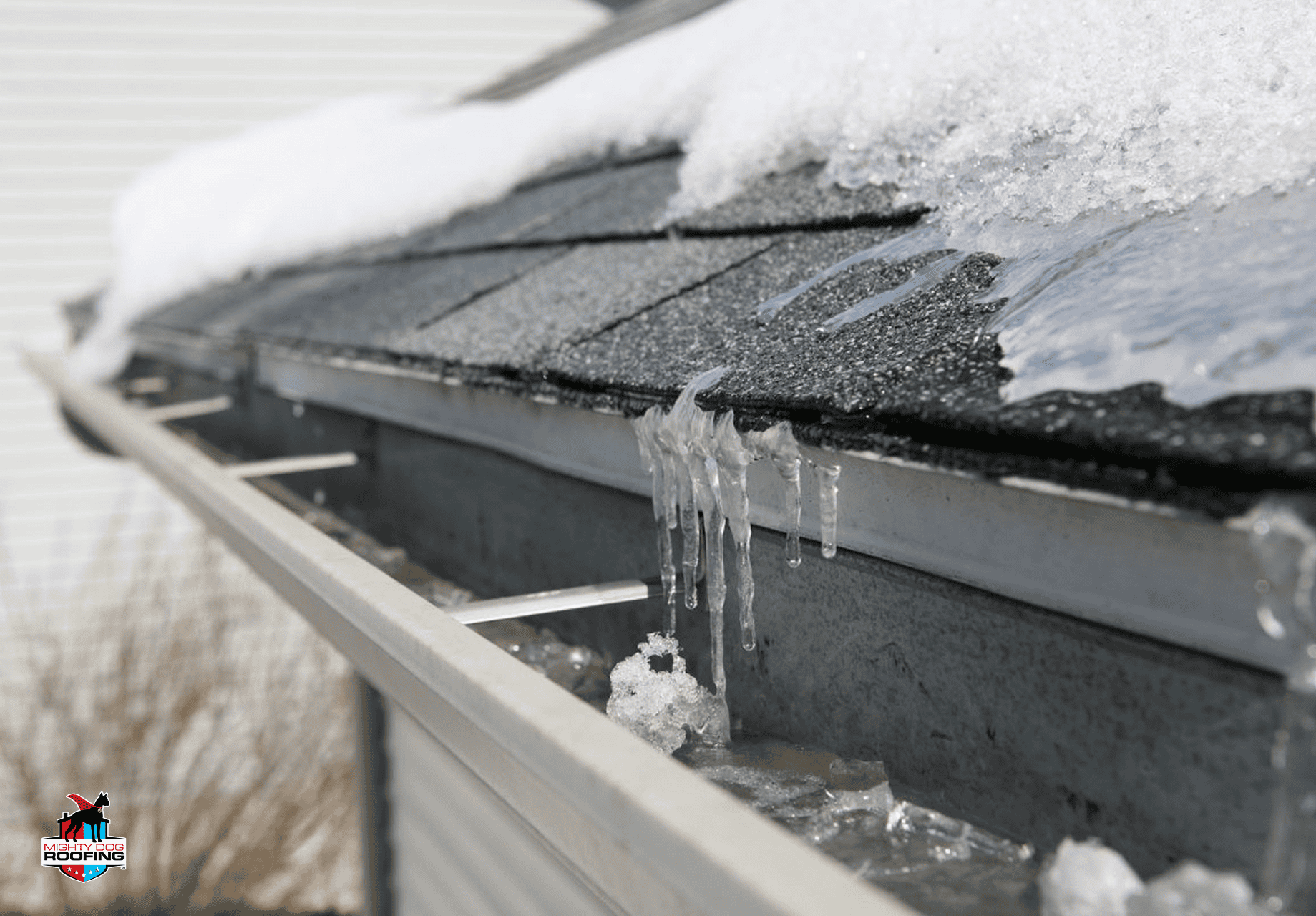
When we pull up to a property and see massive ice dams bulging along the roof edges or "pretty" icicles dangling from gutters, we know what's coming.
Those aren't harmless winter decorations. They're a screaming red flag for heat loss, poor ventilation, and impending water disaster.
Here's what's happening: Warm air escapes through inadequate insulation, melting snow on the roof unevenly. That meltwater trickles down to the colder eaves where it refreezes into a dam. More water gets trapped behind it, forcing its way under shingles or flashing.
The water seeps into the attic, walls, and ceilings. Stained drywall. Warped wood. Electrical hazards. Rampant mold growth.
In places like Buffalo or Syracuse where winters are brutal, homeowners who ignore ice dams end up with repair bills starting at $500 for basic ice removal. But it escalates quickly.
Average cost for water damage remediation: $3,800.
Severe cases balloon to over $10,000 when structural rot or full roof sections need replacing. Add another $2,000 to $5,000 for professional mold cleanup.
The preventive solution? A $200 to $300 ventilation upgrade.
That's a 12x to 50x cost multiplier from inaction.
The Free Inspection Economics
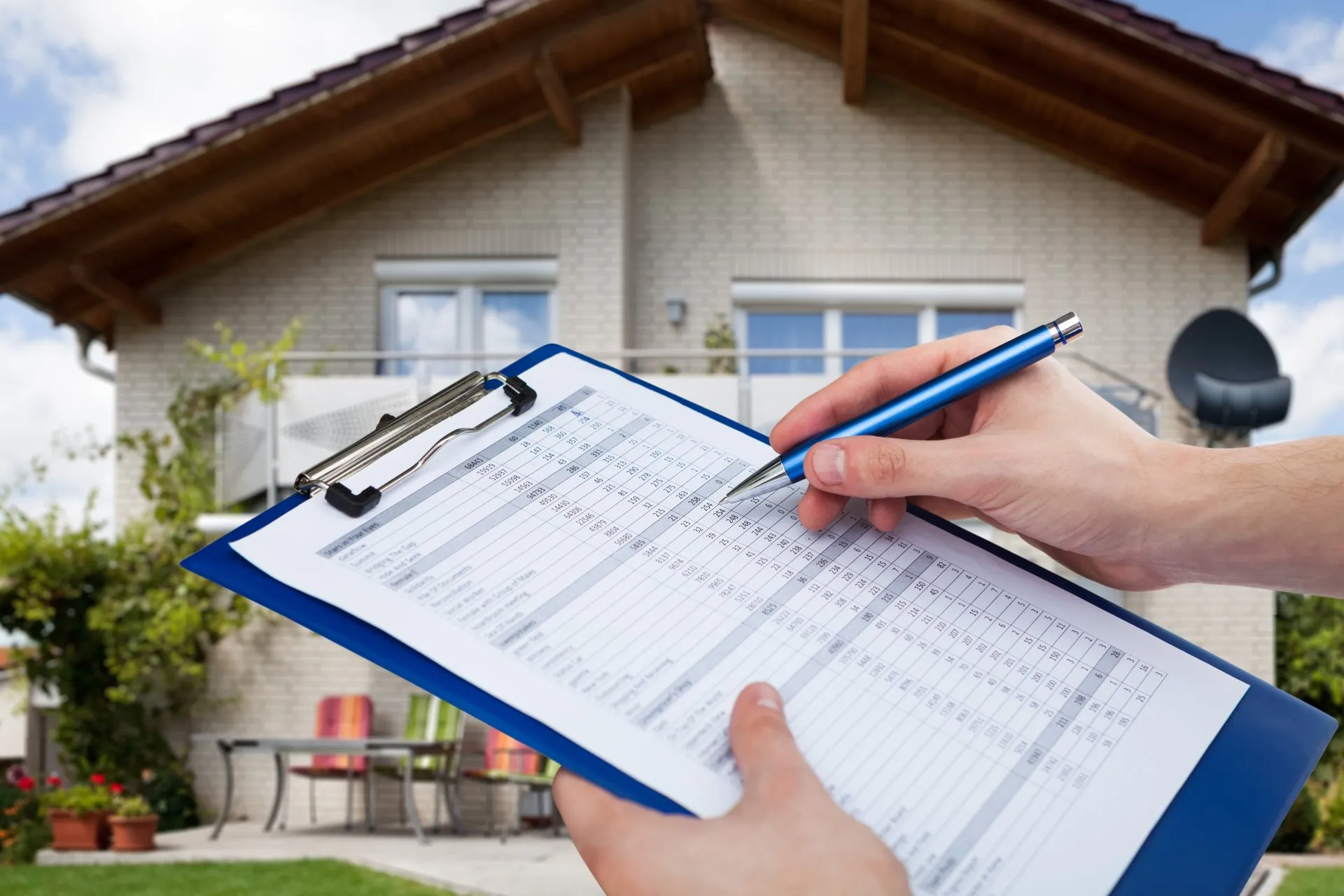
Our roof inspections are completely free. We climb up, check everything from shingles to flashing and attic airflow, and give you a no-obligation report with photos and recommendations.
When we find common minor fixes during the inspection—sealing a small flashing gap, patching a few lifted shingles, adding basic soffit vents to boost ventilation—the average cost runs about $300 to $800 depending on the home's size and access.
Total investment: Under $1,000.
Compare that to the "wait until disaster" approach:
Ice dam damage: $3,800 average
Delayed leak repair: $18,000
Hidden ventilation costs: $3,500 to $7,000 over five years
Commercial roof failure: $400,000+ in total impact
Industry data shows that for every $1 spent on preventative maintenance, building owners save $4 in repairs.
The math isn't complicated. It's just invisible until the damage becomes visible.
The Lifespan Extension Formula
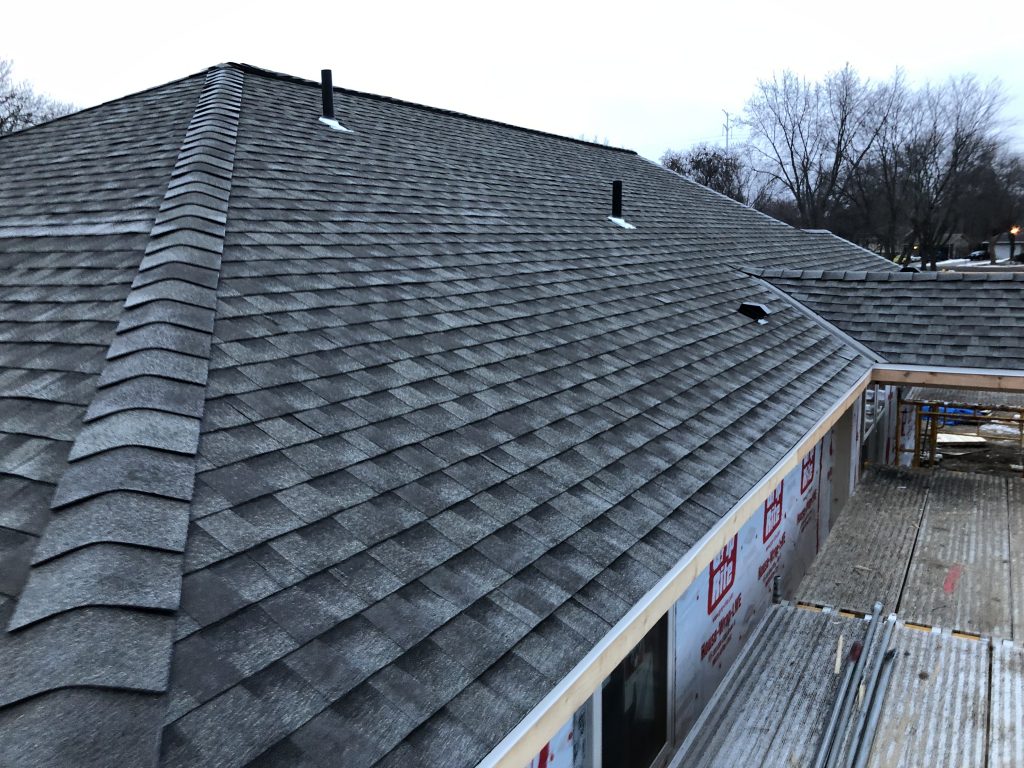
A quality asphalt shingle roof with proper ventilation, regular inspections, and timely minor repairs can realistically last 25 to 30 years in New York's climate.
A neglected one? 15 to 20 years.
That 5 to 15-year extension translates directly to money. Let's use an average $12,500 roof replacement as an example.
Neglected roof (20-year lifespan): $625 per year
Maintained roof (30-year lifespan): $417 per year
That's a $208 annual savings just from extending lifespan. Before factoring in energy bill reductions from better ventilation or avoided disaster repairs.
Research confirms that regular maintenance can add 5 to 10 years to your roof's life.
Those free inspections and occasional $300 to $800 fixes aren't costs. They're investments that stretch your roof's life, lower your effective yearly expense, and prevent five-figure surprises.
💡 Important note: Most roofing manufacturers require routine maintenance to keep warranties valid. Skipping inspections can void coverage when you need it most.
The Commercial Property Multiplier
When a commercial property owner neglects roof inspections, the stakes multiply exponentially.
A mid-sized warehouse client in the Buffalo area had been putting off our recommended annual inspections for about two years. Their flat roof seemed fine despite some minor ponding we'd flagged earlier.
Then a historic lake-effect snowstorm hit with over 80 inches in spots.
The accumulated weight combined with poor drainage from neglected maintenance caused a partial roof collapse right over their main storage section. Beams crashed down, damaging inventory worth around $150,000 in ruined electronics and perishables.
But the repair bill was just the beginning.
The Total Impact Breakdown
Direct costs:
Emergency shoring, membrane replacement, structural fixes: $45,000
Business interruption:
Three-week shutdown: $200,000 in lost revenue from delayed shipments and canceled contracts
Insurance complications:
Adjuster argued "pre-existing wear" vs. storm damage: $15,000 in legal fees before settling
Tenant issues:
Key tenant threatened lease break over safety concerns: Nearly sparked additional lawsuit
Total impact: Over $400,000.
The preventive solution? A free inspection and maybe $5,000 in proactive drainage upgrades.
That's an 80x multiplier on what prevention would have cost.
For commercial owners, roofs aren't just overhead. They're the shield for your livelihood. In New York's unpredictable weather, neglect turns minor oversights into business killers.
The Craftsmanship Difference
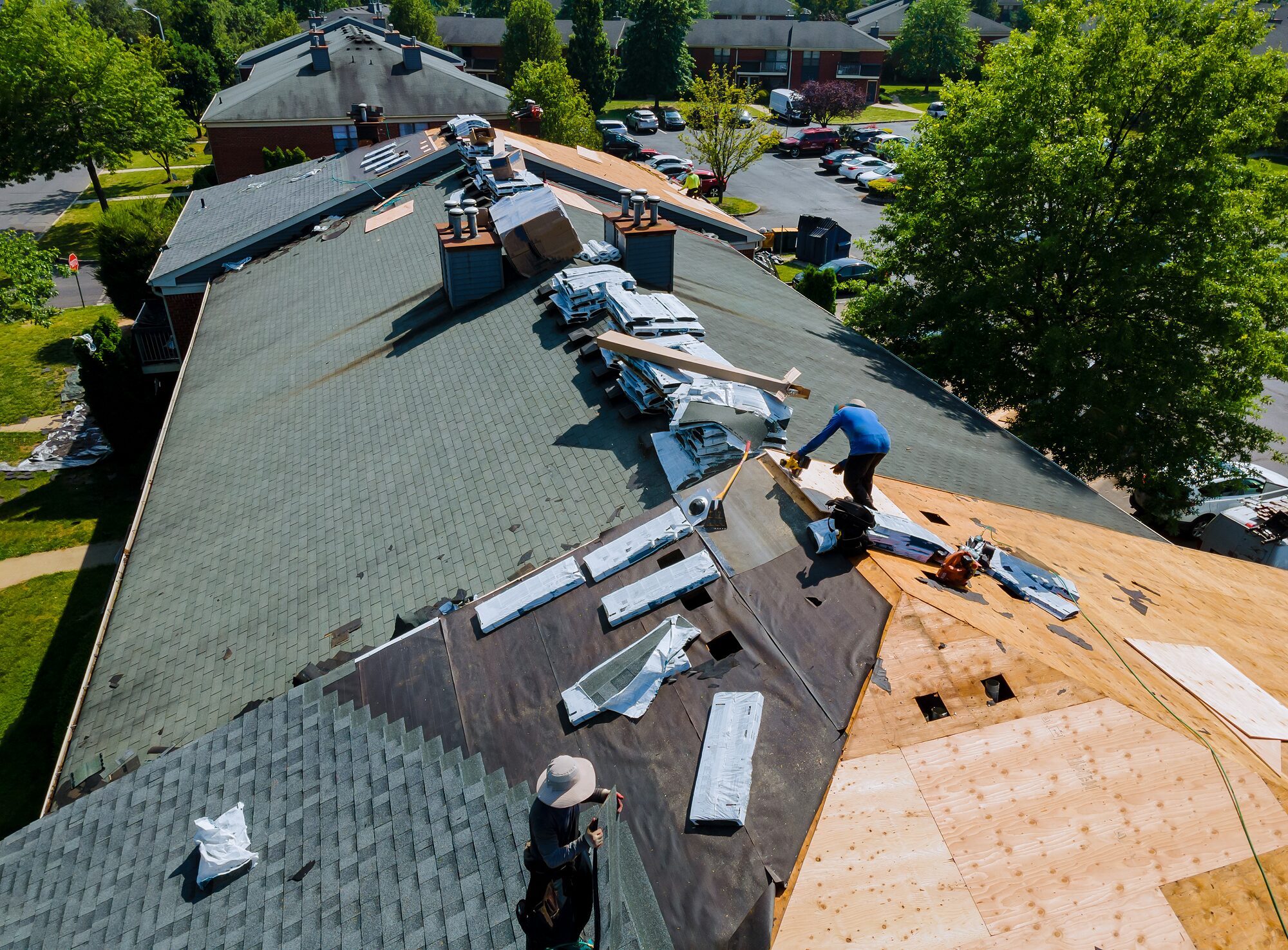
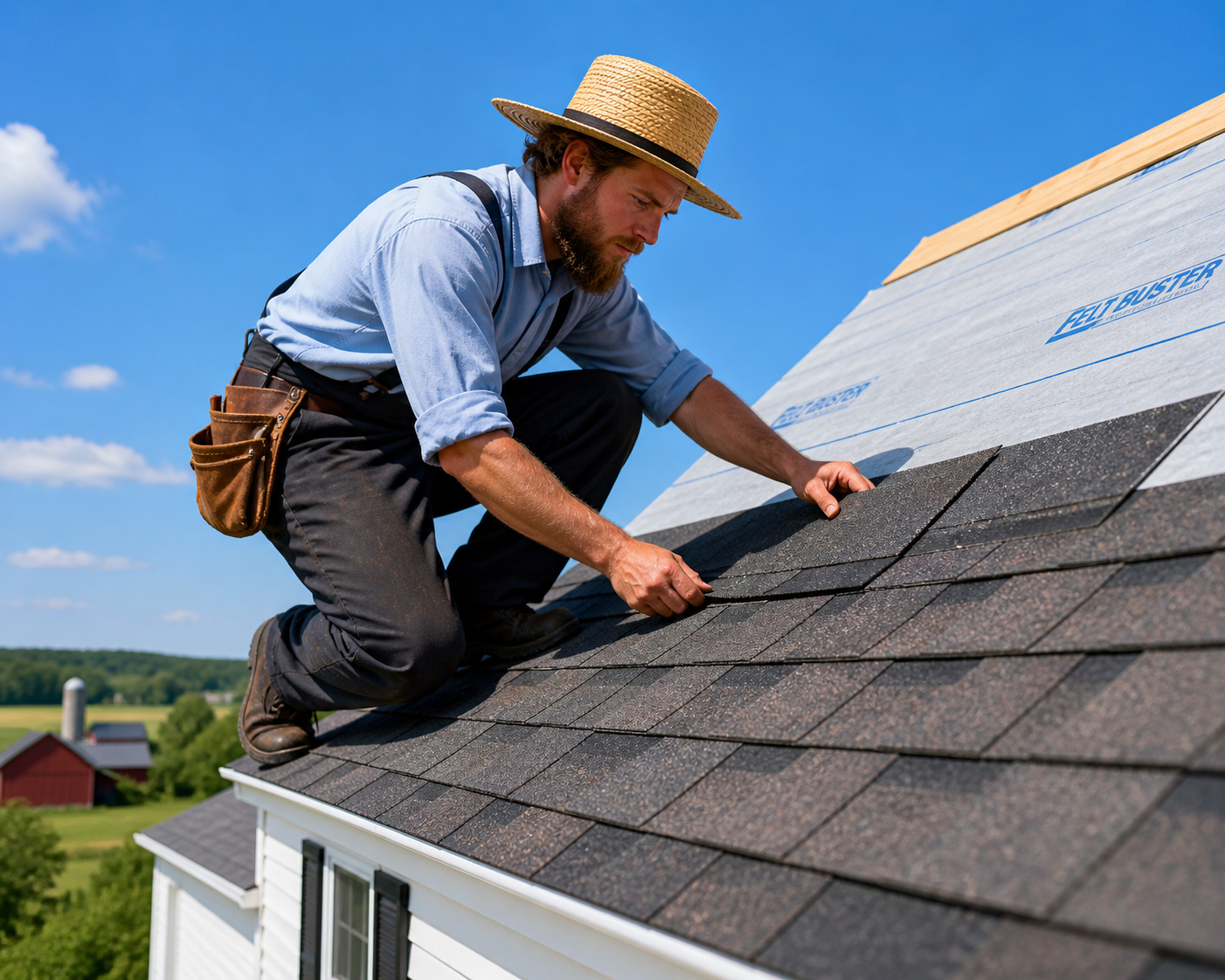
We blend traditional Amish craftsmanship with modern roofing techniques. That means meticulous handiwork passed down generations, with an unwavering focus on precision and integrity, combined with advanced underlayments and energy-efficient designs.
When we install, we don't rush. We take extra time to perfect flashing around chimneys and valleys to prevent leaks. We integrate proper ventilation systems right from the start to avoid moisture traps and ice dams. We select premium materials that resist New York's harsh weather without degrading quickly.
This approach cuts down on emergency repairs significantly.
We've seen our roofs go 25 to 30 years with just routine checkups and minor tweaks. Corner-cutting jobs need major interventions every 10 to 15 years due to poor seals or ventilation leading to rot, warping, or early failures.
Over 20 to 25 years, property owners save $5,000 to $15,000 or more in avoided repairs alone.
That doesn't count lower energy bills from better insulation and airflow, or the peace of mind knowing your roof's built to last through storms and seasons without constant surprises.
What Property Owners Misunderstand

The fundamental misunderstanding is treating your roof as an expense rather than an asset that requires protection.
You wouldn't skip oil changes on a $50,000 vehicle because "it seems fine right now." You understand that small, regular maintenance prevents catastrophic engine failure.
Your roof is the same principle, just with higher stakes.
The difference is visibility. When your car makes a noise, you hear it immediately. When your roof develops a small crack in November, you won't know until spring when water damage appears in your ceiling.
By then, you've missed four intervention points where the fix would have cost a fraction of the final bill.
Industry data shows that more than 80 percent of all roofs are replaced prematurely due to inadequate maintenance.
Think about that. Four out of five property owners are paying for full roof replacements years before they should need them.
Your Preventative Maintenance Roadmap

The National Roofing Contractors Association recommends scheduling a professional roof inspection once a year.
For New York properties, we recommend inspections in spring or fall when weather is milder and we can spot subtle signs before they escalate.
What to Expect During an Inspection
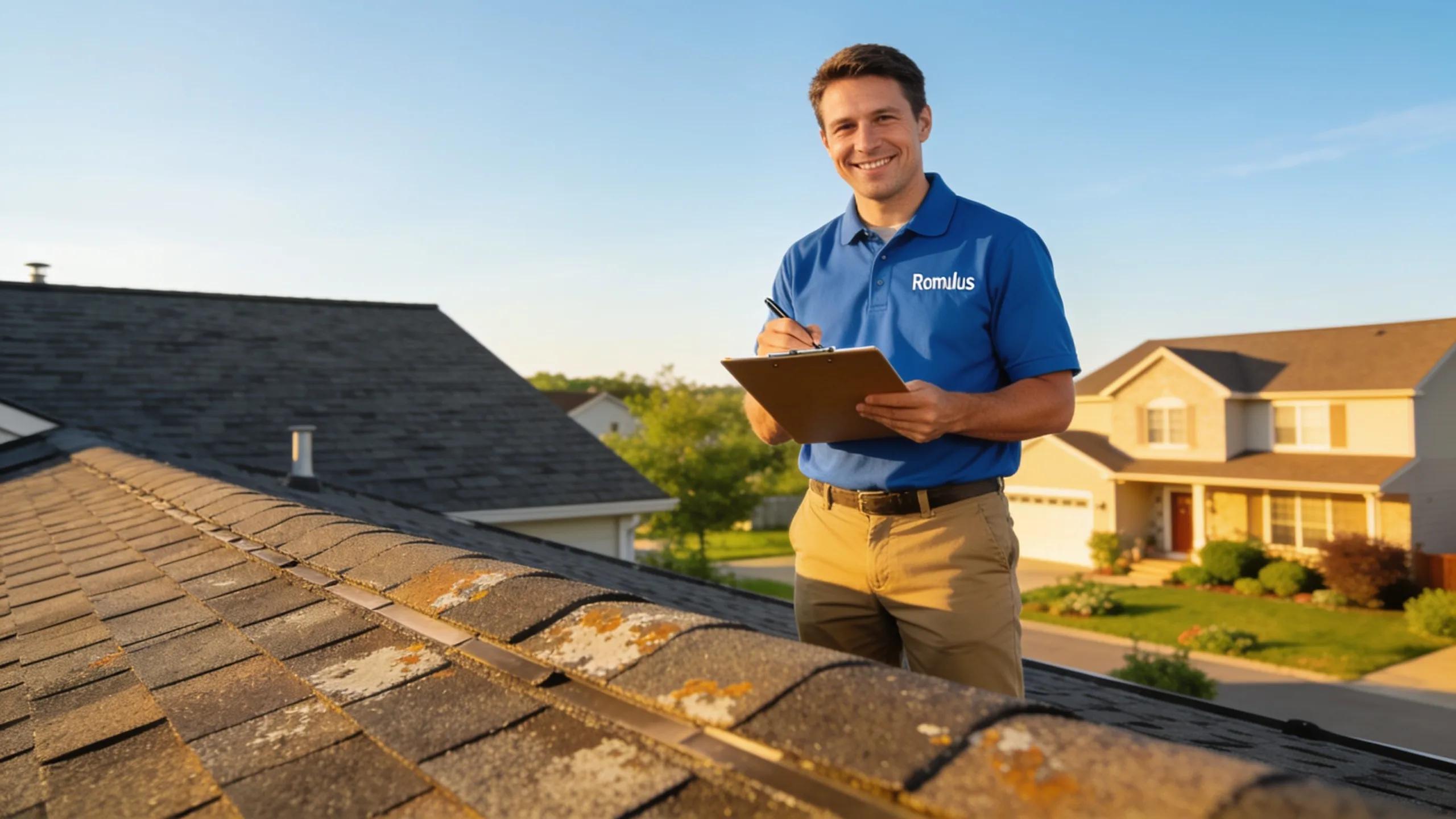
We check everything from shingles to flashing and attic airflow. You get a detailed report with photos and specific recommendations. No obligation. No pressure.
If we find minor issues, we give you clear options with transparent pricing. Most common fixes run $300 to $800 depending on your home's size and what needs attention.
The inspection reveals problems you can't see from the ground. Poor ventilation affecting 90 percent of homes. Granule loss on shingles. Flashing gaps. Early rot. Issues that are already costing you money through energy inefficiency or progressive damage.
Seasonal Timing Matters
Spring inspections catch winter damage before summer storms compound the problems. Fall inspections prepare your roof for the brutal freeze-thaw cycles ahead.
Both timing windows give you the opportunity to address issues before they escalate into the next damage tier.
The Investment That Pays You Back
Regular roof inspections aren't an expense. They're a financial strategy that protects property value, prevents catastrophic costs, and extends asset lifespan.
The numbers are clear:
Free inspection + $300-800 typical repairs = under $1,000 investment
$208 annual savings from extended lifespan alone
$375-500 annual savings from proper ventilation
Avoided disaster costs ranging from $3,800 to $400,000+
We've climbed thousands of New York roofs. The pattern never changes. Property owners who invest in proactive maintenance save dramatically compared to those who wait for visible problems.
Your roof is protecting everything underneath it. Your family. Your inventory. Your business operations. Your financial investment.
The question isn't whether you can afford regular inspections.
It's whether you can afford not to have them.
⚠️ Ready to protect your investment? Schedule your free roof inspection today. We'll show you exactly what's happening on your roof right now, what it means for your wallet, and what your options are. No obligation. Just clear information so you can make the right decision for your property.
Must Read Article: Roof Problems Finger Lakes NY | Common Failure Reasons - LS Roofing LLC