Home / Blog /
Heavy Snow and Ice Can Damage Your Roof in New York

How Heavy Snow and Ice Can Damage Your Roof in New York

November 06, 2026•8 min read

Winter in New York can bring heavy snowfall, freezing temperatures, ice accumulation, and strong winds. While these conditions are a normal part of the season, they can create significant challenges for residential and commercial roofing systems. Heavy snow can place additional weight on a roof, while ice buildup can interfere with proper drainage and increase the risk of water intrusion.

For homeowners in Romulus and the surrounding Finger Lakes region, understanding how winter weather affects roofing materials is important for protecting their properties. Regular inspections, proper maintenance, and timely repairs can help prevent minor roofing issues from developing into expensive problems.

How Heavy Snow Affects Your Roof

Snow accumulation is one of the most common winter roofing concerns in New York. Although many roofs are designed to handle expected local snow loads, prolonged snowfall and drifting can create additional stress.

Here are some ways heavy snow can affect your roofing system.

1. Excessive Weight on the Roof Structure

When snow accumulates over several days, its weight can place additional pressure on roof decking, rafters, trusses, and other structural components. Wet and compacted snow can be particularly heavy.

Buildings with older roofing structures or existing structural damage may be more vulnerable to excessive snow loads.

Homeowners should watch for warning signs such as unusual ceiling cracks, sagging rooflines, or new structural movement. If you suspect excessive snow loading or structural damage, contact a qualified professional promptly.

2. Roof Leaks from Melting Snow

Snow that melts during warmer periods can allow water to travel beneath damaged shingles, flashing, or other roofing components.

If the roof has existing weaknesses, melting snow may enter the building and cause:

  • Water stains on ceilings and walls.

  • Wet attic insulation.

  • Damage to drywall and interior finishes.

  • Moisture accumulation in roof decking.

  • Potential mold growth.

Addressing damaged roofing materials before winter can help reduce the risk of these problems.

How Ice Can Damage Your Roofing System

Ice creates several additional roofing challenges during New York winters. It can interfere with drainage, contribute to water intrusion, and damage roofing components.

1. Ice Dams Along Roof Edges

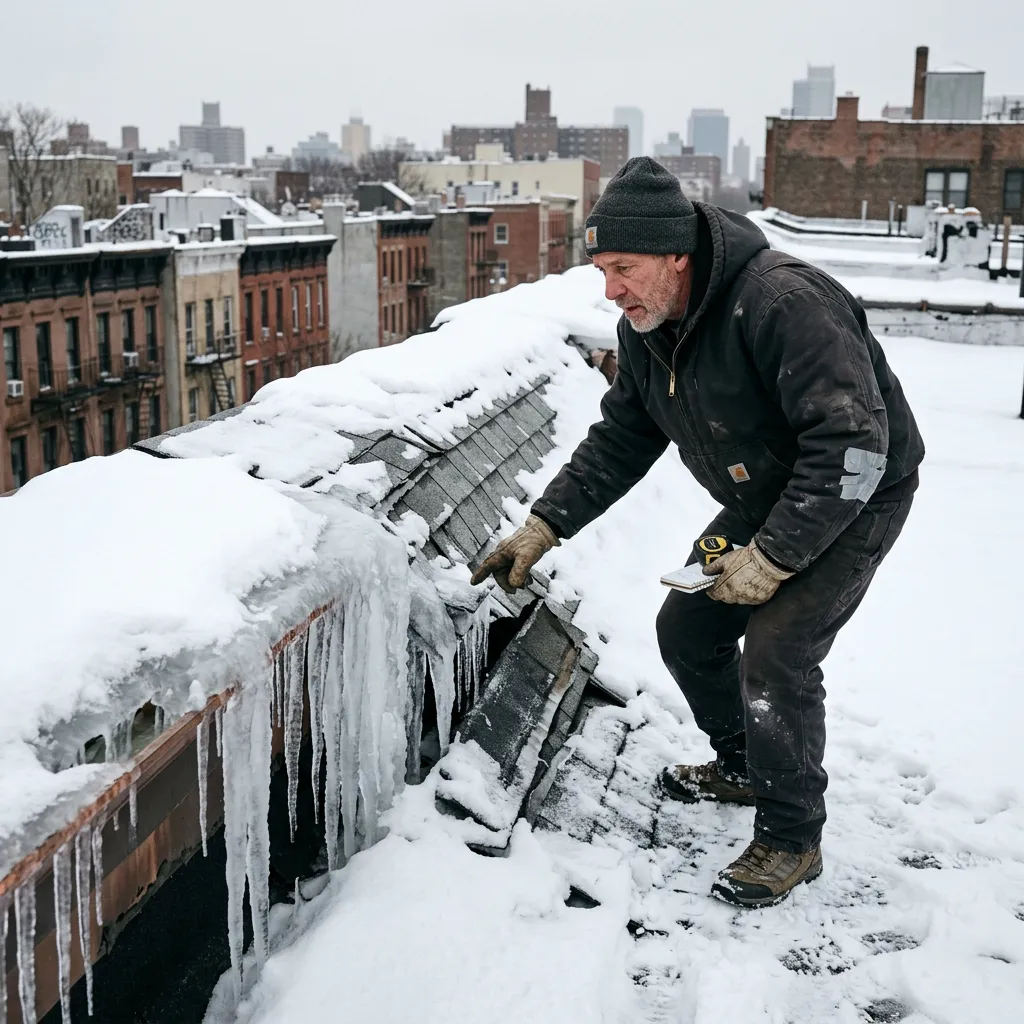
Ice dams develop when snow melts on warmer sections of a roof and refreezes near colder roof edges. Over time, this process can create a buildup of ice along the eaves.

When melting snow cannot drain properly, water may back up beneath shingles and enter the roof assembly.

Ice dams can lead to:

  • Roof leaks and ceiling stains.

  • Damaged shingles and underlayment.

  • Wet insulation.

  • Interior moisture problems.

  • Damage to gutters and roof edges.

Proper attic insulation, air sealing, and ventilation can help reduce the temperature differences that contribute to ice dam formation.

2. Frozen Gutters and Downspouts

Gutters and downspouts help direct rainwater and melting snow away from a building. During freezing weather, accumulated debris and standing water can freeze and restrict drainage.

This can contribute to ice buildup along roof edges and increase the risk of water-related damage.

Cleaning gutters before winter and checking drainage systems periodically can help maintain proper water flow.

3. Damage to Shingles and Flashing

Repeated freezing and thawing can expose existing roofing weaknesses. Damaged shingles, deteriorated flashing, and poorly sealed roof penetrations may allow water to enter the roofing system.

Strong winter winds can also loosen already damaged shingles, leaving sections of the roof exposed.

A professional inspection can help identify these vulnerable areas before they lead to more extensive repairs.

Warning Signs of Winter Roof Damage

Not all roofing problems are immediately visible. Some develop beneath roofing materials or inside the attic.

Homeowners should look for these warning signs during winter:

  • Water stains appearing on ceilings or walls.

  • Missing, cracked, or curling shingles.

  • Ice buildup along roof edges.

  • Sagging gutters or damaged downspouts.

  • Moisture or damp insulation in the attic.

  • Unusual ceiling cracks or visible roof sagging.

  • Water dripping around windows or roof penetrations.

If you notice any of these signs, consider arranging a professional roof inspection. Avoid climbing onto icy or snow-covered roofs because of the risk of falls and structural hazards.

How to Protect Your Roof from Heavy Snow and Ice

Preventive maintenance is one of the most effective ways to reduce winter roofing problems. Homeowners can take several steps before and during the colder months.

Schedule a Professional Roof Inspection

A pre-winter inspection can help identify damaged shingles, loose flashing, deteriorating seals, and other potential problems.

A roofing professional can also assess the overall condition of the roof and recommend necessary repairs before heavy snowfall begins.

Maintain Proper Attic Insulation and Ventilation

Uneven roof temperatures can contribute to snow melting and ice dam formation.

Proper attic insulation and air sealing help prevent excessive indoor heat from escaping into the attic. Adequate ventilation also helps maintain more consistent roof temperatures.

Clean Gutters Before Winter

Remove leaves, branches, and other debris from gutters and downspouts before freezing temperatures arrive.

Clear drainage systems help melting snow and rainwater flow away from the roof and foundation.

Repair Existing Roofing Damage

Small problems can become more serious during winter. Replace damaged shingles, repair flashing, and address leaks before snow and ice make roofing work more difficult.

Manage Snow Accumulation Safely

Heavy snow accumulation should be assessed carefully, particularly on older buildings or roofs with known structural concerns.

Never climb onto a snow-covered roof or attempt to remove ice using sharp tools. Snow removal should be handled by qualified professionals using methods appropriate for the roofing system.

Does Metal Roofing Help During New York Winters?

Metal roofing can be a suitable option for many properties in New York because of its durability and ability to shed snow under appropriate conditions.

Unlike some traditional roofing materials, metal panels often allow snow to slide off more readily, depending on the roof pitch, panel profile, surface finish, and surrounding conditions.

Some benefits of metal roofing include:

  • Durable roofing materials.

  • Resistance to many common weather conditions.

  • Relatively low routine maintenance requirements.

  • Different panel profiles and finishes.

  • Long-term performance when properly installed.

However, metal roofing does not eliminate winter roofing risks. Snow guards or other snow-retention systems may be necessary to help manage sliding snow near entrances, walkways, and lower roof sections.

Homeowners interested in this option can explore Standing Seam Metal Roofing and Corrugated Metal Roofing from LS Roofing NY.

When Should You Contact a Roofing Contractor?

Some roofing issues require professional attention rather than temporary repairs. Contact a qualified roofing contractor if you notice recurring leaks, damaged shingles, deteriorating flashing, or signs of structural stress.

If your existing roof has extensive deterioration or repeated winter-related problems, it may also be worth considering a complete roof replacement.

LS Roofing NY provides Residential Roofing Services for homeowners looking for roof installation, repair, and replacement solutions.

For properties requiring more extensive work, the company also offers New Roof Installation Services.

Why Choose LS Roofing NY for Winter Roofing Needs?

LS Roofing LLC is a family and Amish-owned roofing company based in Romulus, New York. The company combines traditional craftsmanship with modern roofing practices to provide roofing solutions for residential and commercial properties throughout the surrounding Finger Lakes region.

Its services include residential roofing, commercial roofing, metal roofing, roof repairs, and roof replacement.

For homeowners concerned about winter roof damage, a professional inspection can help identify existing problems and determine whether repairs or replacement are necessary.

You can explore LS Roofing NY to learn more about its roofing services and request a free roof inspection.

Frequently Asked Questions

1. Can heavy snow cause a roof to collapse?

Yes. Excessive snow accumulation can place significant weight on a roof structure, potentially causing structural failure. The risk depends on snow density, roof design, structural condition, and local snow-load requirements. Unusual sagging or structural movement requires immediate professional assessment.

2. What is an ice dam, and why is it dangerous?

An ice dam is a buildup of ice along a roof edge that prevents melting snow from draining properly. Water can collect behind the ice and travel beneath roofing materials, potentially causing leaks, insulation damage, and interior water damage.

3. Should I remove snow from my roof?

Snow removal may be necessary in certain situations, but it should be handled safely by qualified professionals. Walking on a snow-covered roof or using sharp tools can cause injuries and damage roofing materials.

4. Does metal roofing prevent ice dams?

Metal roofing does not completely prevent ice dams. Proper attic insulation, air sealing, ventilation, and roof design remain important for managing winter moisture and temperature conditions.

5. How often should I inspect my roof during winter?

Roofing inspections should be scheduled periodically based on the roof's age, condition, and exposure to severe weather. Additional inspections may be appropriate after major storms or when signs of damage appear.

6. When should I replace my roof before winter?

Consider replacement if your roof has widespread shingle deterioration, recurring leaks, significant structural concerns, or extensive weather damage. A professional inspection can help determine whether replacement is necessary.

Conclusion

Heavy snow and ice can create several challenges for roofing systems throughout New York. From excessive structural weight and ice dams to frozen gutters and roof leaks, winter conditions can affect both residential and commercial properties.

Taking preventive steps before winter, maintaining proper attic ventilation, clearing gutters, and repairing existing damage can help reduce the risk of costly roofing problems.

If your home in Romulus or the surrounding Finger Lakes region needs a roof inspection, repair, or replacement, LS Roofing NY can help you understand your options and protect your property with professional roofing services.

Back to Blog
LS Roofing footer logo - company mark

Follow Us On Facebook

Location

2326 Ernsberger Rd,

Romulus, NY 14541

Contact Us
Phone: (315) 730-9043

Hours of Operation
Mon–Fri: 6 AM – 5 PM
Saturday: 8 AM – 3 PM

Website management and hosting by pudgy squirrel marketing

Heavy Snow and Ice Can Damage Your Roof in New York

How Heavy Snow and Ice Can Damage Your Roof in New York

November 06, 2026•8 min read

Winter in New York can bring heavy snowfall, freezing temperatures, ice accumulation, and strong winds. While these conditions are a normal part of the season, they can create significant challenges for residential and commercial roofing systems. Heavy snow can place additional weight on a roof, while ice buildup can interfere with proper drainage and increase the risk of water intrusion.

For homeowners in Romulus and the surrounding Finger Lakes region, understanding how winter weather affects roofing materials is important for protecting their properties. Regular inspections, proper maintenance, and timely repairs can help prevent minor roofing issues from developing into expensive problems.

How Heavy Snow Affects Your Roof

Snow accumulation is one of the most common winter roofing concerns in New York. Although many roofs are designed to handle expected local snow loads, prolonged snowfall and drifting can create additional stress.

Here are some ways heavy snow can affect your roofing system.

1. Excessive Weight on the Roof Structure

When snow accumulates over several days, its weight can place additional pressure on roof decking, rafters, trusses, and other structural components. Wet and compacted snow can be particularly heavy.

Buildings with older roofing structures or existing structural damage may be more vulnerable to excessive snow loads.

Homeowners should watch for warning signs such as unusual ceiling cracks, sagging rooflines, or new structural movement. If you suspect excessive snow loading or structural damage, contact a qualified professional promptly.

2. Roof Leaks from Melting Snow

Snow that melts during warmer periods can allow water to travel beneath damaged shingles, flashing, or other roofing components.

If the roof has existing weaknesses, melting snow may enter the building and cause:

  • Water stains on ceilings and walls.

  • Wet attic insulation.

  • Damage to drywall and interior finishes.

  • Moisture accumulation in roof decking.

  • Potential mold growth.

Addressing damaged roofing materials before winter can help reduce the risk of these problems.

How Ice Can Damage Your Roofing System

Ice creates several additional roofing challenges during New York winters. It can interfere with drainage, contribute to water intrusion, and damage roofing components.

1. Ice Dams Along Roof Edges

Ice dams develop when snow melts on warmer sections of a roof and refreezes near colder roof edges. Over time, this process can create a buildup of ice along the eaves.

When melting snow cannot drain properly, water may back up beneath shingles and enter the roof assembly.

Ice dams can lead to:

  • Roof leaks and ceiling stains.

  • Damaged shingles and underlayment.

  • Wet insulation.

  • Interior moisture problems.

  • Damage to gutters and roof edges.

Proper attic insulation, air sealing, and ventilation can help reduce the temperature differences that contribute to ice dam formation.

2. Frozen Gutters and Downspouts

Gutters and downspouts help direct rainwater and melting snow away from a building. During freezing weather, accumulated debris and standing water can freeze and restrict drainage.

This can contribute to ice buildup along roof edges and increase the risk of water-related damage.

Cleaning gutters before winter and checking drainage systems periodically can help maintain proper water flow.

3. Damage to Shingles and Flashing

Repeated freezing and thawing can expose existing roofing weaknesses. Damaged shingles, deteriorated flashing, and poorly sealed roof penetrations may allow water to enter the roofing system.

Strong winter winds can also loosen already damaged shingles, leaving sections of the roof exposed.

A professional inspection can help identify these vulnerable areas before they lead to more extensive repairs.

Warning Signs of Winter Roof Damage

Not all roofing problems are immediately visible. Some develop beneath roofing materials or inside the attic.

Homeowners should look for these warning signs during winter:

  • Water stains appearing on ceilings or walls.

  • Missing, cracked, or curling shingles.

  • Ice buildup along roof edges.

  • Sagging gutters or damaged downspouts.

  • Moisture or damp insulation in the attic.

  • Unusual ceiling cracks or visible roof sagging.

  • Water dripping around windows or roof penetrations.

If you notice any of these signs, consider arranging a professional roof inspection. Avoid climbing onto icy or snow-covered roofs because of the risk of falls and structural hazards.

How to Protect Your Roof from Heavy Snow and Ice

Preventive maintenance is one of the most effective ways to reduce winter roofing problems. Homeowners can take several steps before and during the colder months.

Schedule a Professional Roof Inspection

A pre-winter inspection can help identify damaged shingles, loose flashing, deteriorating seals, and other potential problems.

A roofing professional can also assess the overall condition of the roof and recommend necessary repairs before heavy snowfall begins.

Maintain Proper Attic Insulation and Ventilation

Uneven roof temperatures can contribute to snow melting and ice dam formation.

Proper attic insulation and air sealing help prevent excessive indoor heat from escaping into the attic. Adequate ventilation also helps maintain more consistent roof temperatures.

Clean Gutters Before Winter

Remove leaves, branches, and other debris from gutters and downspouts before freezing temperatures arrive.

Clear drainage systems help melting snow and rainwater flow away from the roof and foundation.

Repair Existing Roofing Damage

Small problems can become more serious during winter. Replace damaged shingles, repair flashing, and address leaks before snow and ice make roofing work more difficult.

Manage Snow Accumulation Safely

Heavy snow accumulation should be assessed carefully, particularly on older buildings or roofs with known structural concerns.

Never climb onto a snow-covered roof or attempt to remove ice using sharp tools. Snow removal should be handled by qualified professionals using methods appropriate for the roofing system.

Does Metal Roofing Help During New York Winters?

Metal roofing can be a suitable option for many properties in New York because of its durability and ability to shed snow under appropriate conditions.

Unlike some traditional roofing materials, metal panels often allow snow to slide off more readily, depending on the roof pitch, panel profile, surface finish, and surrounding conditions.

Some benefits of metal roofing include:

  • Durable roofing materials.

  • Resistance to many common weather conditions.

  • Relatively low routine maintenance requirements.

  • Different panel profiles and finishes.

  • Long-term performance when properly installed.

However, metal roofing does not eliminate winter roofing risks. Snow guards or other snow-retention systems may be necessary to help manage sliding snow near entrances, walkways, and lower roof sections.

Homeowners interested in this option can explore Standing Seam Metal Roofing and Corrugated Metal Roofing from LS Roofing NY.

When Should You Contact a Roofing Contractor?

Some roofing issues require professional attention rather than temporary repairs. Contact a qualified roofing contractor if you notice recurring leaks, damaged shingles, deteriorating flashing, or signs of structural stress.

If your existing roof has extensive deterioration or repeated winter-related problems, it may also be worth considering a complete roof replacement.

LS Roofing NY provides Residential Roofing Services for homeowners looking for roof installation, repair, and replacement solutions.

For properties requiring more extensive work, the company also offers New Roof Installation Services.

Why Choose LS Roofing NY for Winter Roofing Needs?

LS Roofing LLC is a family and Amish-owned roofing company based in Romulus, New York. The company combines traditional craftsmanship with modern roofing practices to provide roofing solutions for residential and commercial properties throughout the surrounding Finger Lakes region.

Its services include residential roofing, commercial roofing, metal roofing, roof repairs, and roof replacement.

For homeowners concerned about winter roof damage, a professional inspection can help identify existing problems and determine whether repairs or replacement are necessary.

You can explore LS Roofing NY to learn more about its roofing services and request a free roof inspection.

Frequently Asked Questions

1. Can heavy snow cause a roof to collapse?

Yes. Excessive snow accumulation can place significant weight on a roof structure, potentially causing structural failure. The risk depends on snow density, roof design, structural condition, and local snow-load requirements. Unusual sagging or structural movement requires immediate professional assessment.

2. What is an ice dam, and why is it dangerous?

An ice dam is a buildup of ice along a roof edge that prevents melting snow from draining properly. Water can collect behind the ice and travel beneath roofing materials, potentially causing leaks, insulation damage, and interior water damage.

3. Should I remove snow from my roof?

Snow removal may be necessary in certain situations, but it should be handled safely by qualified professionals. Walking on a snow-covered roof or using sharp tools can cause injuries and damage roofing materials.

4. Does metal roofing prevent ice dams?

Metal roofing does not completely prevent ice dams. Proper attic insulation, air sealing, ventilation, and roof design remain important for managing winter moisture and temperature conditions.

5. How often should I inspect my roof during winter?

Roofing inspections should be scheduled periodically based on the roof's age, condition, and exposure to severe weather. Additional inspections may be appropriate after major storms or when signs of damage appear.

6. When should I replace my roof before winter?

Consider replacement if your roof has widespread shingle deterioration, recurring leaks, significant structural concerns, or extensive weather damage. A professional inspection can help determine whether replacement is necessary.

Conclusion

Heavy snow and ice can create several challenges for roofing systems throughout New York. From excessive structural weight and ice dams to frozen gutters and roof leaks, winter conditions can affect both residential and commercial properties.

Taking preventive steps before winter, maintaining proper attic ventilation, clearing gutters, and repairing existing damage can help reduce the risk of costly roofing problems.

If your home in Romulus or the surrounding Finger Lakes region needs a roof inspection, repair, or replacement, LS Roofing NY can help you understand your options and protect your property with professional roofing services.

Back to Blog