How to Prevent Ice Dams and Roof Leaks During New York Winters
Winter in New York can bring freezing temperatures, heavy snowfall, and repeated freeze-thaw cycles that create challenges for residential roofing systems. One of the most common winter roofing problems homeowners experience is ice dam formation. Ice dams can prevent melting snow from draining properly, allowing water to collect along roof edges and potentially seep beneath roofing materials.
For homeowners in Romulus and the surrounding Finger Lakes region, preparing the roof before winter arrives can help reduce the risk of leaks, water damage, and costly repairs. Understanding what causes ice dams and how to prevent them is an important part of maintaining a healthy roofing system throughout the colder months.
What Is an Ice Dam?
An ice dam is a buildup of ice along the lower edge of a roof, commonly near the eaves or gutters. Ice dams typically form when heat escapes from a home's interior into the attic, warming portions of the roof and causing snow to melt.
The melting snow flows down the roof until it reaches a colder area near the roof edge. There, the water freezes again and gradually forms a ridge of ice.
As the ice buildup increases, it can block water from draining off the roof. Water may then accumulate behind the ice and move beneath shingles or other roofing materials, potentially entering the home.
Ice dams can lead to water stains, damaged insulation, deteriorating roof decking, and moisture-related problems inside the property.
Why Ice Dams Form on New York Roofs
Several factors can contribute to ice dam formation during New York winters.
Heat Loss Through the Attic
Poor attic insulation allows warm air from the living space to escape into the attic. This heat can warm the roof deck and cause snow to melt unevenly.
When melted snow reaches colder roof edges, it may refreeze and contribute to ice dam formation.
Inadequate Attic Ventilation
Proper attic ventilation helps maintain more consistent temperatures within the attic space. When ventilation is inadequate, heat and moisture can accumulate, potentially contributing to uneven roof temperatures.
A properly designed ventilation system, combined with adequate insulation and air sealing, can help reduce conditions that contribute to ice dams.
Heavy Snow Accumulation
Heavy snowfall provides a larger amount of snow that may melt and refreeze under changing temperature conditions.
Repeated melting and freezing can gradually increase ice accumulation along roof edges, particularly when drainage is restricted.
Clogged Gutters
Gutters filled with leaves, branches, and debris can interfere with water drainage. During freezing temperatures, trapped water may freeze, contributing to ice buildup along roof edges.
Cleaning gutters before winter can help reduce drainage problems.
7 Ways to Prevent Ice Dams and Roof Leaks
Preventing ice dams generally requires addressing the underlying causes of uneven roof temperatures, moisture accumulation, and poor drainage.
1. Improve Attic Insulation
Adequate attic insulation helps reduce heat transfer from the living space into the attic.
When less heat escapes through the ceiling, the roof deck is more likely to remain at a consistent temperature during winter. This can help reduce uneven snow melting that contributes to ice dams.
Homeowners should evaluate their existing insulation and consider improvements where necessary. Insulation should be installed according to appropriate building requirements while maintaining necessary ventilation pathways.
2. Seal Air Leaks in the Attic
Warm air can escape through gaps around attic access doors, electrical wiring, plumbing penetrations, recessed lighting, and other openings.
Air sealing these gaps can help prevent warm indoor air from entering the attic and warming the roof deck.
A professional can identify common air leakage areas and recommend appropriate sealing methods.
3. Maintain Proper Roof Ventilation
Roof and attic ventilation help manage temperature and moisture conditions within the attic.
Depending on the roof design, ventilation systems may include soffit vents, ridge vents, or other approved ventilation components.
Proper ventilation should be designed alongside insulation and air sealing rather than treated as a standalone solution. A roofing professional can evaluate the ventilation system and recommend improvements where necessary.
4. Clean Gutters Before Winter
Gutters and downspouts should be cleaned before freezing temperatures arrive.
Remove leaves, branches, and other debris that may interfere with drainage. Check that downspouts direct water away from the building and that gutters are securely attached.
Clean drainage systems can help reduce water accumulation and some forms of ice buildup around roof edges.
5. Repair Damaged Roofing Materials
Damaged shingles, loose flashing, deteriorated seals, and compromised roofing components can create pathways for water intrusion.
Before winter, arrange a roof inspection to identify areas that may need repairs.
If your roof has widespread deterioration, recurring leaks, or significant material damage, it may be worth considering a roof replacement instead of continuing with repeated repairs.
Explore Residential Roofing Services to learn more about roofing installation, repair, and replacement solutions.
6. Manage Snow Accumulation Safely
Heavy snow accumulation can contribute to ice dam formation, particularly when snow repeatedly melts and refreezes.
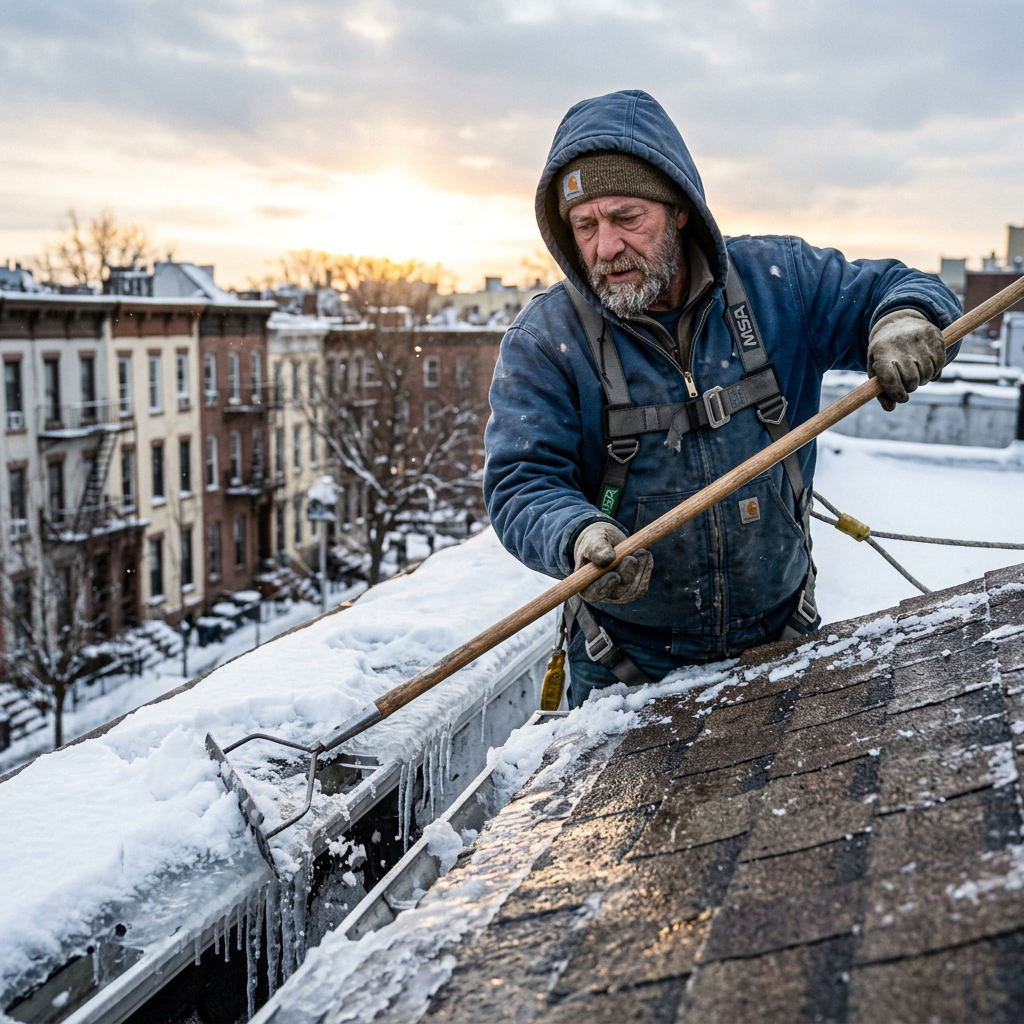
In certain situations, professional snow removal may be appropriate. However, homeowners should never climb onto snow-covered or icy roofs to remove snow themselves.
Roof snow removal should be handled by qualified professionals using suitable methods to avoid damaging shingles, flashing, gutters, or other roofing components.
7. Schedule Regular Roof Inspections
Regular inspections can help identify roofing weaknesses before winter weather makes them more difficult to address.
A professional inspection may include checking:
Shingles and roofing panels.
Flashing around chimneys and vents.
Roof valleys and drainage areas.
Gutters and downspouts.
Attic insulation and ventilation.
Signs of water intrusion or structural damage.
Preventive inspections can help homeowners identify problems early and plan necessary repairs.
Can Metal Roofing Help Reduce Ice Dam Problems?
Metal roofing can be a suitable option for homeowners looking for a durable roofing system in New York. Its smooth surface can allow snow to shed more readily under appropriate conditions, depending on the roof pitch, panel profile, surface finish, and surrounding environment.
However, metal roofing does not eliminate the risk of ice dams. Poor attic insulation, air leakage, ventilation issues, and roof design can still contribute to uneven snow melting and ice formation.
Metal roofing systems may also require snow guards or other snow-management measures to help control sliding snow around entrances, walkways, and other areas where falling snow could create hazards.
Homeowners considering metal roofing can explore Standing Seam Metal Roofing and Corrugated Metal Roofing to learn about available roofing options.
Signs Your Roof May Have Ice Dam Damage
Ice dam damage is not always immediately visible from the outside. Homeowners should look for signs of water intrusion or moisture problems inside the property.
Common warning signs include:
Water stains on ceilings or walls.
Peeling paint or damaged drywall.
Damp attic insulation.
Moisture around roof edges.
Water dripping near windows.
Visible ice buildup along roof eaves.
Damaged gutters or downspouts.
If you notice these problems, contact a roofing professional to assess the roof and identify the source of the moisture.
Why Choose LS Roofing NY for Winter Roofing Services?
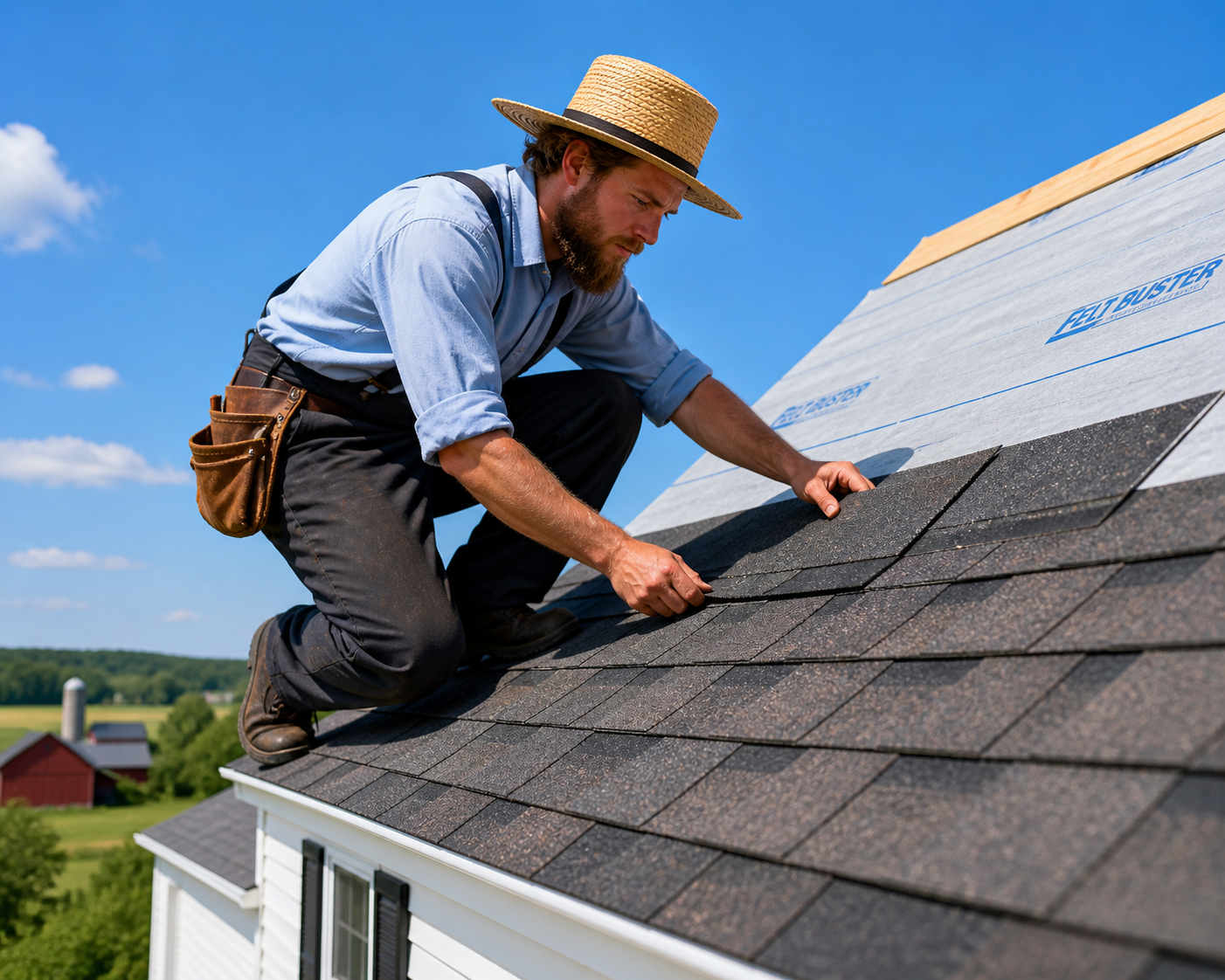
LS Roofing LLC is a family and Amish-owned roofing company based in Romulus, New York. The company combines traditional craftsmanship with modern roofing practices to provide roofing solutions for residential and commercial properties throughout its surrounding service area.
Its roofing services include installation, repairs, replacement, residential roofing, commercial roofing, and metal roofing.
If your roof is experiencing leaks, damaged shingles, or winter-related roofing problems, a professional inspection can help identify the appropriate solution.
Homeowners can visit LS Roofing NY to learn more about its roofing services and request a free inspection.
Frequently Asked Questions
1. What causes ice dams on roofs?
Ice dams typically form when heat escapes into the attic, warming portions of the roof and melting snow. Meltwater then flows toward colder roof edges and refreezes, gradually creating a buildup of ice.
2. Can ice dams cause roof leaks?
Yes. Ice dams can block water drainage and cause water to accumulate behind the ice. This water may enter beneath shingles or other roofing components, potentially causing leaks and interior damage.
3. Does attic insulation help prevent ice dams?
Adequate attic insulation helps reduce heat transfer from the living space into the attic. Combined with proper air sealing and ventilation, it can help reduce uneven roof temperatures that contribute to ice dam formation.
4. Should I remove ice dams from my roof?
Ice dam removal can be dangerous and may damage roofing materials if performed incorrectly. Homeowners should avoid climbing onto icy roofs and contact qualified professionals when removal is necessary.
5. Can gutters cause ice dams?
Clogged gutters can interfere with drainage and contribute to ice buildup around roof edges. Cleaning gutters before winter can help reduce drainage-related problems, although ice dams can form even when gutters are clean.
6. Does metal roofing prevent ice dams?
Metal roofing does not completely prevent ice dams. Proper insulation, air sealing, ventilation, and roof design remain important for reducing the risk of ice buildup and water intrusion.
7. When should I have my roof inspected before winter?
A roof inspection before winter is recommended when your roof is aging, has experienced leaks, shows signs of damage, or has not been inspected recently. Inspections after severe weather may also be appropriate.
Conclusion
Ice dams and roof leaks are common winter roofing concerns for homeowners in New York. Uneven roof temperatures, poor attic insulation, inadequate ventilation, clogged gutters, and damaged roofing materials can all contribute to winter roof problems.
Preventive maintenance, proper attic insulation, air sealing, roof ventilation, and timely repairs can help reduce the risk of ice dams and protect your home during the colder months.
If your roof needs an inspection, repair, or replacement, LS Roofing NY provides roofing solutions for homeowners in Romulus and surrounding communities. Contact the company to discuss your roofing needs and prepare your home for winter.