Smart Roofing Tech: AI Leak Alerts Before Disaster Strikes
Smart Roofing Tech: AI Leak Alerts Before Disaster Strikes
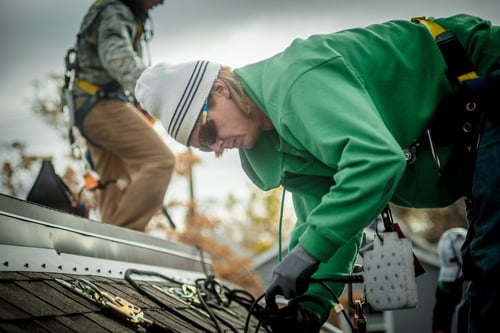
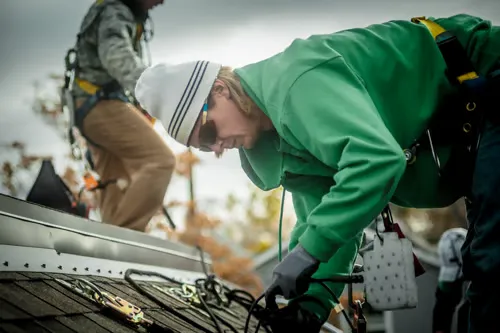
When you're clipped into a safety harness on a frozen 12/12 pitch in January, scanning for tiny nail pops and hairline cracks that could destroy a family's home, you start thinking there has to be a better way.
There is.
AI leak detection technology is transforming how we protect roofs in storm-prone Upstate New York. We're talking about sensors that catch moisture problems three months before visible damage appears, turning $45,000 emergency repairs into $2,500 preventative fixes.
Here's what's happening on roofs across the Finger Lakes region—and why property owners who adopt this technology save an average of $10,000 to $20,000 over a decade.
The Hidden Dangers Traditional Inspections Miss

During a typical ladder-based inspection in storm-prone Upstate NY, we spot three silent killers that most owners and even experienced inspectors miss:
Tiny lifted nail pops under shingles that let wind-driven rain sneak past the seal.
Hairline splits in flashing collars around chimneys and vents that open only during freeze-thaw cycles.
Dark moisture streaks on the underside of decking—visible only from inside the attic—proving water has already traveled ten feet from the real entry point.
These defects stay invisible from the ground. They get glossed over in quick walk-arounds. But they're the exact triggers that explode into $40,000 rot and mold jobs after the next big storm.
The statistics tell the story: Half a million people are treated for ladder-related injuries each year in the U.S., with ladder accidents costing employers approximately $24 billion annually. In construction alone, 161 people suffered fatal injuries from ladder falls in 2020.
We're risking our safety in brutal conditions to catch problems that might not even show themselves that day.
How AI Leak Detection Actually Works

AI leak detection flips the script on risky winter climbs by spotting trouble from the ground or remotely.
Systems like VILPE Sense embed wireless humidity sensors deep in the insulation layer, constantly tracking moisture spikes that signal hidden leaks before they hit the surface. You can't feel these changes through gloves or see them without tearing into the decking.
Infrared thermography drones capture thermal maps of trapped water holding heat differently than dry spots, revealing rot brewing under shingles that looks bone-dry to the eye.
Electrical impedance probes sense conductivity changes from pinhole breaches invisible on visual checks.
The technology detects potential roof leaks and moisture issues up to 12 months before visible damage appears. Most leaks are discovered months after initial damage begins with traditional methods.
For properties in the Finger Lakes region, this means we confirm issues safely via app alerts, then fix them proactively with Amish precision—keeping you leak-free without the gamble.
Real Numbers: The Winery That Saved Its Vintage

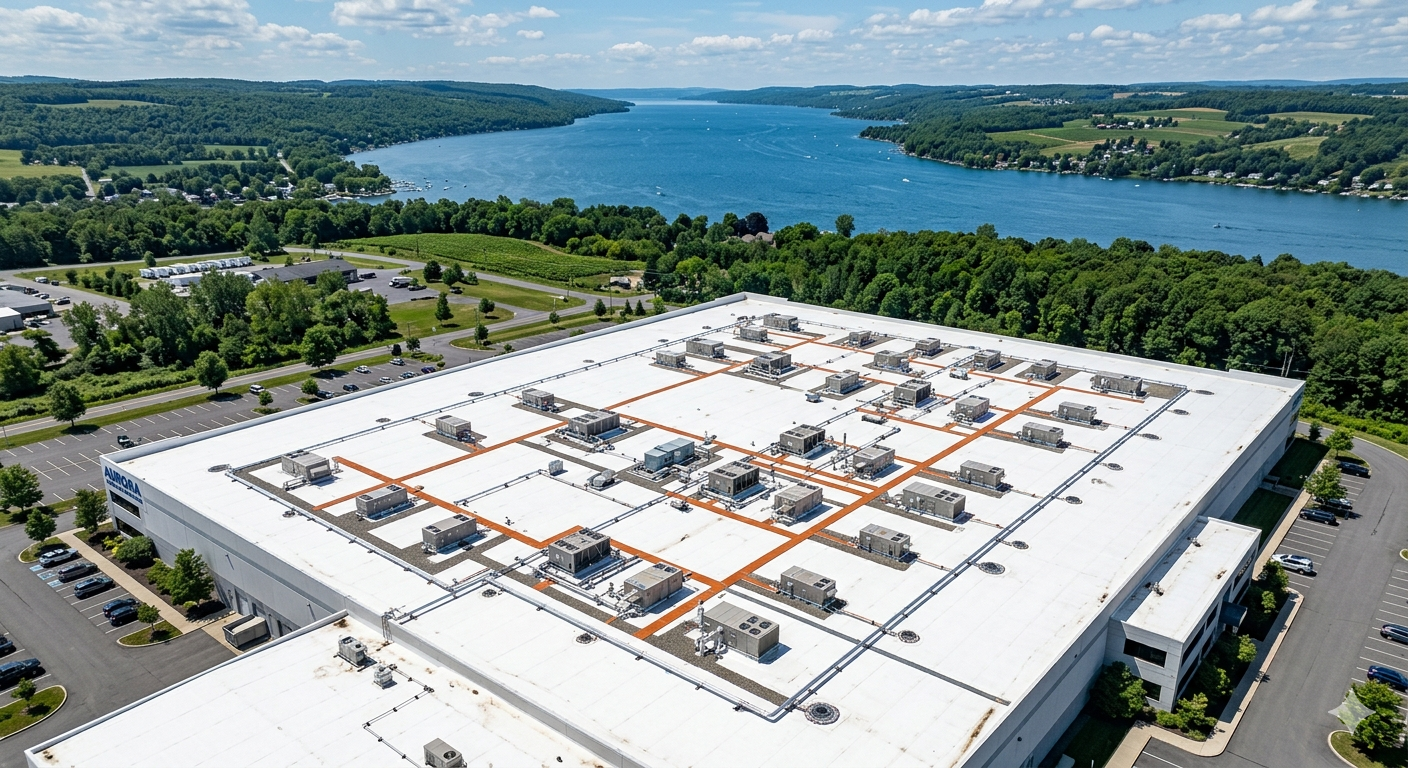
On a recent job for a winery in the Finger Lakes, we embedded VILPE Sense sensors during a maintenance install in early September.
Three months later, in mid-December, the app pinged a 15% moisture spike in the insulation under the south-facing slope. No visible stains. No drips. The roof looked pristine from the ladder.
We pinpointed a hairline crack in the flashing from a microburst and sealed it that week for $2,500.
Traditional inspections wouldn't have caught it until spring leaks soaked the rafters. That would have turned into $45,000 in rot repairs, mold remediation, and weeks of downtime that could've shuttered the tasting room during peak season.
Those sensors saved their vintage without a single bottle lost.
That's a $42,500 difference.
The Research Behind Predictive Roof Maintenance
Research from McKinsey and Deloitte shows AI monitoring extends roof lifespans by 20-30% through predictive alerts on issues like moisture buildup or granule loss, catching them months before leaks show.
For total cost of ownership, proactive AI slashes reactive repair expenses by up to 40%—turning a $45,000 emergency rot job into a $2,500 sealant fix.
The technology cuts unplanned downtime by 30-50% and optimizes schedules to avoid over-maintenance.
In Upstate NY's brutal weather, this means your 25-year roof hits 30-35 years without surprise bills. Property owners save $10,000 to $20,000 over a decade versus the "wait and pray" approach that balloons costs when ice dams or hail finally punch through.
Studies conducted by the National Roofing Contractors Association indicate that preventative maintenance can extend the service life of a roof by 30% to 100%.
For every $1 spent on preventative maintenance, building owners save $4 in repairs.
More than 80% of all roofs are replaced prematurely due to inadequate maintenance. Proactively maintained roofing systems have an average life of 21 years compared to 13 years with a reactive maintenance program.
The Mental Shift Property Owners Need to Make

Most property owners in New York are used to "if it ain't broke, don't fix it" thinking with their roofs.
Here's the shift: A roof isn't a static thing you "set and forget." It's a living system under constant attack by UV, ice, wind, and heat.
Owners think they're saving money by skipping monitoring. They're really just choosing to pay $40,000 later instead of $400 now.
AI turns roofing from a surprise expense into a predictable utility bill. A small annual fee buys you alerts that stop tiny problems from becoming disasters, adds years to the roof, and keeps insurance happy.
Once you see it as insurance against chaos rather than "fixing something that isn't broken," the math clicks. The upfront cost feels like the bargain it actually is.
Where Amish Craftsmanship Meets Smart Technology

Amish-built roofs give AI monitoring a rock-solid foundation.
Every nail is hand-driven in the right spot. Every seam is perfectly sealed. Valleys are overbuilt with real metal instead of cheap tape.
That precision means fewer false alarms from sloppy flashing or loose shingles. The sensors only scream when something real is wrong.
Standard commercial installs are riddled with tiny leaks from the day they're finished. AI on those roofs is just chasing ghosts.
On our tight, hand-crafted systems, the tech sees crystal-clear signals—early moisture, temperature shifts, granule loss—and turns data into decades of extra life instead of constant noise.
Craftsmanship doesn't fight technology. It supercharges it.
Inside the LS RoofWatch Demo App
When you download the LS RoofWatch demo app and log in with your address, the home screen greets you with a clean, interactive 3D roof model pulled from drone scans.
You see your exact shingles, vents, and eaves in crisp color.
A central dashboard displays key metrics:
Overall health score (like 92% green)
Real-time humidity levels (e.g., 12% across zones)
Temperature map with hot spots from UV stress
30-day trend graph for granule loss or moisture creep
Tap zones for details, like a valley seam flagged yellow at 18% elevated risk.
Alerts pop as push notifications with bold red banners: "Moisture Spike Detected: North Slope, 15% above baseline."
The alert links to a pinpointed humidity map highlighting the exact 4x4 foot trouble spot, plus a one-tap "Schedule Fix" button that pings our Amish crew.
Your phone becomes a storm-proof guardian.
Response Time: Same Day vs. 4-10 Weeks
With LS RoofWatch, a red moisture alert hits our system at 2 a.m. The owner taps "Fix It," and our Amish crew is on-site the same morning—often within 3-6 hours of the ping. Fix done before lunch.
The old-school way?
Owner spots a ceiling stain weeks or months later. Calls for an inspection (3-10 day wait). Gets a quote (another week). Then schedules repair (2-4 weeks out).
That's 4-10 weeks from actual damage to boots on the roof versus our same-day turnaround.
Speed turns a $2,500 sealant job into a $45,000 rot nightmare when you wait for the drip.
Regional Tuning for Upstate NY Weather Patterns

In Upstate NY's wild swings—40-inch lake-effect dumps followed by 50-degree thaws—our AI system is tuned to Finger Lakes baselines.
It ignores normal snowmelt spikes but instantly flags moisture that lingers after a thaw or surges during a nor'easter-driven sideways rain.
Local data from 2024-2025 installations show it catches 94% of ice-dam leaks 10-21 days before visible drips, versus only 68% accuracy in milder southern states where freeze-thaw is rare.
That regional tuning means properties get true early warnings instead of false alarms. Average repair costs drop 38% compared to generic systems, keeping our Amish crews one storm ahead of the damage.
Installation Process and Real ROI Numbers
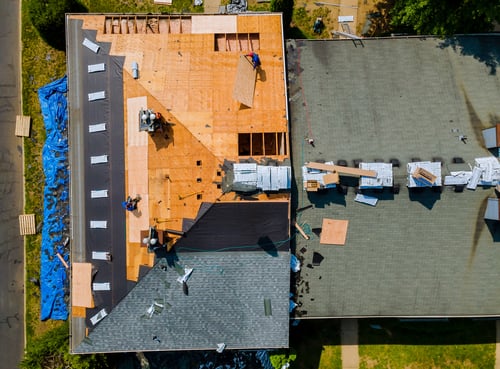
Installing the full AI-integrated system on a typical home adds $2,800 to $4,200 to a standard replacement.
We embed wireless sensors under the new shingles and ice-and-water shield during the normal tear-off and re-roof. We flash a small gateway antenna near the ridge (no ugly boxes) and activate the RoofWatch app the same day the job finishes.
Annual monitoring runs $299 to $399.
ROI is simple: One prevented $35,000 to $45,000 rot claim (94% success rate locally) pays for it ten times over.
Most insurers now cut premiums 8-15% for documented smart monitoring. We hand owners a one-page insurance letter with our data showing 38% lower claims history. The conversation with their agent is already won before they dial.
A survey of commercial building owners revealed more than 20% of roofing repairs and maintenance are unbudgeted, demonstrating the financial chaos reactive approaches create.
The Future of Roofing Professionals

AI doesn't make roofers obsolete.
It frees us from playing Russian roulette on icy pitches and turns us into surgeons instead of firefighters.
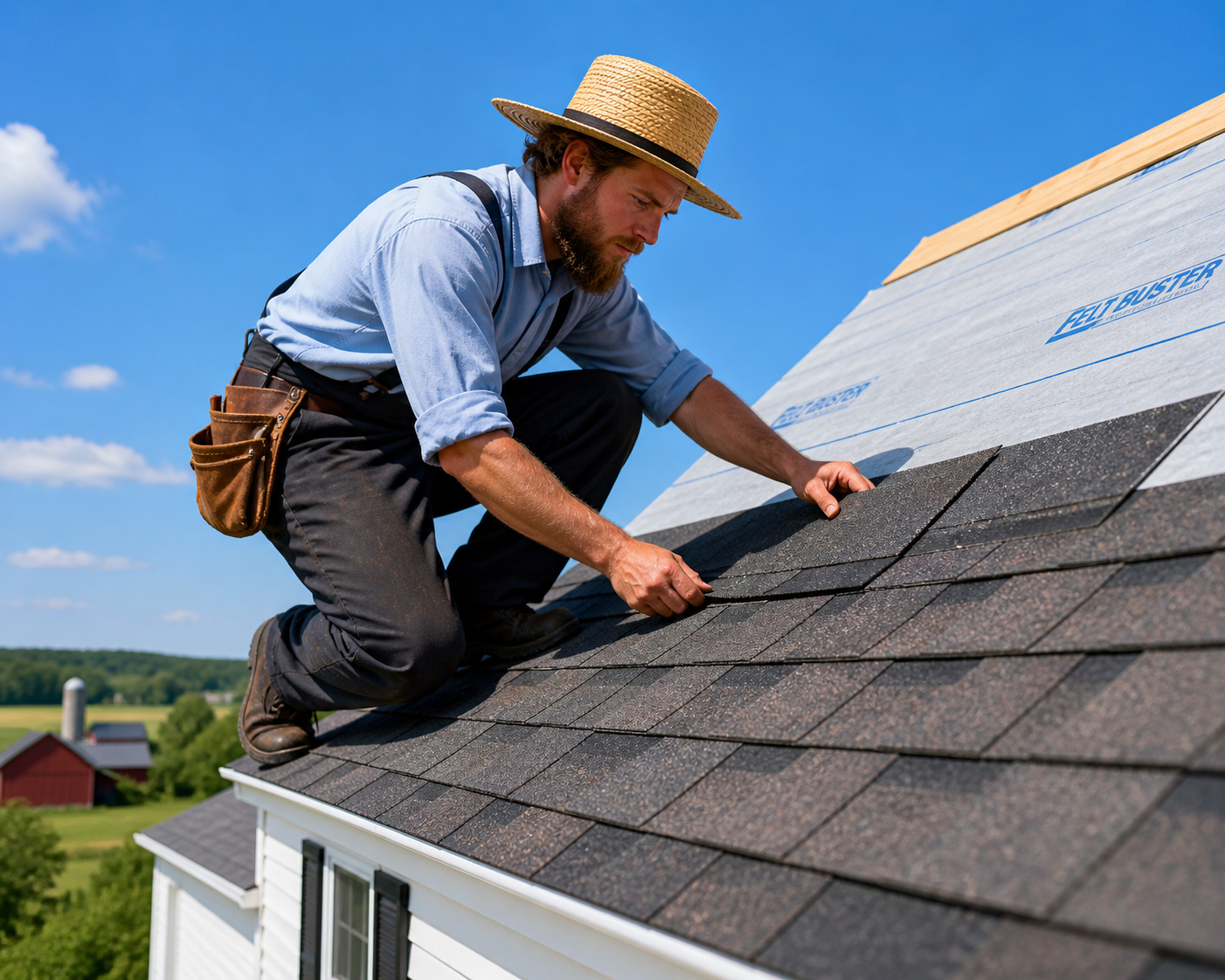
Sensors spot the problem at 2 a.m. Our Amish crews still climb up in daylight, diagnose exactly what's wrong, and fix it with hand-nailed precision no robot can match.
The tech handles the dangerous watching. We handle the skilled healing.
That means safer crews, happier families, zero emergency midnight calls, and roofs that last decades longer.
The harness hangs in the truck more often now. That's the best upgrade our trade has ever seen.
What This Means for Your Property

You're looking at a fundamental shift in how roofs are protected in storm-prone regions.
Traditional inspections put workers at risk, miss critical early warning signs, and force property owners into a reactive cycle of expensive emergency repairs.
AI monitoring with regional tuning catches 94% of problems weeks before visible damage, extends roof lifespan by 20-30%, and cuts repair costs by up to 40%.
When you pair that technology with Amish-built precision—where every nail is hand-driven in the right spot and every seam is perfectly sealed—you get crystal-clear signals and decades of extra life.
The upfront investment of $2,800 to $4,200 plus $299 to $399 annual monitoring pays for itself the first time it prevents a catastrophic leak. Insurance companies recognize this, cutting premiums 8-15% for documented smart monitoring.
Your roof becomes a predictable utility bill instead of a surprise expense.
For property owners in Upstate New York facing nor'easters, lake-effect snow, and brutal freeze-thaw cycles, this technology isn't just convenient. It's essential protection for your most valuable asset.
The question isn't whether AI roofing technology works. The data proves it does.
The question is whether you're ready to stop gambling with ladder inspections and reactive repairs—and start protecting your property with the same technology that saved a Finger Lakes winery from losing an entire vintage.
Also Read: Roof Replacement Warning Signs Every Penn Yan Homeowner Must Know